

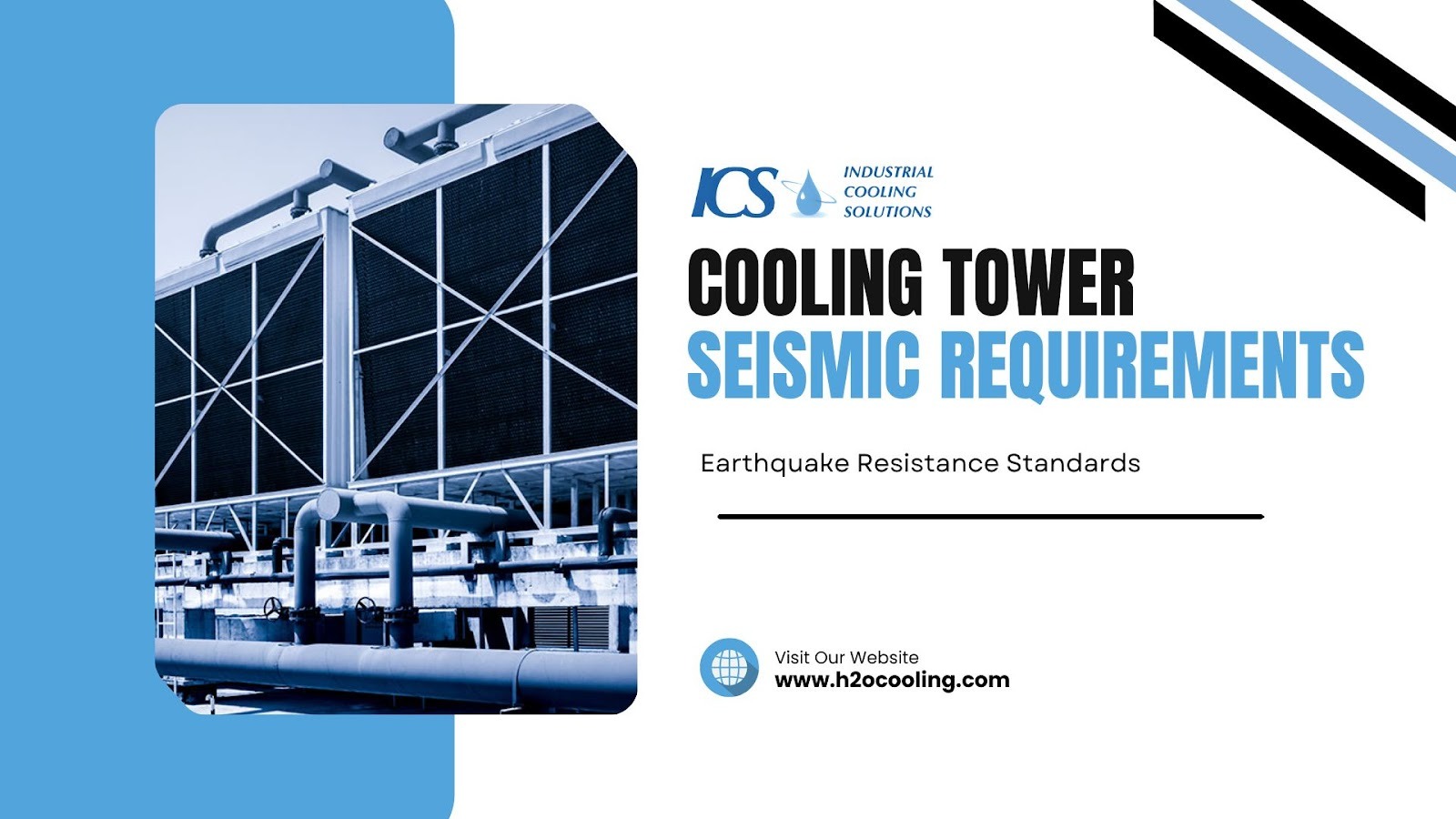
Cooling tower seismic requirements are essential to ensure stability and safety during earthquakes. These standards address key aspects such as design loads, seismic zone compliance, structural analysis methods, and bracing systems for earthquake-resistant design.
Engineers play a vital role in implementing these measures to prevent catastrophic failures during seismic events. In this guide, we will explore the critical engineering principles behind seismic zone compliance, including how to design cooling towers that can withstand earthquake forces while maintaining operational safety.
From understanding seismic loads to incorporating effective bracing systems, this discussion will provide valuable insights into creating robust, earthquake-resistant cooling tower structures. Let’s dive into the key strategies and best practices for achieving safety and compliance.
Why Seismic Design Matters for Cooling Towers
Seismic design extends beyond simple code compliance; it is a critical measure to protect human life, infrastructure, and essential operations. A structural failure in a cooling tower can lead to disastrous consequences for the facility and the surrounding environment.
Disregarding proper cooling tower seismic requirements poses significant risks that extend far beyond the immediate cost of repairs. The potential fallout from a seismic event includes:
- Safety Hazards: Collapse poses an immediate threat to personnel working near the tower.
- Operational Stoppage: Heat rejection is vital for plant functions; a damaged tower halts production entirely.
- Water Containment Loss: Ruptured basins can release massive amounts of treated water, causing environmental damage.
Understanding Cooling Tower Behavior During Earthquakes
Earthquakes subject structures to intense dynamic forces that differ significantly from static wind loads. Cooling towers, particularly tall and slender models, face unique challenges due to their mass distribution and geometry.
The structural behavior of a cooling tower during a seismic event reveals specific vulnerabilities that engineers must address. Earthquake-resistant design accounts for the following stress factors:
- Dynamic Lateral Loads: Ground motion creates horizontal forces that push against the tower's center of mass.
- Torsion and Uplift: Irregular geometries can cause twisting (torsion) or lift the foundation off the ground (uplift).
- Shell Buckling: In hyperbolic concrete towers, the thin shell is susceptible to buckling under extreme pressure.
- Support Leg Failure: The concentrated loads at the base of the tower can shear support columns if not properly reinforced.
Applicable Standards & Seismic Codes
Navigating the landscape of international and local building codes is the first step in successful design. Engineers must reference specific standards that dictate how to calculate loads and detail the structure.
International Building Code (IBC)
The International Building Code serves as the baseline for safety in many jurisdictions. It establishes seismic design categories ranging from A (low risk) to F (very high risk). These categories dictate the rigorousness of the design approach based on the occupancy category and the specific site class of the soil.
ASCE/SEI 7: Minimum Design Loads
This standard provides the mathematical framework for determining the forces the tower must withstand. It details how to calculate seismic loads using response spectra and ground motion accelerations. For complex cooling tower geometries, ASCE/SEI 7 often mandates dynamic analysis over simplified static methods.
Local & National Annexes
Regional codes often supersede or supplement international standards to account for local geological conditions. These annexes provide specific seismic maps and define soil site class effects that influence ground motion amplification. Adherence to these local mandates is essential for legal and safety compliance.
Seismic Zones & Cooling Tower Classification
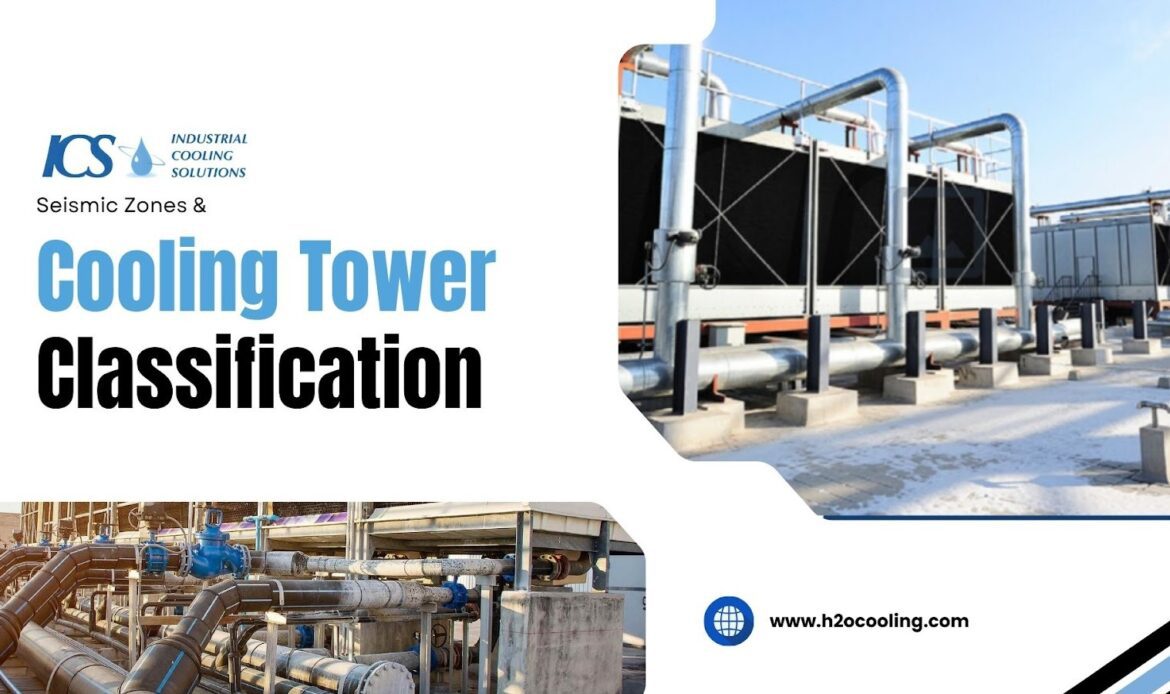
Geologic surveys divide regions into distinct zones based on the probability and intensity of ground motion. Understanding where a project sits on the seismic map determines the base shear coefficients used in calculations.
The classification of the structure heavily influences the stringency of the cooling tower seismic requirements. Determining the risk category involves assessing the tower's function:
- Design Accelerations: Higher seismic zones demand structures to endure increased ground acceleration, ensuring safety during stronger earthquakes. This is critical for regions prone to frequent seismic activity.
- Base Shear Coefficients: This coefficient calculates the lateral forces a structure's base must resist, directly impacting the tower's stability and long-term durability in seismic conditions.
- Essential Facilities: Cooling towers serving critical infrastructure like hospitals or power plants require enhanced safety measures (Importance Factor 1.5) to ensure uninterrupted operation even during natural disasters, highlighting their role in community resilience.
Structural Seismic Analysis Methods
Engineers have several analytical tools at their disposal to predict how a tower will react to ground motion. The choice of method depends on the tower's height, geometry, and the soil conditions at the site.
Equivalent Lateral Force (ELF) Method
For designing shorter, more regular structures, a simplified static approach is often used to evaluate earthquake forces. While this method provides a quick and practical solution for initial designs, it may not fully account for the complexities of larger structures like cooling towers. Here's how it works:
- Step 1: Apply a static load to the side of the tower to simulate earthquake forces.
- Step 2: Use this load to analyze the structural response and identify any potential weak points.
- Step 3: Evaluate the results for preliminary design purposes, keeping in mind that this method is best suited for smaller, less complex structures.
This approach is a valuable starting point, but should be supplemented with more detailed analysis for larger or more intricate designs.
Response Spectrum Analysis
Understanding the dynamic behavior of structures during seismic events is crucial for designing resilient systems. By leveraging spectral acceleration curves, this method offers a precise way to analyze seismic forces and pinpoint potential stress areas. Here's a step-by-step breakdown of how structural seismic analysis works using response spectra:
Step 1: Develop spectral acceleration curves
These curves are created to represent the relationship between acceleration and natural periods of the structure.
Step 2: Identify natural frequencies
Determine the tower's natural frequencies, which are critical for assessing how it responds to seismic forces.
Step 3: Distribute seismic forces
Seismic forces are distributed across the natural frequencies, allowing for a more detailed analysis of how the structure will behave.
Step 4: Analyze stress points
Evaluate the results to identify areas prone to high stress, ensuring a clear understanding of potential vulnerabilities.
This approach improves accuracy, ensuring a robust design that can withstand seismic activity.
Time‑History Analysis
For critical facilities or unique geometries, engineers simulate specific earthquake records. This involves using recorded accelerograms to test the structure against real-world ground motion data over time. It is the most rigorous method for verifying performance.
Design Requirements and Calculation Process

The core of the engineering process involves precise mathematical derivation of loads and resistance. Accurate seismic load calculation prevents under-designing the support structure and foundation.
Defining Seismic Loads
The process begins with gathering site-specific data parameters such as Ss (short period) and S1 (1-second period). Engineers must also account for soil amplification factors, which can significantly increase the shaking intensity on soft ground. These inputs drive the base shear calculation.
Lateral Load Distribution
Seismic forces do not apply evenly across the entire structure. The calculation must distribute lateral loads over the height of the tower, partitioning forces into static and dynamic terms to reflect how the mass accelerates at different elevations.
Drift Limits
Excessive movement, or drift, can cause non-structural components like piping and fill to fail. Engineers perform checks to ensure roof and height drift remain within code-specified limits, preserving the integrity of the mechanical systems within the tower.
Modal Analysis
Modal analysis determines these fundamental periods and evaluates the contribution of higher modes. This step is crucial for flexible structures where multiple vibration modes contribute to the overall response.
Seismic Bracing & Reinforcement Strategies
Resistance requires physical reinforcement to transfer forces effectively to the ground. Effective seismic bracing ensures that the tower maintains its shape and stability during an event.
Types of Seismic Bracing
Different framing systems offer varying levels of ductility and stiffness. Selecting the right bracing type depends on the magnitude of the expected loads:
- Diagonal Bracing: Simple and effective for resisting lateral tension and compression.
- Cross Bracing: Provides high stiffness and is common in steel cooling tower structures.
- Moment Frames: These rely on rigid connections to resist rotation and are useful when bracing obstructs equipment.
Connection Reinforcement
The points where structural members meet are often the first to fail. Strengthening base plates and column reinforcements ensures that loads transfer smoothly from the frame to the foundation without shearing bolts or welds.
Foundation Enhancement
A robust superstructure means little if the foundation fails. Engineers may employ spread footings with tie beams to prevent differential movement or use pile foundations to reach stable bedrock in soft soil conditions.
Retrofitting Existing Cooling Towers
Older cooling towers often fail to meet modern cooling tower seismic requirements. Retrofitting these structures is a cost-effective alternative to demolition and replacement.
Refurbishing a tower for seismic safety involves a systematic workflow. The retrofit process focuses on:
- Identifying Candidates: Structural assessments determine if the existing frame is viable for an upgrade. This step ensures that resources are allocated efficiently and upgrades are implemented on a stable foundation.
- Strengthening Bracing: Adding new diagonal members or replacing undersized supports enhances the structure’s ability to withstand forces like wind or seismic activity, significantly improving overall stability.
- Adding Shear Walls: Constructing new concrete walls to take the lateral load improves resistance to horizontal forces, reducing the risk of structural failure during events like earthquakes.
- Foundation Anchoring: Increasing the size of footings to prevent uplift ensures the structure remains grounded, even under significant stress, providing long-term durability and safety.
Inspection, Testing & Code Compliance Verification
Design is only the first step; verification ensures the physical build matches the engineering plan. Rigorous testing protocols are necessary to validate the structural integrity.
Post-design validation involves several layers of scrutiny to ensure safety. The verification process includes:
- Structural Review: Independent engineers peer-review the calculations and drawings.
- Non-Destructive Testing: Techniques like ultrasonic testing check weld quality without damaging the steel.
- Dynamic Testing: Measuring the actual vibration periods of the built structure.
- Document Compliance: Submitting a detailed inspection checklist to the local building department.
Common Mistakes & How to Avoid Them
Even experienced engineers can overlook critical details when dealing with cooling tower seismic requirements. Avoiding these common pitfalls is key to ensuring long-term stability and code compliance.
Awareness of these errors is the best defense against structural failure. Common design mistakes include:
- Ignoring Soil-Structure Interaction: Failing to account for how the soil amplifies ground motion.
- Using Static Methods Improperly: Applying ELF methods on tall, complex towers that require dynamic analysis.
- Inadequate Bracing Details: Undersizing connections, leading to brittle failure modes.
- Not Addressing Uplift: Forgetting that the tower might try to lift off its foundation during strong rocking motion.
Conclusion
Strict seismic design for cooling towers is essential to ensure safety and prevent catastrophic failure. These structures are vulnerable to earthquake forces due to their height and the large mass of water they hold.
Adhering to cooling tower seismic requirements is critical to avoiding common design mistakes. Ignoring soil-structure interaction, using static analysis on complex towers, undersizing bracing connections, and neglecting uplift forces can all amplify risks and lead to structural failure. To ensure resilience, engineers must prioritize dynamic response design, robust lateral load resistance, and avoid these pitfalls.
Proper design protects your investment, ensures operational continuity, and safeguards lives. Build cooling towers that exceed code requirements with expert guidance. Visit the Industrial Cooling Solutions website to learn more about creating safe, reliable structures.
Frequently Asked Questions
What are the cooling tower seismic requirements?
Cooling tower seismic requirements are engineering standards that ensure a cooling tower can safely withstand earthquake forces without structural failure. These requirements govern seismic load calculations, lateral force resistance, drift limits, structural detailing, and foundation anchorage
Which seismic codes apply to cooling tower design?
Cooling tower seismic design typically follows the International Building Code (IBC) issued by the International Code Council and the seismic load provisions outlined in ASCE/SEI 7 published by the American Society of Civil Engineers. These standards define seismic design categories, importance factors, and structural analysis procedures.
How are seismic loads calculated for cooling towers?
Seismic loads are calculated using site-specific ground motion parameters such as short-period acceleration (Ss) and one-second acceleration (S1), along with soil amplification factors. Engineers determine base shear forces and distribute lateral loads along the height of the tower.
What is the importance of cooling towers in seismic zones?
The importance factor depends on the facility’s function and occupancy classification. Cooling towers serving essential infrastructure, such as power plants or hospitals, are typically assigned a higher importance factor under ASCE/SEI 7, often 1.5. This increases the required seismic resistance to ensure the structure remains operational during and after a major earthquake.