

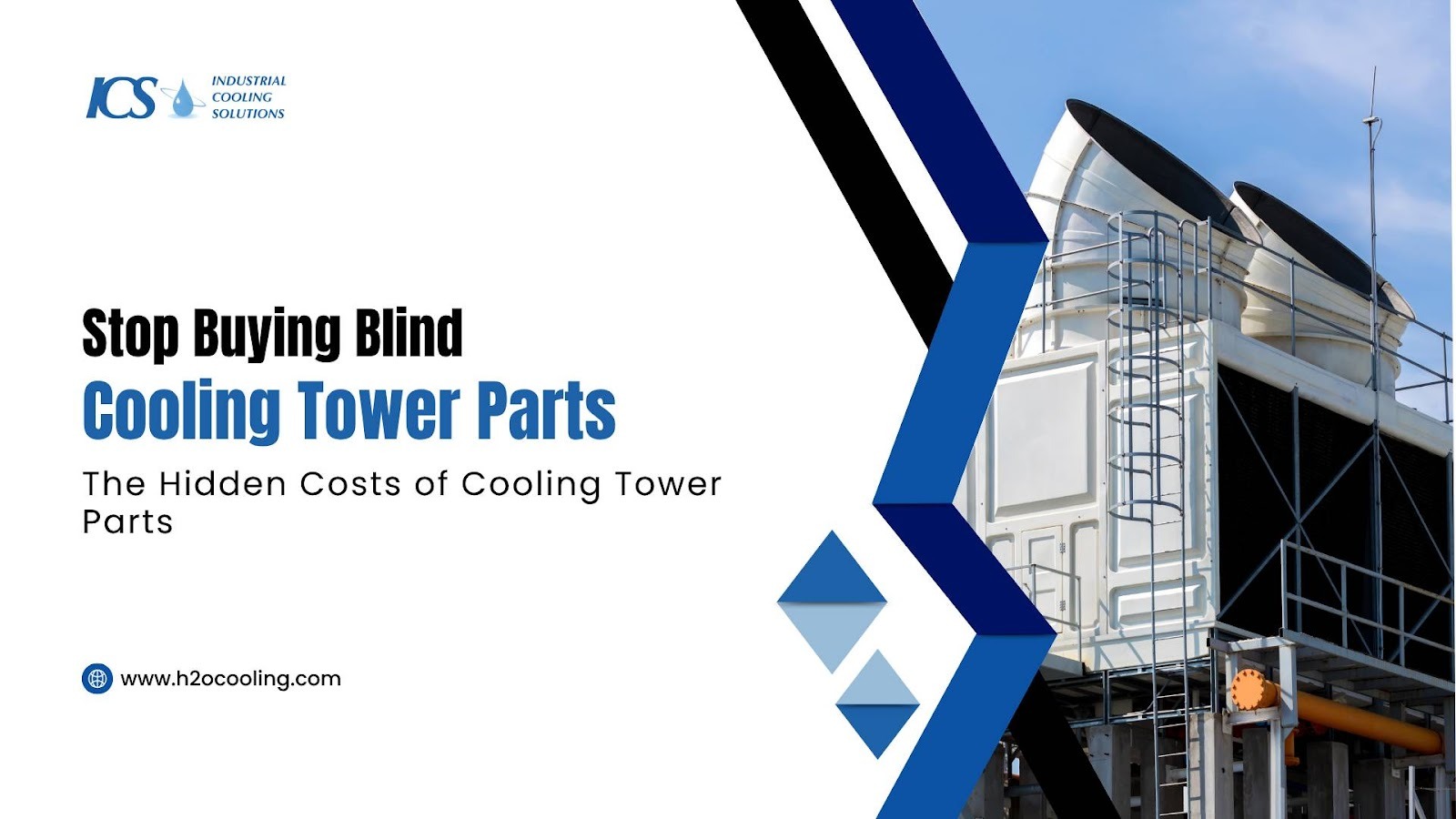
When a critical cooling tower part fails, the immediate reaction is often to find the cheapest, quickest replacement cooling tower parts. This decision may seem logical, but it can lock in decades of high energy bills, major repairs, and operational headaches. This single choice is a $1 million mistake that guarantees inflated operating expenses for cooling towers and related equipment.
Every cooling tower component in your system, from the smallest cooling tower nozzle to the largest tower motor, directly impacts cooling tower efficiency, water splash out, and safety. Understanding these essential parts and assemblies is the first step toward transforming a cost center into an opportunity for significant savings.
This post will guide you through the hidden functions of major parts and provide a blueprint to optimize cooling tower operation, efficient maintenance, and life-cycle cost reduction.
Why Your Approach to Cooling Tower Parts Is Costing You
Most facilities focus on the initial price of a replacement part or a piece of hardware. However, this overlooks the much larger operational cost associated with cooling towers, components, and repairs.
When a cooling tower motor, fan, or fill media fails, simply buying a like-for-like equivalent is a costly misstep. It ignores advancements in manufacturing, durability of materials, and efficient operation that can drastically reduce energy, maintenance, and water consumption.
Paying a small premium for optimized cooling tower parts, such as drift eliminators, tower nozzles, or fill media, is almost always outweighed by the resulting efficiency, minimized water droplet loss, and greater durability of the tower.
These savings derive from reduced energy use, decreased water loss, and lower maintenance and service demands. The core components of a cooling tower, the fill, fan, drift eliminators, louvers, motors, and drive shafts, are like the system's organs and must be treated as essential to the tower’s overall function and control.
3 High-Impact Tower Parts Your Supplier Will Not Tell You About
To get a real advantage, you must look beyond generic replacement parts for your towers. Certain cooling tower components and assemblies offer strong returns on investment by targeting the drivers of operational cost: thermal performance, water loss, corrosion, and energy consumption.
The Thermal Engine: Fill Media
Fill media is the thermal center of new cooling towers and older models alike, not just a plastic stack of equipment. Its hidden function is to maximize water-to-air contact and surface area, contributing to heat transfer.
However, its effectiveness depends entirely on water quality, the ability to withstand debris, house chemicals, and durable materials.
- The Trap: Operators sometimes install high-efficiency film fill, expecting enhanced performance. However, if the process water is dirty or contains debris, this filter will foul almost immediately, leading to poor airflow, increased energy use, and higher water splash, out a direct hit to efficient operation.
- The Strategy: Before ordering fill media as replacement parts or for new towers, always conduct a water quality analysis. For dirty water applications in your tower, durable splash fill is the correct choice. If you intend to use film fill for maximum efficiency, first ensure water pretreatment supports this function.
The Water Guard: Drift Eliminators
Old, cracked, or inefficient drift eliminators may allow up to 0.05% drift loss from cooling towers, wasting thousands of gallons of treated water, chemicals, and complicating compliance.
These issues can lead to fines, add to operating expenses, and create safety risks.
- The Trap: Overlooking or ignoring standard drift eliminators because they appear to be functioning may lead to increased costs from lost water and chemicals, along with possible legal trouble if your towers are not meeting current health codes.
- The Strategy: Upgrade to modern, ultra-low drift eliminators in your cooling tower. These essential parts can guarantee a drift rate of less than 0.0005%. This change is among the fastest ways to achieve water and cost savings, enhanced safety, and improved regulatory certainty for efficient towers.
The Zero-Maintenance Powerhouse: Fan Drive & Motor
The fan and tower motor assembly is the primary energy user and maintenance concern in most cooling towers. Standard gearboxes are heavy, require constant repairs, and demand frequent oil changes for proper performance and durability.
- The Trap: Accepting the default option and buying a standard replacement gearbox perpetuates a cycle of high maintenance costs and operational disruptions for even the best brands.
- The Strategy: Instead of going directly to a gearbox replacement, evaluate an upgrade to a permanent magnet gearless tower motor with VFD integration. These direct-drive motors and assemblies eliminate the gearbox, reduce maintenance, withstand harsh environments, enhance efficiency, and maximize energy savings, especially under variable load conditions.
The Essential Toolkit: A Guide to Core Cooling Tower Components
Efficient operation of cooling towers comes from a system of properly maintained components and assemblies, each contributing to the overall performance, water savings, and reduced energy bills. Understanding these functions is essential for both routine maintenance and strategic system upgrades.
Airflow and Mechanical Components
- Fans (Axial/Centrifugal): These fans provide airflow across fill media, maximizing heat exchange. High-efficiency fan blades, hardware, and adjustable pitch control the function and ability of your tower, lowering energy costs.
- Cooling Tower Motors & Drives: For precise motor control, integrating a VFD is essential. In hazardous service areas, use NEMA explosion-proof motors.
- Drive Shafts & Gearboxes: These connect motors to fans and contribute to torque, speed, and durability. Select corrosion-resistant materials to withstand harsh tower environments.
Heat Transfer and Water Distribution
- Fill Media: Fill media design, crossflow, counterflow, or splash dictates the cooling tower’s ability to transfer heat and resist debris.
- Cooling Tower Nozzles & Water Distribution Systems: Properly selected and installed nozzles and tower nozzles provide an even water spray across fill media, preventing silent performance killers.
- Piping: Support all distribution piping to maximize function and avoid thrust loading on the cooling tower structure or house assemblies.
Water Management, Structure, and Safety
- Float Valves & Automatic Water Level Controls: These cooling tower components are crucial for safe services. Electronic sensors and float valves protect pumps, prevent overflow, and contribute to basin safety.
- Instrumentation & Monitoring: Equip your cooling tower with flow meters, thermocouples, and vibration switches to support predictive maintenance and avoid costly downtime.
- Sealants & Coatings: Use high-grade materials and coatings to protect against leaks, corrosion, and UV. Ensure interior and exterior surfaces of your tower maximize service life.
- Basin Heaters: In cold climates, install basin heaters to safeguard your cooling tower against freeze-ups and major repairs.
Air Inlet Louvers
Air inlet louvers support both airflow control and light-blocking to prevent basin algae growth. Proper louvers enhance tower efficiency and reduce maintenance related to algae and water splashout.
Your Optimization Blueprint: How to Get Cooling Tower Parts Strategies
Moving from reactive to proactive maintenance of your cooling tower assemblies requires a refined plan. Optimization means not just buying new parts, but selecting equipment, services, and materials that contribute to efficient operation, maximize performance, and maintain your assets for the long term.
The Replacement Checklist
Before purchasing any replacement parts for your cooling towers:

- Performance Matching: Demand current specs from your supplier. Confirm replacement parts and equipment match or improve your tower's airflow, water loss, and energy usage for your models and assemblies.
- Material Compatibility: Ensure the materials used can endure chemicals, high temperatures, and the demands of your application. Opt for FRP, PVC, or stainless steel for durability.
- Vibration Tolerance: Always request dynamic balance certificates for fans, drive shafts, and motors. Well-balanced assemblies minimize vibration and extend the service life of your tower.
Critical Tower Mistakes to Avoid
Several recurring errors can undermine your tower's performance, lead to premature replacement, and increase costs across supplies, maintenance, and services.
- The Fouling Trap: Matching fill media to your process water is essential. Choosing the wrong fill risks fouling, rapid failure, and poor cooling efficiency.
- The Motor Killer: Only install cooling tower motors, tower motors, or fan motors with VFD-duty rating. Standard motors overheat and fail fast in variable speed service.
- Corrosion Neglect: Failure to apply sealants and coatings can lead to premature tower and hardware failures. Address every sign of leaks or rust before they spread.
- The Freeze Risk: Maintain basin heaters, especially in frigid coil cooling towers or cold climates, to avoid catastrophic freeze damage and loss of service.
Conclusion: Become a Master Buyer and Tower Pro
The efficient operation of cooling tower Parts is determined at the component and replacement part level. Each part, whether you install or maintain it yourself or engage outside services, impacts your costs, efficiency, compliance, and long-term durability of your tower and supporting assemblies.
Start your next purchase with this knowledge. Audit your cooling tower media, drift eliminators, and cooling tower motors for enhanced value, optimal performance, and maximum service life with an industrial cooling solution.
Use insights from tower tech experts and leading cooling tower brands to stay ahead, maximize efficiency, and lead your world with confidence in every function, repair, and tower upgrade.
Frequently Asked Questions
What are the main components of a cooling tower?
The essential cooling tower parts include fill media, drift eliminators, fan motors, drive shafts, air inlet louvers, nozzles, float valves, basin heaters, and structural coatings.
What is the full form of CT Fan in cooling towers?
The full form of CT Fan is Cooling Tower Fan, an important part of the cooling tower air circulation system.
What is the full form of TR in cooling towers?
In cooling tower terminology, TR stands for Ton of Refrigeration, a key unit used to size cooling tower parts and system capacity.
What is the ideal pH range for cooling tower water?
Cooling tower water typically requires a pH of 6.5 to 8.5 to protect cooling tower parts from corrosion and scaling.
What is the recommended TDS level for cooling tower operation?
The recommended TDS (Total Dissolved Solids) level in a cooling tower is 1,500–2,500 ppm, depending on system design and water treatment.
How much water flow does 1 TR require in cooling towers?
1 Ton of Refrigeration (1 TR) requires approximately 2.4 GPM (gallons per minute) of water flow for proper cooling tower performance.
What are the four main types of water quality in cooling tower systems?
The four types of water quality are physical, chemical, biological, and radiological, each affecting the performance and lifespan of cooling tower parts.