

Comprehensive cooling tower operator training equips maintenance personnel with the technical skills needed to maximize thermal efficiency and prevent costly equipment failure. This specialized instruction covers essential thermodynamic principles, water treatment calculations, mechanical system diagnostics, and critical biosafety compliance protocols.
By mastering these foundational competencies, facility staff transition from reactive technicians into proactive asset managers. Proper training ensures operators can safely manage digital control systems, reduce raw water waste, and significantly extend the operational lifespan of your industrial cooling infrastructure.
Core Competency 1: Thermodynamic and Fluid Path Literacy
Operators must understand that ambient relative humidity dictates the cooling threshold of the equipment. Comprehensive training must emphasize Wet-Bulb Temperature as the absolute baseline for tower capability. Air circulation relies entirely on these thermodynamic principles.
Instructors must teach the diagnostic baseline calculation known as the Metric Triad: Approach, Range, and Delta T. The approach temperature equals the cold water temperature minus the ambient wet-bulb temperature. An approach temperature deviation exceeding design limits is an immediate red flag. A variance of more than 5 to 7 degrees Fahrenheit usually indicates mechanical or thermal fouling.
Water distribution diagnostics play a major role in thermal transfer. Operators must recognize how a shifting nozzle spray pattern creates localized dry zones. Gravity basin imbalances trigger air bypass, which cripples heat transfer. Proper training verifies that technicians can identify these factors and correct them swiftly.
Core Competency 2: Quantitative Water Treatment and Mass Balance
Operators must move past automated chemical panel alerts. They must master the mathematical logic of Cycles of Concentration (CoC). You calculate the CoC by dividing the conductivity of the makeup water by the conductivity of the blowdown water. This calculation forms the foundation of effective water treatment.
Training programs should outline the economic optimization strategy of water usage. You must train your team to evaluate the financial differences between operating at three CoC versus six CoC. Higher cycles result in a massive reduction in raw water consumption and wastewater discharge fees.
Advanced water treatment training must cover the mineral and biological trinity. Operators must understand how to prevent calcium carbonate scaling and systemic galvanic corrosion. They must also control the buildup of Extracellular Polymeric Substances (EPS) that shelter biological colonies. Effective chemical control will protect the infrastructure and assist in maintaining peak efficiency.
Core Competency 3: Mechanical System Maintenance and Diagnostics
Cooling towers depend on robust mechanical components. Operators must develop mechanical skills for direct-drive, belt-driven, and gear-reduced configurations. Training should emphasize shaft alignment tolerances and external bearing lubrication rules.
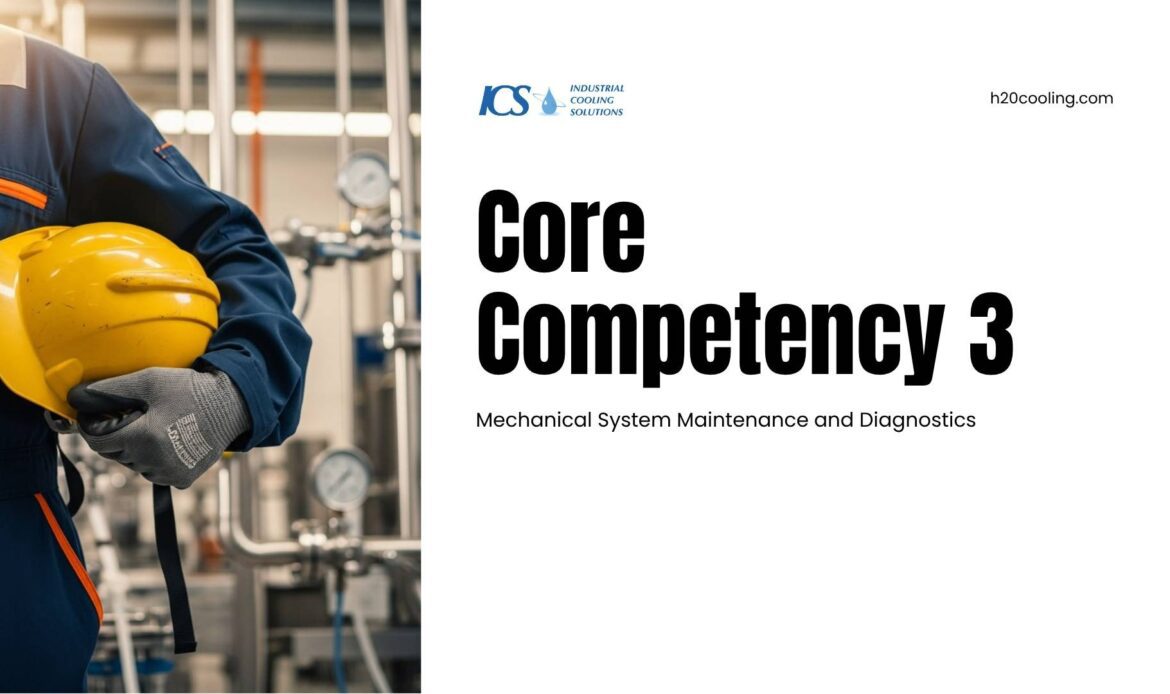
Vibration analysis serves as a critical troubleshooting tool. Operators must check and interpret localized fan deck velocity and displacement shifts. They must identify early structural indicators of blade pitch imbalances, cracked fan hubs, or loose gearbox anchors. Catching these harmonic variations early prevents sudden physical failure.
Electrical profiling is equally important. Technicians should use infrared thermography and ammeter logging on fan motor leads. This practice helps identify electrical winding deterioration or mechanical friction before catastrophic damage occurs. Proper maintenance extends the life of the entire function.
Core Competency 4: Advanced Automation, SCADA, and Security
Modern cooling towers integrate heavily with building management systems and SCADA networks. Operators must optimize Variable Frequency Drive (VFD) technology. They should move away from binary motor cycles. You must train operators to configure smooth fan speed ramping based on fluctuating cold-water basin temperatures.
Data verification and calibration protect the central automation loop. Operators must standardize calibration intervals for RTD sensors, flow meters, and conductivity probes. This diligence prevents data drift and ensures reliable operation.
Digital security is now an operational requirement. Industrial networks often face external probing. Operators must understand the importance of performing security verification on digital interfaces. A robust security service blocks malicious bots from accessing the control network. If a system prompts a technician to respond to a ray ID or complete a waiting page challenge, they must know how to proceed. Once the interface displays a successful verification message, the operator can safely click continue and access the control page. Proper security verification ensures that only authorized practitioners involved in facility management can alter critical setpoints.
Core Competency 5: Biosafety Compliance and High-Risk Safety
Biosafety compliance requires rigorous adherence to ASHRAE Standard 188 protocols. Operators must maintain detailed operational logging of continuous biocide injection cycles. They must document residual halogen counts and execute quarterly sanitization procedures to counter Legionella proliferation.
High-risk industrial safety training workflows are non-negotiable. Fan Stack Lock-Out/Tag-Out (LOTO) procedures safeguard technicians from aerodynamic windmilling. Wind currents over idle fan stacks can cause dangerous rotation. Operators must implement clean LOTO boundaries to protect themselves.
Confined space entry regulations govern hot and cold basin deep cleaning. Instructors must describe the comprehensive permit compliance parameters required for internal fouling inspections. These protocols ensure safe access to enclosed areas within the construction layout.
Structured Operator Competency Matrix
| Key Competency Area | Standard Field Task | Objective Performance Criteria | Critical Failure Risk if Lacking |
| Thermal Performance Monitoring | Approach and Range calculation | Identify thermal anomalies within ±0.5 °F of design specifications | Unchecked chiller efficiency degradation; high energy costs |
| Water Chemistry Management | Cycles of Concentration (CoC) adjustments | Maintain target water mass balance and blowdown metrics | Accelerated scaling or excessive water and chemical waste |
| Mechanical System Diagnostics | Fan deck vibration evaluation | Detect harmonic variations before alarm thresholds trip | Catastrophic fan blade throw or total gear drive failure |
| Safety & Biosafety Compliance | ASHRAE 188 / LOTO execution | Implement clean LOTO boundaries and document precise biocide residuals | Structural bio-contamination or severe personnel injury |
You can use the following matrix as a practical reference guide to evaluate the capabilities of your maintenance team.
- Thermal Performance Monitoring: Operators must calculate Approach and Range. They must identify thermal anomalies within 0.5 degrees Fahrenheit of design specifications. Lacking this skill leads to unchecked chiller efficiency degradation and high energy costs.
- Water Chemistry Management: Operators must adjust Cycles of Concentration. They must maintain target water mass balance and blowdown metrics. Failure to do so causes accelerated scaling, corrosion, and excessive chemical waste.
- Mechanical System Diagnostics: Operators must evaluate fan deck vibration. They must detect harmonic variations before alarm thresholds trip. Ignoring these warnings risks catastrophic fan blade throw or total gear drive failure.
- Safety and Biosafety Compliance: Operators must execute ASHRAE 188 and LOTO protocols. They must document precise biocide residuals. A lack of compliance invites structural bio-contamination or severe personnel injury.
Certification Frameworks and Industry Standards
Aligning internal curricula with external testing criteria provides verified operational consistency. Independent performance metrics offer immense value to industrial facilities. You should structure ongoing operator competency modules to secure specialized maintenance credentials over time.
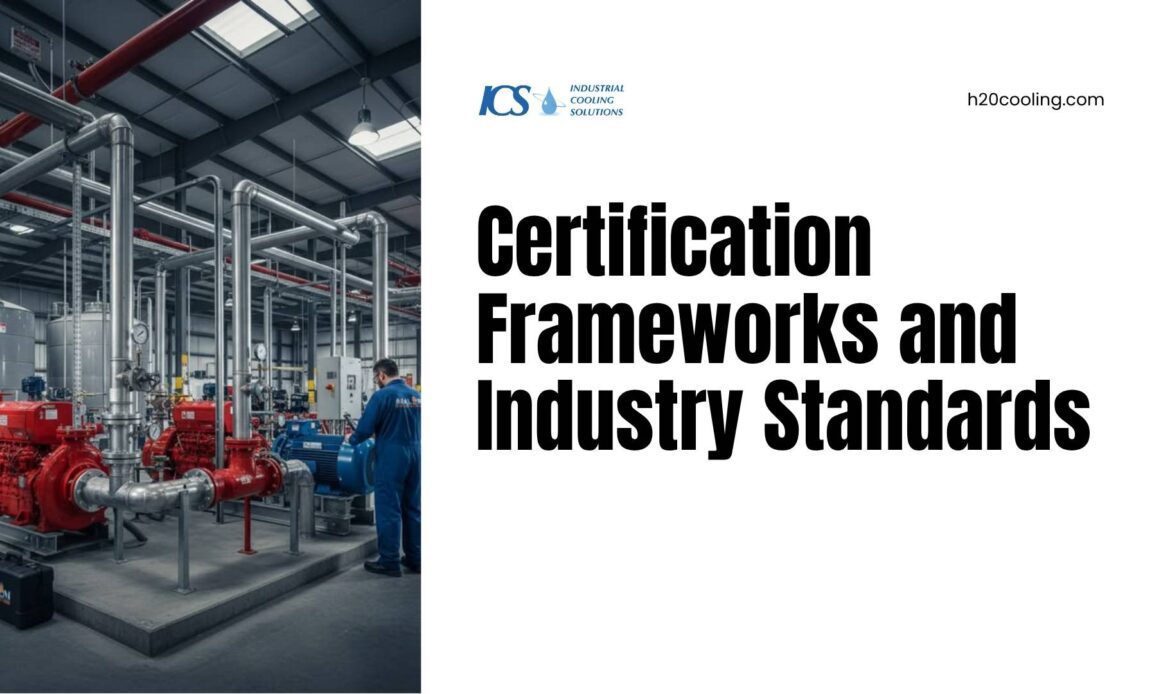
Practitioners must understand CTI Standard 201. Instructors should teach operators the applicable design constraints and verified performance ratings established by the Cooling Technology Institute. When operators obtain these certifications, it verifies their expertise and elevates the standard of care for your buildings.
You can display these credentials on your company website to demonstrate your commitment to excellence. As your team completes each online module, they build a comprehensive understanding of the systems they manage.
Conclusion: Driving Operational Resilience
Upgrading the physical components of your cooling towers only addresses half of the operational equation. True thermal efficiency demands a highly skilled workforce. When you invest in comprehensive cooling tower operator training, you transform your maintenance team from reactive technicians into elite efficiency managers.
Are you ready to optimize your thermal assets? Contact Industrial Cooling Solutions today to deploy a site-specific, high-performance training program tailored to your unique facility. Assess your current competency matrix and take the first step toward operational resilience.
Frequently Asked Questions
What does cooling tower operator training include?
Comprehensive cooling tower operator training includes essential modules on thermodynamic principles, water treatment, and mechanical maintenance. Operators learn to calculate thermal metrics and perform security verification on digital controls. This foundational understanding ensures the efficient operation of your systems. By mastering these core competencies, your practitioners can confidently manage thermal assets and prevent costly downtime.
Why is water treatment important for cooling towers?
Effective water treatment prevents mineral scaling, corrosion, and biological growth within cooling towers. Operators learn to balance water chemistry and control cycles of concentration to minimize waste. Proper chemical control protects internal components and maintains peak thermal efficiency. When practitioners understand these fundamentals, they protect the infrastructure and significantly reduce overall raw water consumption.
How does routine maintenance impact cooling tower efficiency?
Routine maintenance directly drives the efficient operation of cooling towers. Troubleshooting mechanical systems early allows operators to detect fan vibration or gear drive issues before catastrophic failure occurs. Training operators to monitor air circulation and verify structural integrity extends equipment life. A proactive maintenance strategy ensures your thermal assets deliver consistent performance while minimizing unexpected repair costs.
Can practitioners complete cooling tower operator training online?
Yes, you can easily purchase a comprehensive online course for your maintenance team. The course materials cover critical troubleshooting techniques, safety protocols, and automation control systems. An online format allows practitioners to review the information at their own pace. Once they complete the modules, operators obtain applicable credentials that verify their readiness to manage thermal systems.
Why is security verification necessary for cooling tower systems?
Modern cooling towers rely on digital automation and control systems that require robust digital security. Performing security verification blocks malicious bots from accessing sensitive building networks. Operators must understand how to navigate waiting page prompts to securely verify their identity. A successful verification ensures that only authorized practitioners involved in facility management can alter critical thermal parameters.