

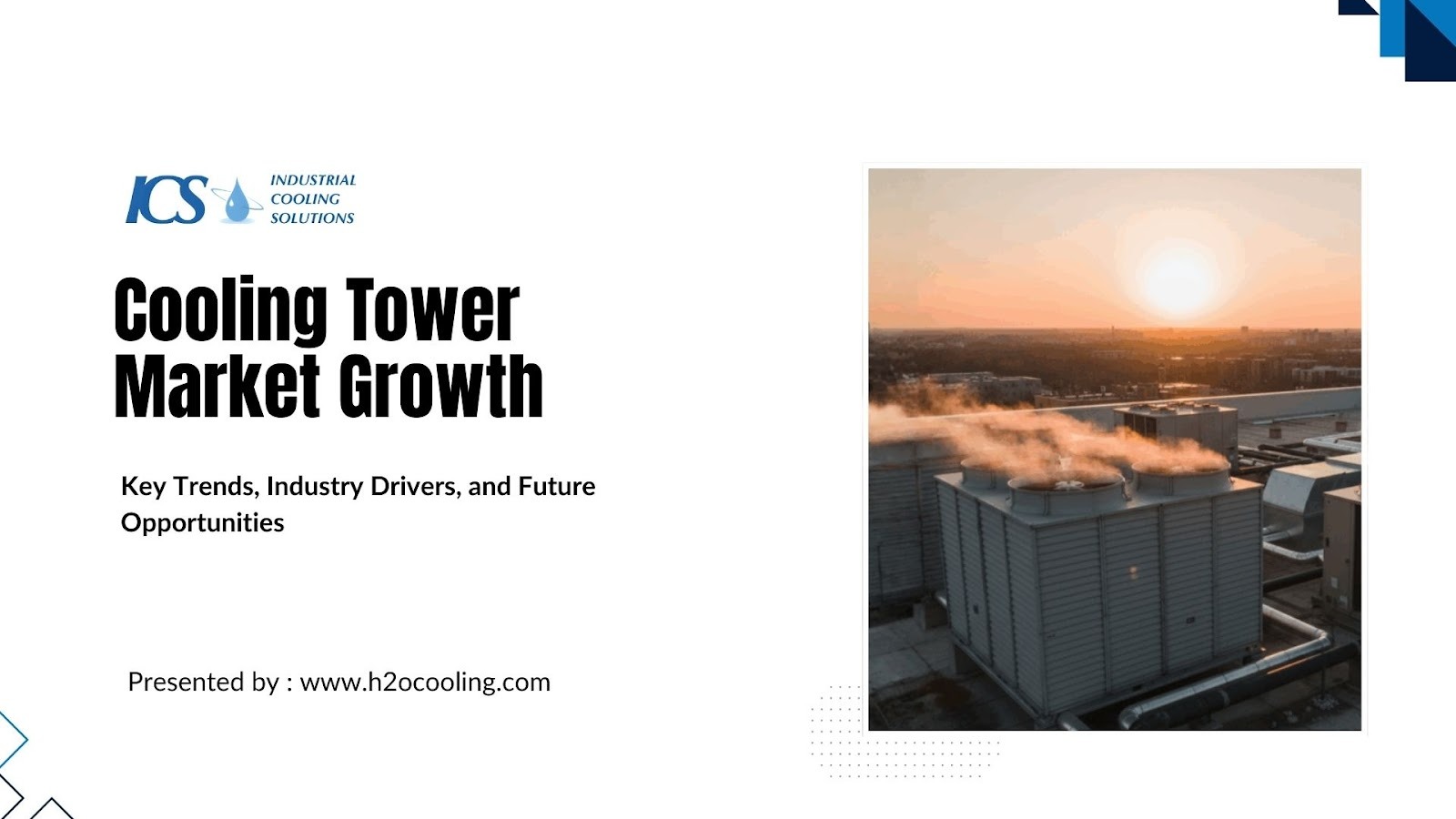
Cooling towers are the backbone of industrial thermal management. From power plants and petrochemical facilities to data centers and HVAC systems, they regulate heat across some of the world's most critical infrastructure.
As the global cooling tower market size continues to expand, driven by rising industrial activity and surging digital infrastructure, these systems are attracting renewed investment and technological advancement.
The cooling tower market growth story is not simply about more units being installed. It reflects a broader transformation in how industries approach energy efficiency, environmental compliance, and operational reliability.
Three forces are reshaping the global cooling tower market trends: the push for energy-efficient cooling solutions, the acceleration of digital monitoring technologies, and tightening environmental regulations.
Cooling Tower Market Size and Growth Forecast
The numbers tell a compelling story. According to Mordor Intelligence, the global cooling tower market is valued at approximately USD 4.59 billion in 2026 and is projected to reach USD 5.89 billion by 2031, growing at a compound annual growth rate (CAGR) of 5.09%. This steady upward trajectory reflects strong cooling tower industry growth across multiple end-use sectors.
Rising Industrial Infrastructure
Industrial expansion, particularly across the Asia Pacific, Southeast Asia, and parts of Africa, is generating consistent demand for new cooling infrastructure.
Heavy investment in manufacturing parks, chemical processing facilities, and power generation assets in countries like India, China, Vietnam, and Indonesia is fueling cooling tower market growth, as these facilities all require large-scale thermal management systems.
Increasing Demand for Energy-Efficient Cooling
Operational cost pressures and regulatory mandates are pushing facility managers toward hybrid, dry, and plume-reduction cooling designs. These systems consume less water and energy without sacrificing thermal performance.
Facilities that once relied on conventional evaporative towers are now retrofitting or replacing them with more efficient alternatives to meet both financial and environmental targets.
Digital Monitoring and Smart Cooling Systems
Artificial intelligence, the Internet of Things (IoT), and predictive maintenance platforms are changing how cooling towers are managed. Real-time monitoring systems detect performance deviations before they become failures.
Automated controls optimize fan speeds, water flow rates, and chemical dosing in response to ambient conditions. The integration of these smart technologies is a significant factor in the cooling tower market growth, leading to improved uptime, reduced maintenance costs, and better energy utilization across the asset lifecycle.
Key Factors Driving Cooling Tower Market Expansion
Several structural forces are fueling the strong demand for industrial cooling towers across global markets. Each factor reinforces the others, collectively driving the ongoing cooling tower market growth.
Industrialization Across Emerging Economies
Emerging markets are undergoing rapid industrialization, which is driving significant demand for cooling towers. This growth is not just about building individual factories, but about creating entire industrial ecosystems with complex cooling needs.
This expansion translates into sustained, long-term demand for new installations and ongoing maintenance, directly fueling the cooling tower market growth.
Key drivers include:
- Special Economic Zones (SEZs): These dedicated areas attract concentrated industrial activity, all requiring robust cooling infrastructure.
- Export-Oriented Manufacturing: As countries become global manufacturing hubs, the need for process cooling in factories escalates.
- Energy Infrastructure Projects: New power plants and energy facilities are major consumers of cooling tower technology to manage heat generation.
Data Center Cooling Demand
The rise of hyperscale cloud computing and AI workloads is creating immense heat, making data center cooling tower systems essential for tech companies. As the digital landscape expands, the demand for efficient and powerful cooling solutions is skyrocketing to prevent overheating and ensure operational stability.
- AI and Cloud Computing: The intense processing power required for AI model training and cloud services generates massive amounts of heat, necessitating high-capacity cooling.
- Mission-Critical Infrastructure: Data centers are the backbone of the digital economy, and their cooling systems are vital for maintaining uptime and reliability.
- Massive Cooling Requirements: A single hyperscale data center's cooling needs can be comparable to those of a mid-sized power plant, highlighting the scale of the challenge.
Growing Demand from Data Centers and Power Generation
The intersection of digital infrastructure and energy generation is creating some of the most demanding cooling requirements the market has ever seen.
High-Capacity Cooling Requirements
Large-scale facilities, particularly those requiring above 20 MW of cooling capacity, are driving demand for counterflow cooling towers and, in some cases, seawater-based cooling systems.
These installations are engineered for continuous, high-load operation where any thermal inefficiency translates directly into performance degradation or equipment damage.
Reliability and Operational Efficiency
For data centers and power plants, cooling system downtime is not an acceptable outcome. Redundancy planning, scheduled maintenance cycles, and real-time performance monitoring are standard requirements.
Operators are increasingly selecting cooling tower providers based on demonstrated uptime records and the availability of comprehensive service agreements.
Environmental Regulations Transforming Cooling Tower Design
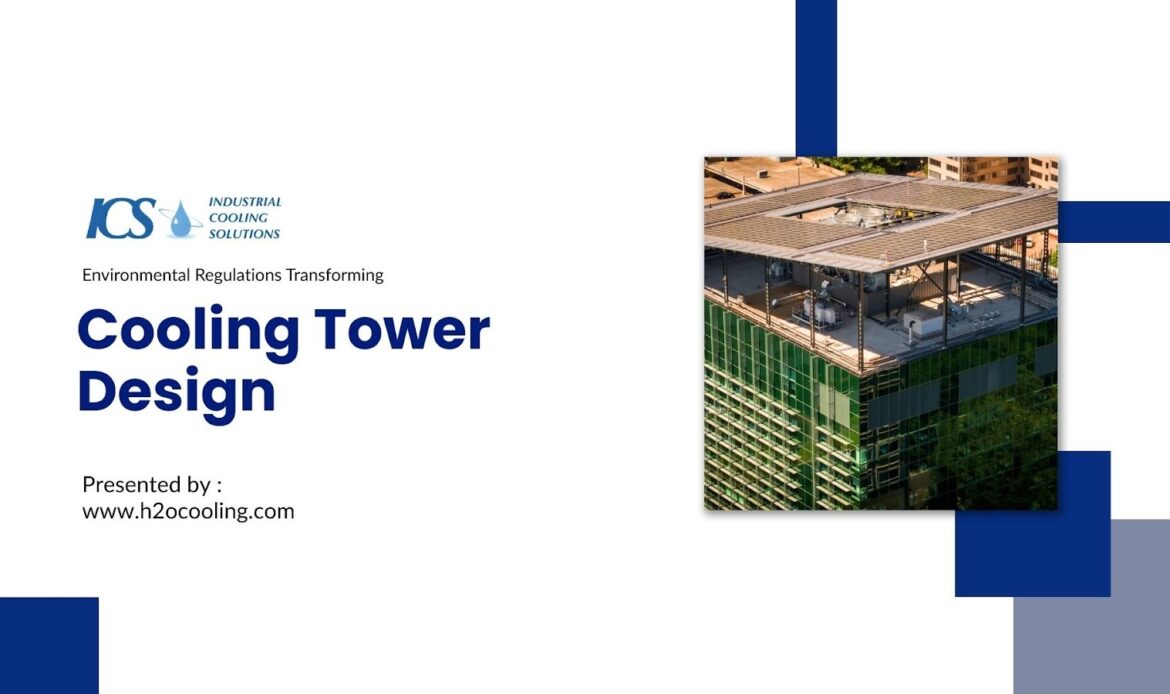
Regulations governing water use, energy consumption, and material safety are accelerating the adoption of next-generation cooling tower technologies. Compliance is no longer optional—it is a core design requirement.
Water Conservation Requirements
To comply with water conservation regulations, many facilities are turning to advanced cooling tower designs. These systems not only meet stringent environmental standards but also offer long-term operational savings, particularly in water-scarce areas.
- Closed-loop and hybrid systems: These designs dramatically lower water consumption compared to traditional open-circuit models, making them essential in regions with water stress or strict discharge rules.
- Regulatory guidance: The US Environmental Protection Agency (EPA) sets industrial water efficiency standards that guide cooling system design choices across North America, promoting more sustainable practices.
Energy Efficiency Standards
Modern cooling towers are engineered to minimize electricity usage, a crucial factor considering that most facilities operate at partial load for the majority of their operating hours.
- Variable-speed fans: These adjust their speed to match the cooling demand, significantly cutting down on electricity consumption during periods of lower load.
- Low-drift nozzles: These minimize water loss and the energy needed to pump replacement water, contributing to overall system efficiency.
- Aerodynamically optimized fill media: This design maximizes the surface area for heat exchange, allowing the system to cool more effectively with less energy input.
PFAS-Free Materials
Growing awareness of per- and polyfluoroalkyl substances (PFAS) has prompted manufacturers to develop alternative construction materials for cooling tower components. Sustainability-focused procurement policies and tightening chemical safety regulations are making PFAS-free designs the new standard for responsible cooling tower construction.
Cooling Tower Market Segmentation
Understanding the structure of the cooling tower market forecast 2031 requires examining how demand breaks down across flow types, cooling methods, capacity ranges, and application sectors.
By Flow Type
Crossflow towers direct air horizontally across a vertical water stream, making them easier to maintain due to accessible fill media. Counterflow towers force air upward against downward-flowing water, delivering greater thermal efficiency in a more compact footprint. Each design suits different site constraints and performance requirements.
By Cooling Method
- Evaporative (wet) cooling remains the dominant technology due to its high thermal efficiency and cost-effectiveness in humid climates.
- Dry cooling eliminates water consumption, making it ideal for arid regions, though at a higher capital cost and reduced efficiency in hot weather.
- Hybrid cooling combines both methods, switching between wet and dry operation depending on ambient conditions and water availability.
By Capacity
- Below 5 MW: Suited for commercial HVAC, light manufacturing, and small process industries.
- 5–20 MW: Common in medium-scale industrial facilities and regional power generation.
- Above 20 MW: Required for hyperscale data centers, large power plants, and heavy petrochemical processing.
By Application
Power plant cooling tower demand represents one of the largest application segments globally. Additional key markets include petrochemical refining, commercial HVAC, data center infrastructure, pharmaceutical manufacturing, and food processing.
Each application brings distinct requirements around water quality, thermal load, and regulatory compliance.
Regional Cooling Tower Market Analysis
Regional dynamics shape how the global market develops, with each geography presenting distinct growth drivers and technology preferences.
North America
The United States and Canada are investing heavily in data center construction and refinery modernization. Low-drift cooling systems are increasingly required by state and federal environmental regulations.
The push toward energy efficiency is also driving replacement cycles for older open-circuit towers with hybrid or closed-loop alternatives.
Europe
European demand is shaped by district energy networks, strict EU environmental directives, and the seasonal variability of industrial cooling needs. Countries with ambitious decarbonization targets are investing in heat recovery systems that integrate with cooling tower operations, creating new efficiency opportunities for facility operators.
Asia Pacific
Asia Pacific leads global cooling tower adoption by volume. Rapid industrial cooling tower demand growth in China, India, and Southeast Asia reflects massive investments in manufacturing, petrochemical production, and power infrastructure. Hybrid cooling tower adoption is accelerating as water stress becomes a growing concern in many sub-regions.
Middle East & Africa
Water scarcity fundamentally shapes cooling tower strategy across the Middle East and North Africa. Dry cooling and seawater-based cooling systems are common in desalination plants and solar energy facilities.
As the region diversifies its economy beyond oil, new industrial and commercial developments are creating fresh demand for advanced thermal management solutions.
Leading Cooling Tower Companies in the Global Market
The competitive landscape of the cooling tower industry combines established global manufacturers with specialized service providers, each addressing different aspects of the market.
Major Cooling Tower Manufacturers
What does the manufacturer landscape look like at a global scale? These companies define the benchmarks for performance, reliability, and innovation.
- H2ocooling: A leading provider of industrial cooling solutions, specializing in cooling tower rehabilitation, maintenance, and performance optimization. The company focuses on enhancing operational efficiency, ensuring regulatory compliance, and extending the lifespan of cooling towers.
- SPX Technologies, Inc.: A globally recognized leader in fluid handling and cooling solutions, offering a broad portfolio of industrial and HVAC cooling towers.
- Baltimore Aircoil Company, Inc. (BAC): Known for evaporative cooling and thermal storage systems, with a strong presence across North American and international markets.
- EVAPCO, Inc.: Specializes in evaporative heat transfer equipment, widely used in commercial and industrial refrigeration applications.
- Johnson Controls International plc: Delivers integrated building technologies and cooling infrastructure, with a significant HVAC cooling tower portfolio.
- Hamon and CIE (John Cockerill SA): A major player in large-scale cooling systems for power generation and industrial applications.
- Babcock & Wilcox Enterprises, Inc.: Provides cooling tower solutions for power plants and large industrial facilities.
- ENEXIO Management GmbH: Focuses on natural draft and mechanical draft cooling towers for power generation.
- Brentwood Industries, Inc.: A leading supplier of fill media, drift eliminators, and structural components for cooling tower manufacturers worldwide.
- Thermax Ltd.: An Indian multinational offering cooling towers and energy solutions across Asia and global markets.
- Kelvion Holding GmbH: Specializes in heat exchangers and industrial cooling systems across multiple sectors.
- Paharpur Cooling Towers Ltd.: One of the largest cooling tower manufacturers in India with significant regional market presence.
- Liang Chi Industry Co., Ltd.: A Taiwan-based cooling tower manufacturer serving Asian and international markets.
- Star Cooling Towers Pvt. Ltd.: An Indian manufacturer providing FRP and RCC cooling towers to industrial clients.
- Kimre, Inc.: Produces mist eliminators, tower fill, and air pollution control products for cooling tower applications.
- SPIG S.p.A. (Babcock & Wilcox): An Italian firm specializing in large-scale cooling systems for power and industrial sectors.
- Mesan Group: Provides cooling tower equipment and industrial thermal solutions across multiple global regions.
Final Thoughts
The cooling tower market growth trajectory through 2031 reflects something larger than a single product category expanding. It mirrors the global economy's deepening dependence on reliable, efficient, and environmentally responsible thermal infrastructure.
From data center cooling tower systems handling AI-driven workloads to power plant cooling tower demand fueled by new energy capacity, the market is evolving in response to forces that show no sign of slowing.
Global cooling tower market trends point toward smarter systems, tighter regulations, and greater demand for specialist expertise. Companies that combine manufacturing quality with service capability—and that place sustainability at the center of their value proposition—will be best positioned to lead.
The future belongs to those who treat cooling infrastructure as a strategic asset worthy of continuous investment and expert stewardship.
Frequently Asked Questions
What is the global cooling tower market size?
According to Mordor Intelligence, the global cooling tower market is valued at approximately USD 4.59 billion in 2026 and is forecast to reach USD 5.89 billion by 2031, growing at a CAGR of 5.09%.
Which industries use cooling towers the most?
Power generation, petrochemical refining, data centers, pharmaceutical manufacturing, commercial HVAC, and food processing are the primary industries driving cooling tower demand globally.
How are environmental regulations affecting cooling tower design?
Regulations focused on water conservation, energy efficiency, and material safety are accelerating adoption of closed-loop, hybrid, and PFAS-free cooling tower designs. Compliance requirements vary by region but are consistently tightening across major markets.
What are the latest innovations in cooling tower technology?
Key innovations include AI-powered predictive maintenance, IoT-based real-time monitoring, digital twin modeling, hybrid cooling architectures with automated switching, corrosion-resistant composite materials, and advanced plume control systems.