

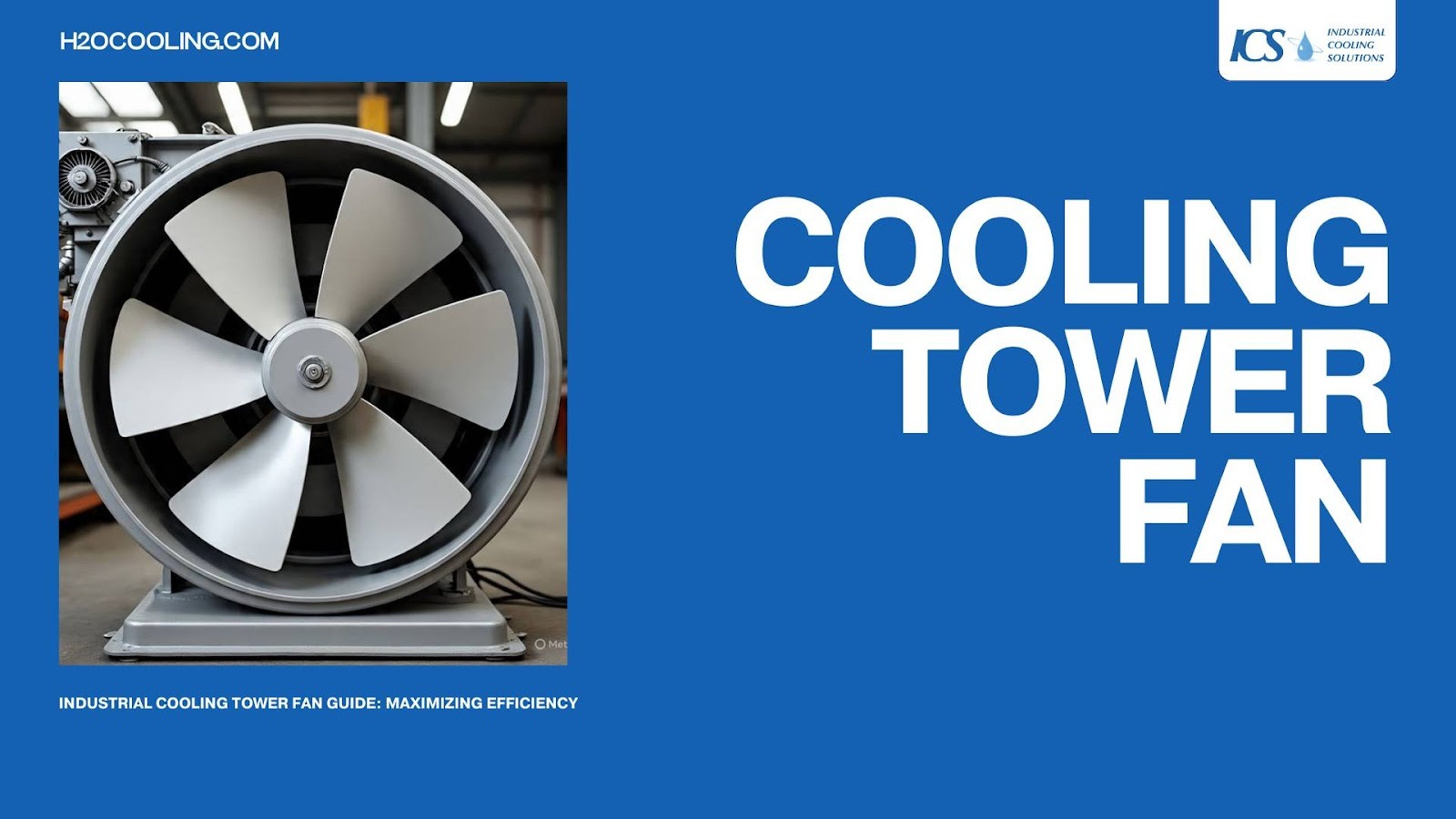
The industrial cooling tower fan acts as the lungs of your thermal rejection system. It is the single most important mechanical component for maintaining optimal temperatures. Without proper air movement, even the most advanced heat exchangers will fail to perform.
However, moving air is only part of the equation. A modern engineering standard demands more than simple air movement. It requires optimized pressure management, precision balancing, and strategic material selection.
This guide will walk you through the science of airflow, material comparisons, and proactive maintenance strategies. You will learn exactly how to transform your cooling tower from a simple utility into a highly efficient profit center.
The Science of Airflow: How Axial Fans Drive Efficiency
To understand cooling tower performance, you must first understand how axial fans operate. These mechanical workhorses move large volumes of cool air parallel to the rotating shaft.
The Role of the Axial Flow Fan
Axial fans draw ambient air through the tower to evaporate a small portion of the recirculating water. This linear airflow must overcome internal system resistance. The design of the fan directly impacts how effectively it pushes air through the water droplets and fill media. The entire system's cooling power depends on this fundamental process of circulating air.
CFM vs. Static Pressure
Many operators focus solely on Cubic Feet per Minute (CFM). However, a higher CFM does not always guarantee better cooling. If the fan cannot overcome the "pressure drop" created by the heat exchanger or the fill media, the air will stall. You need a fan that delivers the right balance of raw airflow and static pressure capability to achieve effective cooling.
The "Approach" Connection
Fan performance directly dictates your cooling tower approach. The approach is the difference between the cold water temperature leaving the tower and the ambient wet-bulb temperature. A highly efficient fan pulls enough air to shrink this temperature gap, ensuring optimal heat rejection for your industrial processes.
Material Science: FRP vs. Aluminum Blades
The materials you choose for your fan blades dictate the lifespan and efficiency of your tower. Operators face a distinct choice between standard metals and advanced composites.
The "Rust Tax" and Corrosion
Cooling towers operate in wet, chemical-heavy environments. Aluminum fan blades often suffer from galvanic corrosion and severe pitting. This degradation alters the aerodynamic profile of the blade, forcing the motor to work harder. We call this the "rust tax," and it silently consumes your energy budget.
FRP (Fiberglass Reinforced Plastic) Advantages
Upgrading to FRP blades offers significant mechanical advantages:
- Weight-to-Strength Ratio: FRP is incredibly strong but weighs significantly less than solid metal. This reduces the startup torque on the cooling tower fan motor, which extends the life of your entire drive system.
- Aerodynamic Flexibility: Manufacturers can mold FRP into complex, "variable chord" shapes. Aluminum extrusion cannot replicate these twisted, highly efficient airfoil designs.
- Infinite Fatigue Life: Composite blades easily outperform metals in the cyclic loading environment of a cooling tower. They flex without suffering from metal fatigue.
- Leading Edge Protection: High-quality FRP blades feature nickel-tipping and specialized coatings. These additions provide vital erosion resistance against constant water droplet impacts.
Key Mechanical Components: The Power Train
The fan blade relies on a robust mechanical power train to function correctly. Understanding these components helps you make better upgrade decisions.
The Cooling Tower Fan Motor
The motor is the heart of the system. Operators typically choose between Totally Enclosed Fan Cooled (TEFC) motors and premium efficiency models. Premium efficiency motors feature better winding designs and higher-grade materials, which drastically reduce heat loss and lower electrical consumption. This smart fan technology is a core part of optimizing performance.
Drive Systems
The motor power must transfer to the fan hub. Engineers typically use two methods:
- Gear reducers: Large-diameter fans require precision speed reduction. Gear reducers step down the high speed of the motor to the high-torque, low-speed rotation required by massive axial fans.
- Belt Drives: Smaller HVAC cooling towers often use belt drives. These provide a cost-effective, easy-to-maintain solution for lighter mechanical loads.
The Carbon Fiber Driveshaft
The driveshaft connects the motor (mounted outside the airstream) to the gearbox (mounted inside). Upgrading to a carbon fiber driveshaft provides massive benefits. The dramatic weight reduction prevents transmission vibration, eliminates the need for intermediate bearings, and drastically reduces bearing failure rates.
Operational Comparison: Technical Specifications
Below is a table comparing the key technical specifications of Aluminum Fan Blades, Standard FRP Blades, and High-Efficiency Aero-FRP Blades:
| Feature | Aluminum Fan Blades | Standard FRP Blades | High-Efficiency Aero-FRP (ICS Standard) |
| Corrosion Resistance | Low (Needs Coatings) | High | Excellent (Gel-Coated) |
| Weight | Moderate | Light | Ultra-Light |
| Noise Profile | High (Vibration-prone) | Moderate | Low (Aero-optimized; quiet fan) |
| Efficiency (Static) | 20% – 30% | 40% – 50% | 60% – 75% |
| Maintenance Need | High (Re-balancing) | Low | Minimal |
Performance Optimization: The ROI of "Smart" Ventilation
You can maximize efficiency by adding smart controls and optimizing mechanical clearances.
Variable Frequency Drives (VFDs)
VFDs capitalize on the "Cube Law" of fans. The power required to run a fan is proportional to the cube of its speed. Therefore, if you reduce the fan speed by just 20%, you will achieve a 50% reduction in energy consumption. This allows you to fine-tune different settings for optimal performance.
Variable Flow Strategies
Industrial cooling systems automation allows you to match fan speed to real-time ambient temperature readings. When the ambient temperature drops at night, the automated system slows the fan down. This ensures you do not waste electricity overcooling the water.
Tip Clearance Optimization
The gap between the tip of the blade and the cooling tower ventilation system stack is a critical measurement. A gap larger than one inch allows air to slip backward over the blade tip. This recirculation is the primary source of energy waste. Tightening the tip clearance forces all the air up and out of the tower, maximizing efficiency.
Proactive Cooling Tower Fan Maintenance
Do not wait for a mechanical failure to service your tower. Proactive maintenance ensures longevity and protects your capital investment.
Vibration Analysis
Install accelerometers on your gearboxes and motors. These sensors detect microscopic bearing wear and gear pitting long before a catastrophic failure occurs. This allows you to save time and prevent costly shutdowns.
Pitch Angle Balancing
Every blade must pull an equal load. Technicians must set the pitch angle of each blade within an accuracy of exactly 0.5 degrees. Improper pitch angles cause extreme hub stress and severe tower vibration. It is critical to double-check this setting during maintenance.
The "5-Minute" Visual Audit
You should perform a visual inspection regularly. Look for the following indicators:
- Check the fan blades for leading-edge erosion or cracks.
- Inspect the gearbox for "weeping" oil seals.
- Verify that the tip clearance remains uniform around the entire cylinder.
- Listen closely for unusual harmonic resonance at specific speeds or RPMs.
Troubleshooting Common Fan Issues
When problems arise, accurate troubleshooting prevents extended downtime.
- Excessive Noise: Determine the exact source. High-pitched squeals often indicate bearing failure in the motor. Grinding noises point to gearbox damage. A pulsating sound usually means aerodynamic stall caused by incorrect blade pitch. A high noise level is a clear sign that something is wrong.
- Reduced Airflow: Do not immediately blame the fan. Check for clogged drift eliminators or fouled fill media. If the air path is clear, verify the fan pitch and ensure the motor is spinning at the correct speed.
- Frequent Belt or Bearing Failure: If you replace belts and bearings constantly, you likely have a hidden mechanical misalignment. Laser alignment of the driveshaft and pulleys will eliminate the root cause of these repetitive failures.
Conclusion: Transforming Your Tower from a Utility to a Profit Center
Energy-efficient Cooling Tower Fan systems drastically reduce the total cost of ownership for your cooling infrastructure. By eliminating the "rust tax," implementing VFDs, and maintaining tight mechanical tolerances, you reduce electrical draw and prevent costly unplanned outages. Upgrading your Cooling Tower Fan technology gives you the power to enhance system performance and optimize energy use.
Do not let outdated ventilation equipment drain your operational budget. Review your current fan specifications and consider a modern FRP retrofit. Partnering with specialized engineering services for thermal performance audits will reveal your exact energy savings potential.
Take action today with ICS to audit your fan system, upgrade your drive components, and secure your thermal efficiency for the future.
Frequently Asked Questions
What is the role of a cooling tower fan?
A cooling tower fan circulates air to remove heat from water in industrial systems, ensuring efficient thermal performance and energy savings.
Why choose FRP blades over aluminum for tower fans?
FRP blades are lightweight, corrosion-resistant, and have a longer lifespan, making them more efficient and durable than aluminum blades.
How does tip clearance affect cooling tower efficiency?
Minimizing the gap between the fan blade and the tower stack reduces air recirculation, improving airflow and energy efficiency.
What are the benefits of using Variable Frequency Drives (VFDs) in cooling fans?
VFDs optimize fan speeds based on real-time conditions, reducing energy consumption by up to 50% and extending equipment life.
How can I maintain my cooling tower fan for optimal performance?
Regularly check for vibration, blade erosion, and proper pitch angles. Use accelerometers and perform visual audits to prevent failures.