


A cooling tower fan operating with even a slight imbalance poses a serious risk to system reliability, energy efficiency, and overall plant performance. Improper cooling tower fan balancing increases maintenance needs, drives up electricity usage, and shortens the lifespan of critical equipment.
Achieving turbine-grade reliability requires expert techniques and a precision-engineered approach. This guide provides actionable strategies for balancing cooling tower fans, unlocking substantial energy savings, and maximising the performance and reliability of your cooling tower system.
By applying these expert Cooling Tower Fan Balancing techniques, your facility can move beyond reactive repairs to achieve proactive operational excellence. Effective balancing results in immediate and long-term energy savings, reduced maintenance costs, and turbine-grade reliability for your cooling tower system.
This guide explores essential principles of fan dynamics, advanced vibration diagnostics, and the measurable return on investment delivered by professional cooling tower fan balancing.
The Authority Hook: 13 Expert Secrets of Cooling Tower Fan Balancing
Most standard maintenance manuals miss critical steps that are essential for optimal cooling tower fan balancing, energy savings, and achieving turbine-grade reliability.
The expert tips below deliver practical, high-impact strategies to fix the root causes of cooling tower fan vibration and system inefficiency.
13 Game-Changing Tips You Won't Find in a Manual
- The 2X RPM Looseness Check: A vibration signal at twice the fan's running speed (2X RPM) is rarely an imbalance issue. Unbalance manifests at 1X RPM. A strong 2X RPM signal almost always points to structural looseness, such as loose gearbox bolts or a fractured support, which is often misdiagnosed.
- Account for Thermal Alignment Shift: Always perform final alignment checks after the tower reaches its normal operating temperature. Structural supports and components change dimensions as they heat up. This "hot alignment" ensures precision under real-world conditions.
- Correct Pitch-Angle Discrepancy: Use a digital inclinometer to verify that every fan blade has an identical pitch angle. A deviation greater than ±0.5 degrees creates an aerodynamic imbalance. This thrust mismatch generates vibration that cannot be corrected with balancing weights alone.
- Target G2.5, Not G6.3: Most industrial fans are balanced to ISO 1940 Grade G6.3. For low-speed, high-impact cooling tower fans, you should demand a finer balance grade of G2.5. This turbine-grade standard is essential for maximising bearing and gearbox longevity.
- Conduct a Pre-Balancing RCFA: Never attempt to balance a fan without first performing a Root Cause Failure Analysis (RCFA). If the vibration is from debris buildup, clean the blades. If a blade is damaged, replace it. Balancing a compromised component only masks the underlying problem.
- Optimise Fan Tip Clearance: The gap between the fan blade tips and the fan stack is critical. Excessive clearance can reduce airflow efficiency by 15-20%. Insufficient clearance can cause destructive air turbulence and vibration.
- Differentiate Static vs. Couple Unbalance: Use vector analysis to diagnose the type of unbalance. A static unbalance is a simple heavy spot, while a couple unbalance creates a wobble. This diagnosis determines whether a single-plane or a more complex two-plane correction is required.
- Perform Seasonal Trim Balancing: Your fan's balance will shift with the seasons. Changes in air density, humidity, and minor fouling alter the mass distribution across the blades. A small seasonal trim balance maintains peak efficiency year-round.
- Use Specialised Low-Speed Sensors: Standard accelerometers may not capture accurate data on low-speed equipment. Use piezoelectric sensors designed for low frequencies (down to 1.0 Hz or 60 RPM) to obtain the reliable amplitude and phase readings necessary for precision balancing.
- Prioritise Hub over Tip Weights: When possible, add correction weights closer to the fan hub. This practice of mass centralisation minimises the centrifugal forces and mechanical stress exerted on the blade root, which is a common failure point.
- Eliminate the "Balance-Run-Balance" Cycle: Avoid the costly and time-consuming process of trial-and-error balancing. A professional uses influence coefficients to calculate the exact correction weight and its placement, ensuring the problem is solved the first time.
- Understand the 'Zero-Phase' Myth: A phase angle reading indicates the location of the heavy spot. A reading of zero is not a sign of a perfect balance; it almost always signifies a faulty sensor, a data collection error, or an improper setup.
- Inspect Blade Edge Integrity: Carefully check the trailing edge of each fan blade for erosion or delamination. Even minor surface defects disrupt the smooth, laminar airflow, generating high-frequency turbulence, noise, and vibration.
The System Unlocked: Understanding Fan Dynamics
To master cooling tower fan balancing, you must first understand the essential role of the fan in overall cooling tower performance and how unbalance can negatively impact system reliability, energy efficiency, and operational longevity.
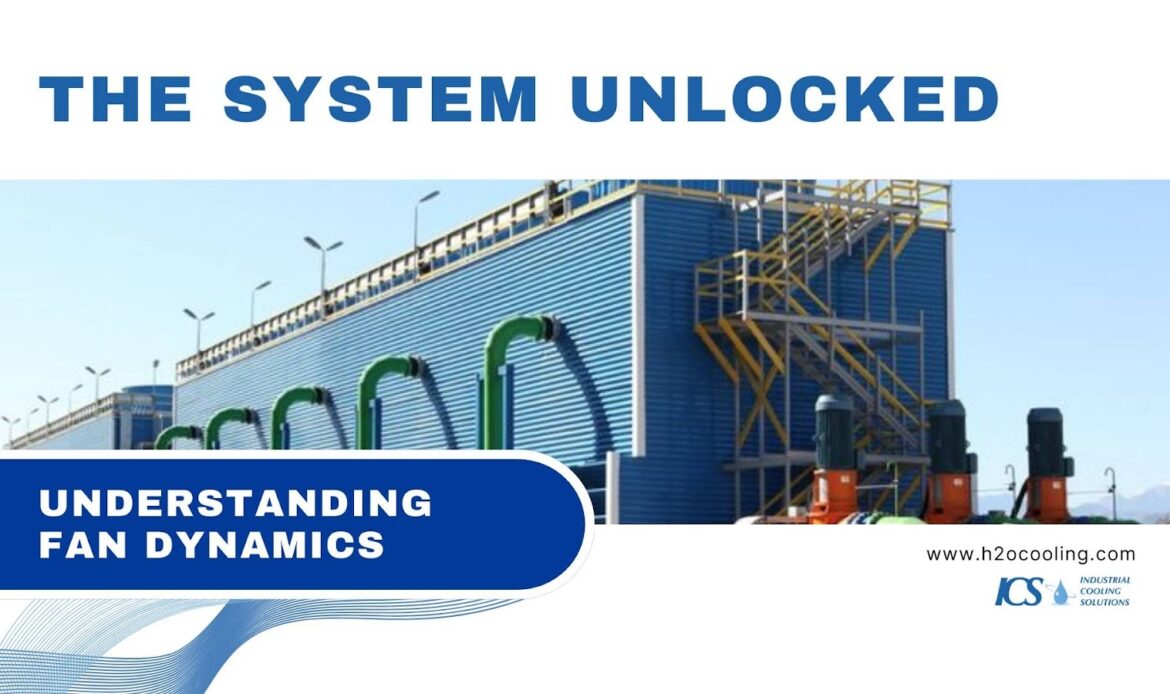
The destructive physics of fan unbalance cause excess vibration, increased maintenance, and higher energy consumption, making precise cooling tower fan balancing critical for facilities seeking consistent energy savings and turbine-grade reliability.
The Critical Function of Cooling Tower Fans
Cooling tower fans are the engines of the evaporative cooling process. In an induced draft system, the fan sits atop the tower, pulling air up through the fill media. In a forced draft system, it is located at the base, pushing air through.
In both cases, the fan's purpose is to create sufficient airflow to evaporate a small portion of the circulating water. This evaporation carries away immense amounts of heat, allowing the system to achieve the design cold water temperature (CWT) needed for industrial processes or HVAC chillers.
Why Unbalance is More Than Just Vibration
An unbalanced cooling tower fan wastes energy, increases maintenance needs, and causes costly downtime. The imbalance creates strong centrifugal forces, even from small mass errors, due to the fan's size and speed.
These forces wear down bearings, gears, and structures, reducing performance and equipment lifespan. Proper fan balancing is crucial for energy savings and long-term reliability.
This compromised state leads to:
- Reduced cooling capacity and higher CWT.
- Increased electrical load on associated equipment like chillers, driving up the plant's overall kW/ton.
- Accelerated wear on mechanical components, leading to premature failure.
Advanced Diagnosis: Reading the Vibration Spectrum
Professional cooling tower fan balancing uses precise tools and techniques to diagnose and fix vibration issues like unbalance and misalignment.
This process saves energy, reduces downtime, and ensures efficient, reliable cooling tower performance.
What Does a Cooling Tower Fan Balancing Look Like?
The gold standard for large cooling tower fans is two-plane dynamic balancing. This method corrects for both static (heavy spot) and couple (wobble) unbalance along the length of the fan shaft assembly.
The process involves these key steps:
- Initial Data Collection: A vibration analyst places sensors on the gearbox or motor bearings to measure the initial vibration amplitude (how much it is shaking) and phase angle (where the heavy spot is located).
- Applying a Trial Weight: A temporary weight of a known mass is attached to a specific location on the fan.
- Calculating the Influence Coefficient: The system is run again, and new vibration readings are taken. By comparing the "before" and "after" data, the software calculates an influence coefficient that shows how the fan assembly responds to a known weight at a known position.
- Applying the Correction Weight: Using the influence coefficient, the analyst determines the precise mass of the correction weight and its exact angular position needed to counteract the imbalance. This weight is then permanently installed.
Key Requirements for Effective Balancing
Optimal cooling tower fan balancing goes beyond adding weights; it requires a full-system approach. Proper balancing reduces vibration, saves energy, and ensures turbine-grade reliability.
By following best practices, facilities can improve efficiency, reduce downtime, and extend equipment lifespan.
- Vibration Analysis Spectrum: A full vibration spectrum is non-negotiable. It allows an analyst to differentiate between unbalance (high peak at 1X RPM), shaft misalignment (high peak at 2X RPM), and structural looseness (multiple harmonics at 1X, 2X, and 3X RPM).
- Bearing Vibration Limits: The goal is to operate well below the "Alert" level defined by ISO 10816 standards for rotating machinery. These standards provide clear limits for acceptable vibration velocity (measured in mm/s or in/s).
The Root Cause: Identifying the Real Problem
Effective reliability programs address the cause, not just the symptom. A Root Cause Failure Analysis (RCFA) should always precede balancing.
For example,
If vibration is caused by ice buildup in cold climates or scale from hard water, balancing is only a temporary fix. The root cause of improper winter operation or inadequate water treatment must be resolved. Likewise, balancing a fan with a cracked blade or a failed bolt is dangerous and ineffective.
The Engineered ROI: Benefits and Compliance
Precision cooling tower fan balancing is a smart investment in energy savings, reliability, and long-term performance. It improves efficiency, cuts costs, extends equipment life, and ensures industry compliance while reducing failures, downtime, and safety risks.
7 Quantified Benefits of Implementing Precision Balancing
Adopting turbine-grade balancing standards delivers measurable improvements across your operation.
| Benefit Area | Operational Impact | Quantifiable Result for Industries |
| Energy Efficiency | Reduces parasitic motor load from fighting vibration. | 15-30% Reduction in fan energy consumption (kWh). |
| Component Life | Drastically reduces dynamic loads on bearings and gears. | 2X to 3X Extension of Mean Time Between Failures (MTBF). |
| Downtime Avoidance | Prevents catastrophic failures and unplanned outages. | Avoids unplanned downtime costs, which can exceed $125,000 per hour. |
| Compliance/Warranty | Adheres to stringent ISO G2.5 balance standards. | Preserves OEM warranties and satisfies insurance requirements. |
| Structural Integrity | Eliminates high-force oscillations on the tower structure. | Prevents cracking and fatigue failure of the fan stack and supports. |
| Noise Reduction | Corrects mass distribution to minimise air turbulence. | Reduces noise pollution and helps maintain OSHA compliance. |
| System Stability | Achieves a stable Cold Water Temperature output. | Improves chiller and process efficiency, boosting overall plant output. |
Uses and Requirements for Cooling Tower Fan Balancing
Precision cooling tower fan balancing is essential for long-term system efficiency and turbine-grade reliability, not just emergency repairs. Facilities must perform cooling tower fan balancing during the following key scenarios to maximise energy savings and ensure optimal operation:
- After any major repair or component replacement on the fan assembly.
- Before the seasonal start-up to correct for any shifts that occurred during shutdown.
- Whenever vibration alarms are triggered by a monitoring system.
Operational Strategies for Zero Vibration
Sustaining peak reliability for your cooling tower fan system requires a proactive, structured approach to cooling tower fan balancing.

Shifting from a "run-to-failure" mindset to a preventative strategy is essential for maximising energy savings, ensuring turbine-grade reliability, and achieving operational excellence.
Consistent, data-driven maintenance of cooling tower fan balancing optimises system performance, extends equipment lifespan, and drives down long-term operational costs.
The 3-Step Strategy for Sustained Reliability
- Quarterly Vibration Monitoring: Implement a routine vibration data collection program. This provides an early warning system to detect developing problems before they escalate.
- Annual Alignment and Pitch Check: Once a year, verify the hot alignment of the motor and gearbox and confirm that all blade pitch angles are identical. This is a critical preventative maintenance task.
- Documented G2.5 Precision Balance: When balancing is required, insist on a final report that documents the achievement of ISO Grade G2.5. This ensures the work was done to a turbine-grade standard.
Conclusion: Continuous Monitoring Integration
The future of cooling tower fan balancing and turbine-grade reliability depends on continuous monitoring integration. Upgrading from traditional periodic inspections to permanently installed wireless vibration sensors delivers real-time detection of cooling tower fan imbalance, abnormal vibration, and potential failures.
By enabling predictive maintenance, these advanced monitoring solutions maximise energy savings, reduce unplanned downtime, and ensure optimal cooling tower performance. Early alerts empower your team to maintain turbine-grade reliability and address issues before they escalate, preventing costly breakdowns and safeguarding your cooling tower investment.
Mastering Cooling Tower Fan Balancing is the key to boosting system efficiency, securing energy savings, and eliminating unnecessary downtime. Apply these expert techniques to ensure turbine-grade reliability and extend the lifespan of your cooling tower assets. Take control, implement precision balancing, and empower your facility for long-term success with H2O Cooling.
Frequently Asked Questions
Why is cooling tower fan balancing important?
Cooling tower fan balancing is crucial for reducing vibration, saving energy, and extending the lifespan of critical components like bearings and gears. It ensures efficient operation and prevents costly downtime.
What are the signs of an unbalanced cooling tower fan?
Common signs include excessive vibration, unusual noise, uneven airflow, and increased wear on mechanical components. These issues can lead to reduced cooling efficiency and higher energy costs.
How often should cooling tower fans be balanced?
Fans should be balanced during major maintenance, after repairs, or when vibration levels exceed acceptable limits. Seasonal checks and regular monitoring can help maintain optimal performance.
What tools are used for professional fan balancing?
Professional fan balancing relies on advanced tools like vibration analysers, piezoelectric sensors, and vector analysis software to diagnose and correct unbalance with precision.
What are the benefits of achieving turbine-grade fan balancing?
Turbine-grade balancing improves energy efficiency, reduces vibration-related failures, minimises downtime, and ensures compliance with industry standards, leading to long-term reliability and cost savings.