

Industrial cooling towers operate for long hours and remain one of the largest consumers of electrical energy in many facilities. When efficiency declines even slightly, the result is higher power costs, increased mechanical stress, and reduced system reliability. Unfortunately, many of these energy losses occur gradually and go unnoticed until operating expenses rise or performance issues appear.
Improving cooling tower energy efficiency requires more than just reducing electricity usage. It directly affects heat rejection capability, equipment lifespan, and the overall stability of industrial processes. Fan systems, heat transfer surfaces, and water quality all play a critical role in how much energy a cooling tower requires to meet demand.
In this blog post, we'll explain how operational efficiency is impacted, where energy losses commonly occur, and what practical steps facility managers can take to reduce power consumption. Discover how strategic operational shifts and smart system upgrades can slash your energy waste and drive down long-term costs.
What Cooling Tower Energy Efficiency Really Means
Many operators confuse efficiency with simple capacity, but true energy efficiency is a measure of how much energy the system consumes to reject a specific amount of heat. In technical terms, engineers look at the ratio of heat rejection (often measured in tons) to the electrical power input (kilowatts). A highly efficient system removes maximum heat with minimal electrical demand.
Inefficiency doesn't just affect your utility bill; it impacts the entire facility.
- Cascading Effect: When a cooling tower struggles to reject heat, downstream compressors and chillers have to work harder, increasing power consumption across the entire cooling loop.
- Primary Energy Consumers: The main energy users within the tower are the fan motors and water circulation pumps.
- Heat Transfer Losses: Energy is also wasted through poor heat transfer. If the fill media is fouled or airflow is restricted, fans must run faster or longer to achieve the desired cooling.
- System-Wide Issue: Ultimately, cooling tower energy efficiency is a result of the entire system's performance, not just one component
Key Factors That Affect Cooling Tower Energy Consumption
Several mechanical and environmental variables determine how much power a cooling tower uses. Identifying these factors helps facility managers diagnose why their energy bills are climbing.
Fan System Performance
The fan system is the primary driver of airflow and, consequently, the largest variable energy consumer in the tower. The design and condition of the fan assembly dictate how much horsepower is required to move air through the tower.
Fans that are poorly pitched or constructed from heavy, outdated materials force the motor to draw more amperage to do the same work.
- Blade Design: Older, heavy metal blades require significant torque to start and maintain speed, whereas modern composite blades reduce this load.
- Pitch Settings: Incorrect blade pitch leads to air turbulence and insufficient airflow, forcing the motor to operate inefficiently.
- Aerodynamics: Poor inlet conditions or obstructions increase static pressure, making the fan work harder to pull air through the fill.
Heat Transfer Efficiency
The core function of the tower is to facilitate heat exchange between water and air. Any barrier to this exchange forces the mechanical systems to consume more energy to bridge the gap.
Over time, the internal surfaces of the tower degrade or become obstructed, which insulates the water from the cooling air.
- Fill Condition: Fouled or damaged fill reduces the surface area available for evaporation, crippling thermal performance.
- Biological Growth: Algae and biofilm act as insulators on heat transfer surfaces, requiring higher fan speeds to compensate.
- Airflow Blockage: Debris accumulation restricts air movement, increasing the fan horsepower needed to maintain proper static pressure.
Water Distribution and Flow Rates
Water must be distributed evenly across the fill media to maximize air-to-water contact. If the distribution system fails to spread water uniformly, parts of the tower run dry while others are overloaded.
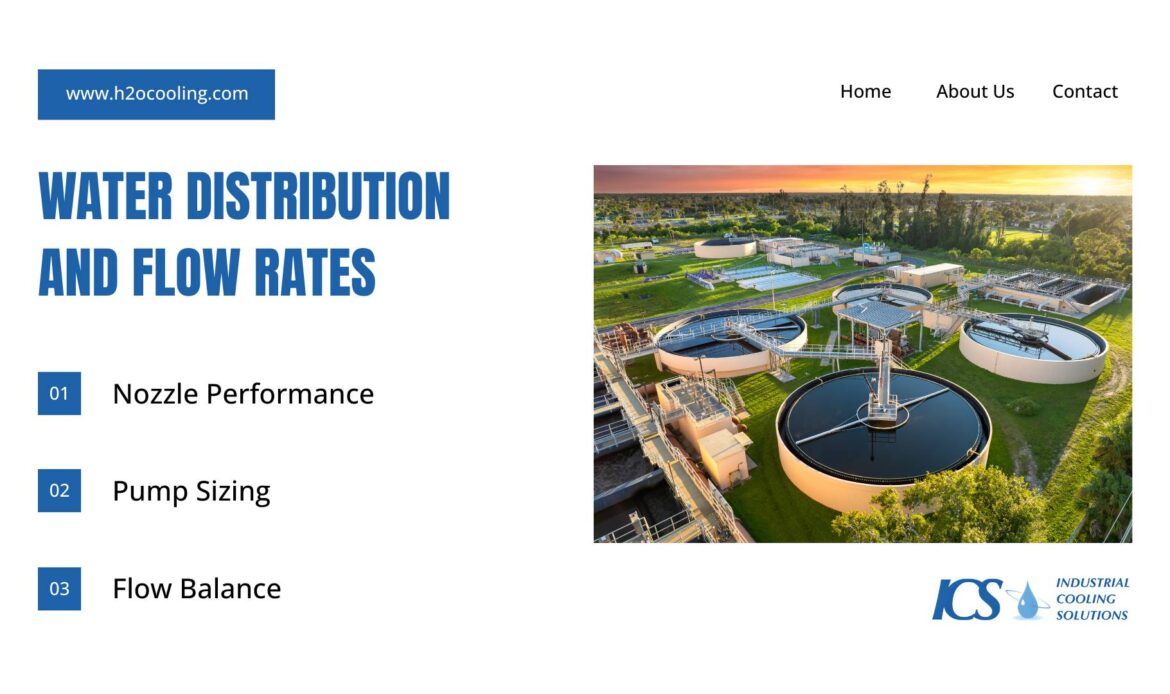
Uneven distribution causes air to bypass the water entirely (short-circuiting), wasting the energy used to move that air.
- Nozzle Performance: Clogged or missing nozzles create dry spots in the fill, significantly reducing cooling capacity.
- Pump Sizing: Over-pumping water through the system wastes electrical energy without providing additional cooling benefit.
- Flow Balance: Poor hydraulic balance forces pumps to operate outside their best efficiency point.
Practical Ways to Improve Cooling Tower Energy Efficiency
Optimizing a cooling tower does not always require a complete replacement. Specific upgrades and operational changes yield substantial energy savings.
Upgrade to High-Efficiency Fan Blades
Legacy fans made of cast aluminum or galvanized steel place a heavy load on mechanical drive systems. Replacing these with modern Fiber Reinforced Polymer (FRP) blades is one of the most effective ways to boost performance.
FRP blades are lighter and designed with advanced airfoils that move more air with less horsepower.
- Reduced Weight: Lighter blades reduce the starting torque required by the motor, lowering peak power demand.
- Better Aerodynamics: Advanced airfoil shapes reduce drag and turbulence, allowing for higher airflow rates at lower energy costs.
- Durability: Composite materials resist corrosion, maintaining their aerodynamic profile longer than metal alternatives.
Install Variable Frequency Drives (VFDs)
Running cooling tower fans at full speed when maximum cooling is not required is a major source of energy waste. A Variable Frequency Drive (VFD) allows the fan motor speed to match the actual heat load of the system.
Because fan power consumption follows the cube law, reducing fan speed by just 20 percent can reduce energy usage by nearly 50 percent.
- Part-Load Efficiency: The VFD slows the fan during cooler weather or reduced process loads, saving massive amounts of power.
- Soft Starts: VFDs ramp up the motor speed slowly, reducing mechanical stress on belts, gears, and couplings.
- Precise Control: The system maintains a tighter leaving water temperature setpoint, improving downstream process stability.
Improve Water Quality Management
Water chemistry is often overlooked as an energy factor, but scaling and fouling are silent efficiency killers. A thin layer of scale on heat transfer surfaces acts as an insulator, forcing the system to work harder.
Implementing a robust water treatment program keeps surfaces clean and maintains optimal heat transfer rates.
- Scale Prevention: Chemical inhibitors prevent minerals from precipitating out of the water and forming hard deposits on the fill.
- Biocides: Controlling biological growth prevents biofilm from clogging the fill and restricting airflow.
- Filtration: Side-stream filtration removes suspended solids that would otherwise settle in the basin or clog spray nozzles.
Optimize Blowdown and Basin Management
Blowdown is the process of removing water with high mineral concentration and replacing it with fresh make-up water. Managing this process correctly is vital for cooling tower energy efficiency because it dictates water conservation and chemical costs.
Operators must balance the cycles of concentration to minimize water waste without allowing dangerous scaling conditions to form.
- Conductivity Control: Automated controllers bleed water based on actual dissolved solid levels rather than a fixed timer.
- Temperature Management: Keeping basin water within design parameters prevents the system from working against itself.
- Recirculation Prevention: Proper basin design prevents warm discharge air from being drawn back into the tower intake.
Maintenance Practices That Directly Reduce Energy Use
Reactive maintenance waits for failure, whereas proactive maintenance preserves efficiency. A neglected tower will always consume more power than a well-maintained one, regardless of its age.
Regular inspections identify small issues like loose belts or clogged nozzles before they evolve into major energy drains.
- Fill Cleaning: Regularly removing scale and debris from the fill media restores the original heat transfer capability.
- Drift Eliminators: Inspecting and cleaning drift eliminators ensures air leaves the tower freely without carrying excessive water droplets.
- Mechanical Alignment: Properly aligning shafts and pulleys reduces friction losses in the drive train.
- Vibration Analysis: Monitoring vibration helps detect early bearing or gear wear that adds drag to the motor.
When to Consider a Cooling Tower Retrofit or Upgrade
There comes a point where maintenance alone cannot restore a system to the necessary performance levels. Recognizing when a tower has reached the end of its efficient service life is a key financial decision.

Aging towers often suffer from structural deterioration or obsolete component designs that inherently limit cooling tower energy efficiency.
- Rising Power Costs: If energy bills continue to climb despite good maintenance, the technology may simply be outdated.
- Thermal Shortfalls: If the tower cannot maintain cold water temperatures on hot days, it forces chillers to overwork.
- Frequent Failures: Repeated motor or gearbox failures suggest the system is operating under excessive strain.
Measuring and Monitoring Cooling Tower Energy Efficiency
You cannot manage what you do not measure. Establishing a baseline for energy performance allows facility managers to track improvements and justify investments in new technology.
Modern control systems provide real-time data that reveals exactly how much energy is being used per unit of cooling provided.
- kW per Ton: Tracking the kilowatts consumed for every ton of heat rejection provides the clearest metric of efficiency.
- Approach Temperature: Monitoring the difference between the cold water temperature and the wet-bulb temperature indicates the health of the heat transfer process.
- Trend Analysis: Long-term data logging helps identify gradual efficiency degradation that might be missed during daily checks.
- Upgrade Justification: Hard data on energy use makes a compelling business case for installing VFDs or new fan systems.
Conclusion
Improving cooling tower energy efficiency isn’t about a quick fix; it’s about a strategic, holistic approach. By combining smart design, precise control, and regular maintenance, facilities can significantly enhance performance while reducing costs.
Even small inefficiencies, like suboptimal fan performance or heat transfer, can lead to substantial financial losses over time. Proactive facility managers who prioritize system evaluations and follow strict maintenance schedules can achieve immediate power consumption reductions and long-term savings.
This blog explores practical strategies to optimize cooling tower efficiency, ensuring reliable performance and significant energy savings for your facility's operations.
For any cooling tower maintenance, replacement, or new build needs, visit the ICS website to explore our services.
Frequently Asked Question
What is cooling tower energy efficiency?
Cooling tower energy efficiency measures how much electrical power is used to reject a given amount of heat. An efficient tower removes maximum heat using minimal fan and pump energy.
What causes high energy consumption in cooling towers?
High energy use is caused by inefficient fan systems, fouled fill media, poor airflow, incorrect water distribution, scaling, biological growth, and running fans at full speed under low load.
How can fan upgrades improve cooling tower energy efficiency?
Upgrading to lightweight, aerodynamically designed fan blades reduces motor load, improves airflow, lowers starting torque, and cuts overall power consumption.
How do I measure cooling tower energy efficiency?
Efficiency is measured using metrics such as kilowatts per ton of heat rejected, approach temperature, fan motor amperage, and long-term energy trend analysis.