

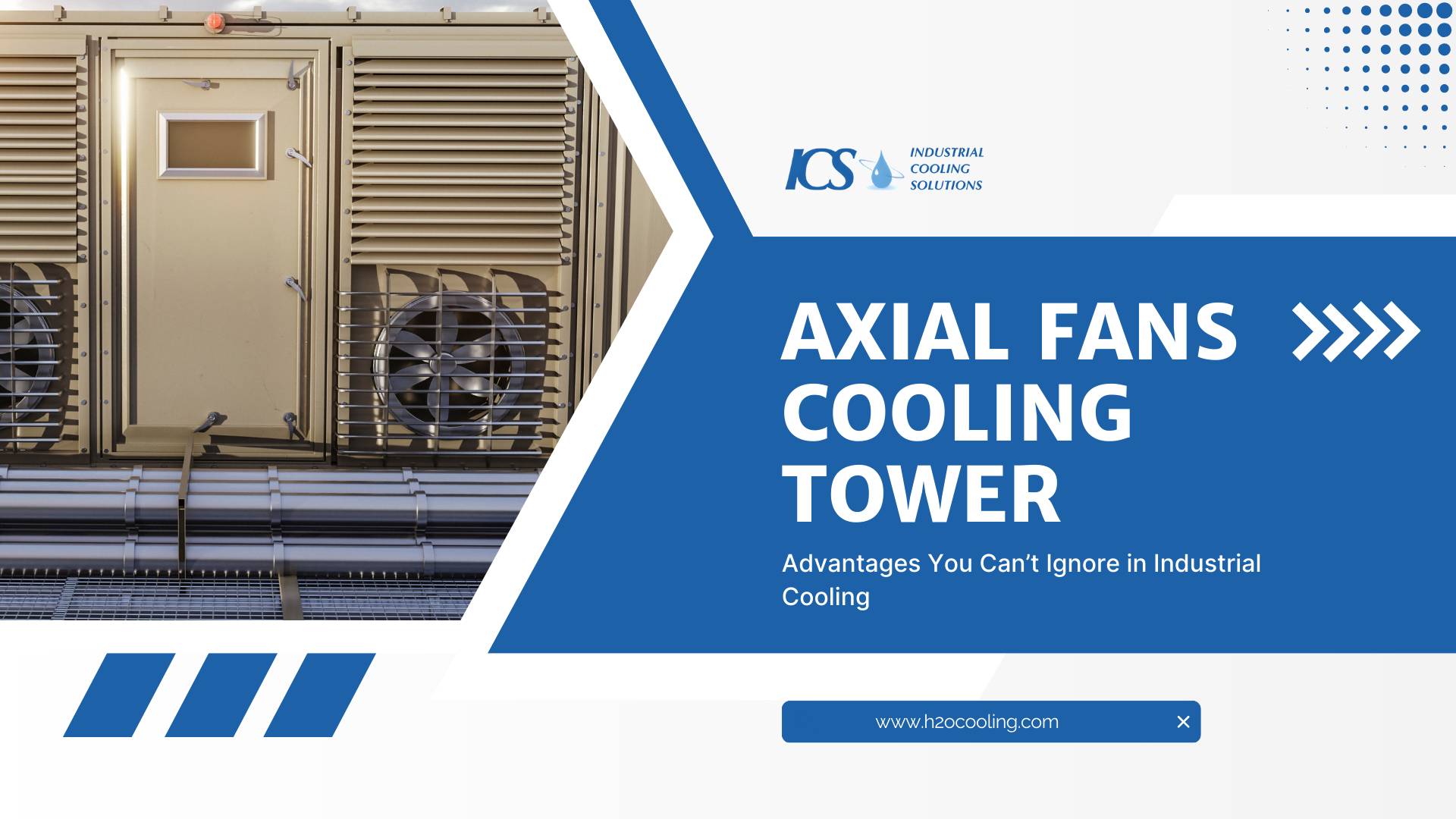
Choosing the right cooling tower fan isn’t just a detail; it’s the key to unlocking peak performance and extending the life of your cooling tower system. The fan controls it all: airflow, energy use, and thermal efficiency, making a direct impact on your bottom line.
For industrial setups, axial fans take center stage, delivering powerful airflow with unmatched efficiency. Getting the airflow right means you are not just optimizing your system; you are also saving money and maximizing results.
This guide explores why axial fans are the industry standard for cooling towers. We will examine their efficiency, airflow control capabilities, maintenance advantages, and lifecycle costs. If you are looking to optimize your axial fans cooling tower setup, understanding these benefits is the first step toward better performance.
Understanding Axial Fans in Cooling Tower Systems
Axial fans are mechanical devices designed to move air parallel to the shaft around which the blades rotate. This specific design allows them to generate high airflow rates at low pressures, making them ideal for the open, induced-draft nature of cooling towers.
The vertical geometry of most induced-draft cooling towers requires a fan that pulls air directly upward and exhausts it into the atmosphere. Axial fans align perfectly with this requirement because they move large volumes of air in a straight line with minimal resistance. This direct path allows the system to reject heat effectively without wasting energy on redirecting the air stream.
Why do manufacturers prefer this configuration for large-scale operations? The design offers specific mechanical advantages that suit industrial environments.
- High airflow capacity allows the system to process the massive amounts of air necessary for significant heat rejection.
- Low static pressure generation matches the low-resistance nature of cooling tower fill and drift eliminators.
- Large diameter availability ensures that a single fan can cover a vast surface area of the tower deck.
Axial Fans vs Centrifugal Fans in Cooling Towers
When evaluating fan options, the primary comparison often arises between axial and centrifugal designs. When comparing axial and centrifugal fans for cooling towers, the main differences are in their efficiency, application, and how they move air.
Centrifugal Fans (or Blowers):
- Push air outward at a 90-degree angle from the intake.
- Generate higher pressure but move lower volumes of air.
- They are less common in modern induced-draft towers due to consuming significantly more energy.
- Sometimes used in smaller, forced-draft units, especially where noise levels are a concern or high external static pressure is a factor.
Axial Fans:
- Move air along the axis of the fan
- Excel at moving massive volumes of air, which is the primary requirement for large cooling towers.
- Offer a more energy-efficient and direct path for airflow, making them the standard choice for facilities looking to minimize power consumption.
- Outperform centrifugal fans in the high-volume, low-to-moderate static pressure environments typical of most cooling towers.
Airflow Volume vs Static Pressure Requirements
Cooling towers generally operate in high airflow, low-to-moderate static pressure environments. The resistance to airflow comes primarily from the fill media, drift eliminators, and air inlet louvers.
Why are axial fans optimized for this specific duty?
- Volume Efficiency: They excel at moving large quantities of air with minimal horsepower.
- Pressure Matching: Their performance curve aligns well with the static pressure drop found in standard cooling towers.
- Design Simplicity: The parallel airflow path minimizes turbulence and energy loss.
Why Axial Fans Improve Cooling Tower Efficiency
The efficiency of a cooling tower relies heavily on the relationship between airflow volume and heat rejection. To cool water effectively, the system must expose as much water surface area as possible to the passing air. Axial fans deliver consistent, high-volume airflow across the entire fill area, ensuring uniform heat transfer.
Here’s why axial fans are key to boosting cooling tower efficiency:
- Uniform Airflow for Consistent Cooling: Axial fans distribute air evenly across the fill area. This prevents "hot spots" where water isn't cooled effectively, ensuring the entire system performs optimally and maintains the required cold water temperatures.
- Aerodynamic Blade Design for Energy Savings: Modern axial blades are designed to minimize drag and move air with less effort. This means the fan motor doesn't have to work as hard, directly reducing energy consumption and lowering operational costs. Every kilowatt of power is used more effectively for cooling.
Energy Savings and Operational Cost Benefits
Operating costs are a major concern for facility managers, and fan energy consumption is a significant contributor. Axial fans typically require lower horsepower to achieve the same cooling duty as alternative fan designs.
This reduction in horsepower translates directly to lower electricity bills month after month.
- VFD Compatibility: Axial fans are well-suited for use with Variable Frequency Drives (VFDs), which adjust motor speed according to cooling needs.
- Significant Power Savings: Since fan power follows the cube law, small reductions in speed result in substantial power savings.
- Partial Load Efficiency: During cooler periods or off-peak hours, a VFD can slow the fan down, drastically cutting energy use compared to running at full speed.
- Flexibility Advantage: This adaptability makes axial fans more efficient than fixed-speed systems.
Variable Speed Control Without Airflow Loss
One of the challenges with some fan types is maintaining stable airflow at lower speeds. Axial fans, however, maintain their efficiency characteristics even when slowed down.
How does variable speed operation impact the bottom line? It allows the system to consume only the energy required for the immediate moment.
- Seasonal Adaptation: You can reduce speed in winter without stalling the airflow.
- Process Stability: The fans provide precise temperature control by adjusting speed incrementally.
- Soft Starts: VFDs allow for gradual ramping, reducing mechanical stress on belts and gears.
Maintenance Advantages of Axial Fans in Cooling Towers
Maintenance teams prefer equipment that is accessible and easy to service. The open design of induced-draft cooling towers with axial fans allows for straightforward inspection. Technicians can visually check blade condition, hub integrity, and clearance without dismantling complex housing structures.
- Axial designs allow faster blade replacement and pitch adjustment.
- Most industrial axial fans have detachable blades clamped into a central hub.
- Damaged blades can be replaced individually, avoiding the need to replace the entire wheel.
Reduced Long-Term Maintenance Costs
The mechanical simplicity of axial fans not only improves accessibility but also translates directly into lower long-term maintenance expenditures. Over the operational life of a cooling tower, these savings can become substantial.
Let's break down exactly what makes them more economical to maintain over time.
- Fewer Moving Parts: The system typically involves a motor, driveshaft, gearbox, and fan, minimizing points of failure.
- Easier Balancing: Re-balancing an axial fan hub is generally simpler than balancing a large centrifugal squirrel cage.
- Lower Service Hours: Routine tasks take less time, reducing labor charges during shutdowns.
When Axial Fans Are the Right Choice for Your Cooling Tower
While axial fans are the dominant choice, it is helpful to know exactly where they shine. They are the definitive solution for induced-draft cooling towers where the fan sits atop the unit, pulling air through.
Consider axial fans if your application involves:
- Large Airflow Requirements: When you need to move massive volumes of air to reject high heat loads.
- Energy Efficiency Priorities: When reducing electrical operating costs is a primary KPI.
- Reliability Needs: When continuous, heavy-duty operation is required with minimal downtime.
- Compact Space Constraints: When equipment must fit into tight or limited spaces without sacrificing performance.
- Customizable Options: When specific configurations or features are necessary to meet unique operational needs.
Common Misconceptions About Axial Fans
Despite their prevalence, some misconceptions about axial fans persist in the industry. It is important to separate fact from fiction to make an informed decision.
“Axial fans are weaker than centrifugal fans.”
This statement is misleading. While centrifugal fans generate higher pressure, axial fans are far superior at generating volume. In cooling towers, volume is the driving factor for heat exchange, making the axial fan "stronger" for this specific application.
“Axial fans cannot handle industrial loads.”
On the contrary, axial fans are the workhorses of the largest power plants and refineries in the world. Their robust construction and ability to scale up to massive diameters make them perfectly suited for the most demanding industrial heat loads.
Understanding the physics behind these fans clarifies why they remain the standard. They are designed for the specific aerodynamic challenges of a cooling tower, whereas other fan types are often retrofits from HVAC applications that do not scale well.
Conclusion
Axial fans remain the superior choice for industrial cooling tower applications due to their unmatched efficiency, serviceability, and performance. By delivering high airflow volumes at low energy costs, they provide the thermal stability required for critical processes. Their compatibility with modern VFDs and ease of maintenance further solidifies their position as the industry standard.
Selecting the correct axial fans cooling tower configuration ensures your facility operates at peak potential while minimizing lifecycle costs. Whether you are building a new system or retrofitting an aging unit, prioritizing axial technology is a sound investment in reliability.
Need quality cooling tower parts or expert help with repair, maintenance, or replacement? Contact the specialists at H2ocooling.com today! We can help you evaluate your current system and implement solutions that drive real results.
Frequently Asked Questions
Why are axial fans used in cooling towers?
Axial fans move large volumes of air efficiently at low static pressure, which perfectly matches cooling tower requirements. This makes them ideal for effective heat rejection with lower energy consumption.
Are axial fans more energy efficient than centrifugal fans?
Yes. Axial fans require less horsepower to move the same airflow in cooling towers, resulting in significantly lower power usage and reduced operating costs.
What type of cooling towers use axial fans?
Axial fans are primarily used in induced-draft cooling towers where air is pulled vertically through the fill and discharged upward for efficient heat removal.
Do axial fans reduce cooling tower operating costs?
Lower motor power requirements, VFD compatibility, and reduced maintenance needs contribute to substantial long-term operational cost savings.
Are axial fans noisy in cooling tower applications?
Modern axial fans with optimized blade designs operate quietly while delivering high airflow, often producing less noise than older or poorly matched fan systems.