


Industrial cooling towers are giants of heat rejection, but their performance relies on an often overlooked component: the fans. Think of them as the lungs of the system, powering airflow that cools process water with precision. When these fans run smoothly, everything clicks into place.
But when they falter, the whole operation feels the heat—literally. Want to keep your system breathing easy? Let’s dive into why these fans are the heartbeat of efficiency.
Fan stability is often overlooked until failure occurs or energy bills spike. It's not just about whether the fan turns, but how smoothly it rotates under load. Small imbalances or vibrations can quickly lead to structural damage, safety risks, and costly downtime.
This guide explores the critical nature of cooling tower fan stability. We will examine the root causes of instability, the risks associated with vibration, and the best practices for inspection and maintenance to ensure your system runs reliably for the long haul.
Understanding Cooling Tower Fan Stability
Before diagnosing issues, it’s crucial to first understand what stable operation looks like in an industrial context. Stable operation typically involves consistent performance, minimal downtime, and adherence to safety and quality standards.
By establishing a clear baseline of normal operations, you can more effectively identify deviations and pinpoint potential problems.
What Fan Stability Means in Industrial Cooling Towers
In technical terms, cooling tower fan stability refers to the ability of the fan assembly to maintain a consistent center of rotation without deviation. It involves steady rotation at the designated RPM, minimal vibration transmission to the gearbox or motor, and balanced airflow distribution across the blade span.
- Minimizes mechanical stress: Stability is crucial for long-term operation.
- Ensures even force distribution: A stable fan distributes centrifugal forces equally.
- Prevents premature wear: This equal distribution prevents early damage to bearings and drive shafts.
Difference Between Wobble, Vibration, and Imbalance
While often used interchangeably, wobble, vibration, and imbalance describe different mechanical phenomena.
- Imbalance is the root cause, an uneven distribution of mass around the center of rotation. For example, if scale buildup is heavier on one blade than another, the center of mass shifts away from the geometric center.
- Vibration is the reaction to that imbalance. As the heavy spot rotates, it creates an oscillating force that shakes the entire assembly.
- Wobble is the visible manifestation of severe instability, where the plane of rotation tilts or shifts during operation.
In an industrial setting, a fan might have an imbalance that causes high-frequency vibration invisible to the naked eye but destructive to the gearbox seals. Wobble usually indicates that the issue has progressed to structural looseness or severe component failure.
Why Stability Matters More Than Fan Speed Alone
Operators often focus on RPM to meet cooling demands, but speed without stability can lead to serious issues. High RPM generates greater centrifugal forces on fan blades, and if the fan is unstable, these forces are amplified.
Here are some key reasons why stability is critical for fan operation:
- Running a high-speed fan with even slight instability can lead to problems.
- Instability puts extra stress on motors, drive shafts, and bearings, causing faster wear and tear.
- A stable fan operation ensures energy is used to move air rather than create harmful mechanical forces.
- Stability improves system reliability, reducing the risk of damage and extending equipment lifespan.
How Cooling Tower Fans Function Within the System
To truly grasp why stability is so crucial, it's essential to understand how the fan functions within the larger cooling tower system. The fan's performance directly influences heat rejection and airflow control, which are the core mechanisms of the cooling process.
Role of Fans in Heat Rejection and Airflow Control
The primary function of the fan is to induce a draft—pulling or pushing air through the tower's fill media where it interacts with hot water. This airflow facilitates evaporation and sensible heat transfer.
The effectiveness of this heat rejection depends entirely on consistent, stable rotation. If the fan speed fluctuates or the rotation is erratic due to instability, the airflow volume becomes inconsistent, directly compromising the cooling capacity.
Relationship Between Fan Stability and Thermal Efficiency
Cooling tower fan stability is intrinsically linked to thermal efficiency. When a fan vibrates significantly, it disrupts the laminar flow of air. Instead of a smooth, continuous stream, the air becomes turbulent.
- Turbulence in the tower causes uneven cooling, creating pockets where heat rejection is less efficient.
- Mechanical energy lost to vibration reduces the energy available for air movement.
- Less air movement means less effective heat rejection.
- As a result, the tower consumes the same or more power while rejecting less heat, leading to a drop in overall performance.
Impact of Continuous Rotation on Mechanical Components
Cooling tower fans often run continuously for weeks or months. This constant rotation subjects the fan assembly to cyclical fatigue. Stable fans distribute this stress evenly across the hub and blades.
However, even minor instability creates cyclical loading, which is a repetitive "hammering" effect on the mechanical components. Over time, this cyclical loading can have the following impacts:
- Accelerated wear and tear on cooling tower components.
- The need for more frequent maintenance.
- A shorter overall lifecycle for the equipment.
Common Causes of Fan Instability in Cooling Towers
Identifying the source of the problem is the first step toward a solution. In a fan assembly, issues can arise from misaligned blades, worn-out bearings, or motor malfunctions.
Additionally, monitoring for unusual noises or vibrations can provide early warnings of potential problems, ensuring the assembly operates efficiently.
Blade Imbalance and Uneven Weight Distribution
The most frequent cause of instability is blade imbalance. This can stem from manufacturing tolerances, but it more commonly results from operational factors. Uneven erosion from water droplets, disparate scale buildup, or debris impact can alter the weight of individual blades.
As the fan spins, this uneven weight distribution creates unbalanced centrifugal forces, directly leading to fan stability issues.
Shaft Misalignment and Drive System Issues
The drive train, which consists of the motor, driveshaft, couplings, and gearbox, must be perfectly aligned. If the driveshaft is misaligned, it forces the fan to rotate off its natural axis.
Here are some common causes of equipment vibration:
- Rotational inconsistency leads to vibration.
- Misalignment can happen during installation or after maintenance if components are not properly re-seated.
- Vibration travels up the shaft, destabilizing the fan hub.
Wear and Loosening of Fan Assembly Components
Over time, the harsh environment inside a cooling tower affects the hardware. Bolts, hub clamps, bearings, and motor mounts can loosen due to thermal expansion and contraction cycles or continuous vibration.
As fasteners lose their torque, the components they hold can shift. A loose blade clamp, for example, allows the blade to change its pitch or position slightly, instantly throwing the fan out of balance.
Vibration Risks Associated With Unstable Cooling Tower Fans
Vibration isn’t just an annoyance—it’s a silent threat that can lead to significant damage over time. Left unchecked, it accelerates wear and tear on machinery, reduces efficiency, and increases the risk of costly breakdowns.
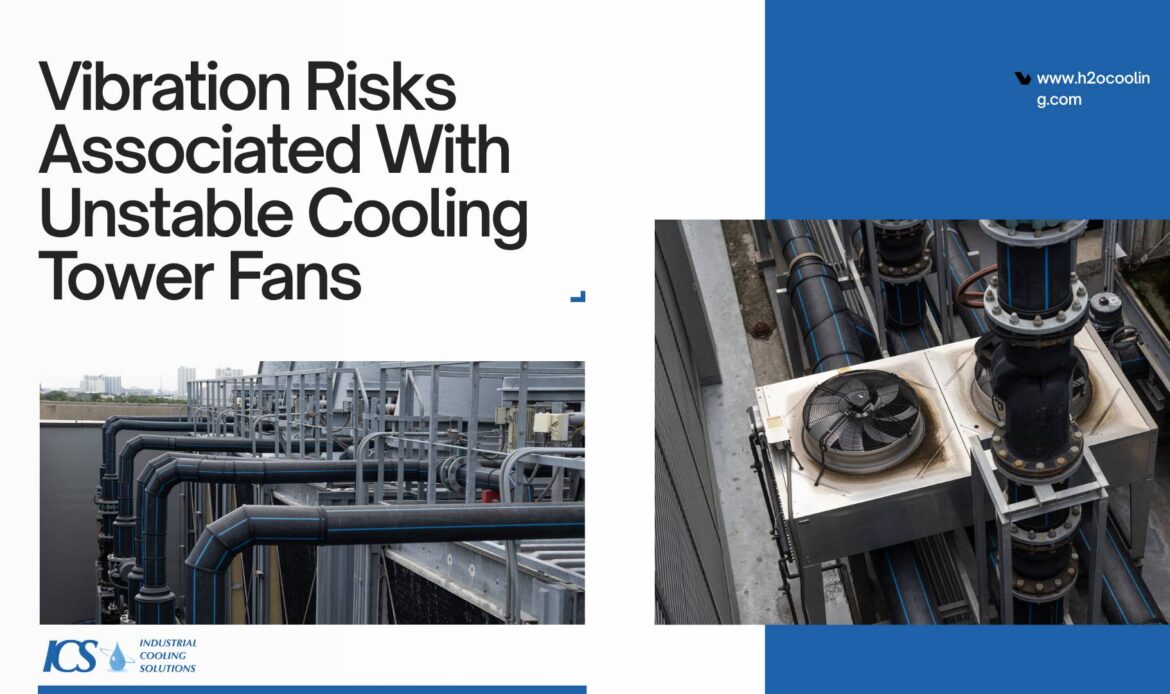
Addressing vibration early not only extends equipment lifespan but also ensures smoother, more reliable operations.
How Vibrations Develop From Minor Imbalances
Vibration problems rarely appear overnight; they develop from minor imbalances that go unchecked. A small weight discrepancy on a blade tip might cause a barely perceptible vibration.
However, as the fan continues to run, this vibration can loosen fasteners or cause further wear, which in turn increases the imbalance. This creates a feedback loop where the vibration amplifies itself, sometimes reaching resonant frequencies that can be catastrophic.
Structural Damage Caused by Prolonged Vibration
Prolonged vibration does not stay contained within the fan assembly. It travels through the fan stack, into the fan deck, and down the tower supports.
Here are the alarming consequences of prolonged fan vibration:
- Cracked Fiberglass Casings: The constant shaking can cause stress fractures in the fan's protective housing.
- Weakened Steel Supports: The structural integrity of the steel framework can be dangerously compromised.
- Damaged Equipment Supports: The very mounts holding expensive mechanical equipment can fail.
- Total Fan Deck Compromise: In the most severe cases, the entire upper platform can collapse, leading to catastrophic failure and costly structural reconstruction.
Fan Blade Damage and Its Impact on Stability
Physical damage to the blades is a primary cause of instability, as it can disrupt balance and performance. Staying on top of inspections and making timely repairs is your first line of defense against escalating damage and eventual failure.
Common Types of Blade Damage in Cooling Towers
Fan blades endure tough conditions, constantly exposed to factors that can compromise their performance and longevity. Harsh environments and operational stresses make them susceptible to various types of damage.
Common types of blade damage include:
- Leading-edge erosion caused by water droplets wearing down the blade edge over time.
- Impact damage from debris or ice falling from drift eliminators.
- Fatigue cracking near the hub due to repeated stress.
- Ice formation in colder climates leads to sudden damage and imbalance.
Airflow Disruption Caused by Damaged Blades
Damaged blades do not pull air uniformly. If one blade is deformed or eroded, it moves less air than its neighbors. This creates a pulsing effect in the airflow, known as aerodynamic imbalance.
This pulsing not only reduces cooling efficiency but also creates a rhythmic vibration that destabilizes the fan assembly.
Maintenance Best Practices to Maintain Cooling Tower Fan Stability
Stability is maintained through consistent, high-quality maintenance practices. Regular checks and proactive measures ensure systems run smoothly without interruptions.
By addressing issues early, downtime is minimized, and long-term efficiency is preserved. This approach not only saves costs but also builds reliability over time.
Preventive Maintenance vs Reactive Repairs
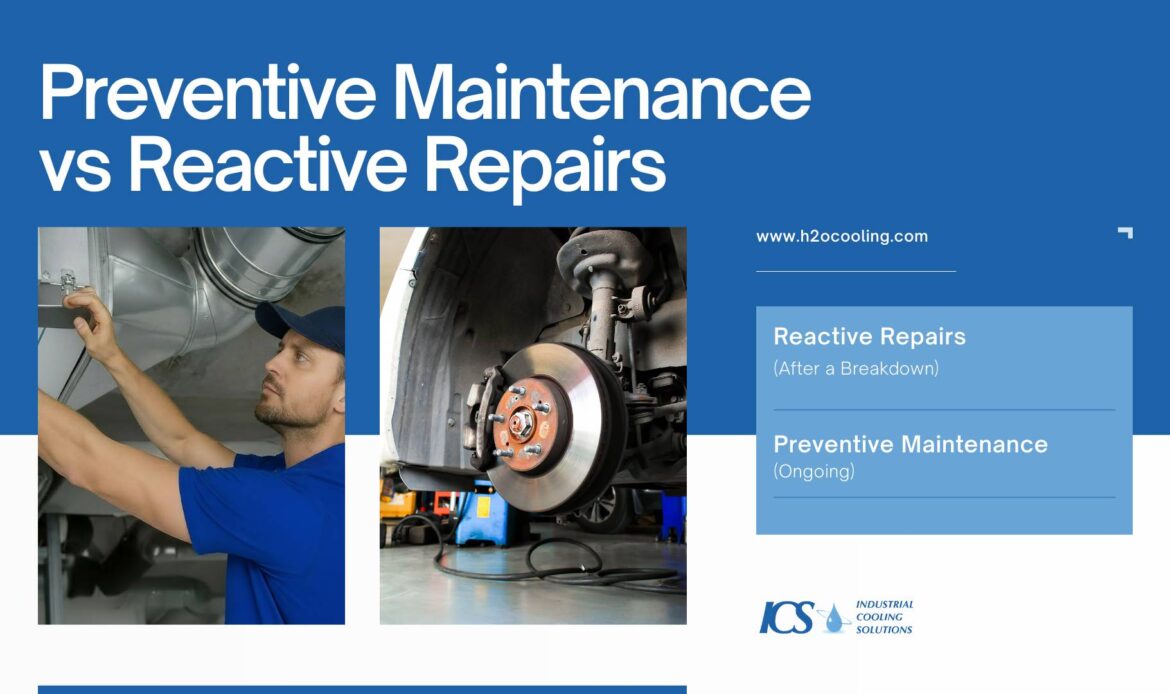
- Reactive Repairs (After a Breakdown): This approach involves fixing the fan only after it fails. It often leads to high costs from emergency parts, crane rentals, and unplanned downtime.
- Preventive Maintenance (Ongoing): This proactive approach includes regular tasks like cleaning and balancing to keep the fan stable. It prevents costly failures and offers a high return on investment by extending the equipment's lifespan.
Importance of Torque Checks and Fastener Integrity
Vibration loosens bolts. A critical part of any maintenance schedule is checking the torque on all fan hardware, including hub clamp bolts and blade attachment hardware.
Using the correct torque specifications and applying thread-locking compounds where appropriate ensures that the assembly remains rigid and stable during operation.
Conclusion
Cooling tower fan stability is not a luxury; it is a necessity for efficient, safe, and cost-effective operation. From ensuring proper airflow to protecting expensive motors and gearboxes, a stable fan is the heartbeat of the cooling system.
By understanding the causes of instability, ranging from blade imbalance to misalignment, and implementing rigorous inspection and maintenance protocols, facility managers can prevent disastrous failures.
Don't wait for the fan to shake itself apart. Proactive care ensures that your cooling tower continues to deliver the thermal performance your process demands.
Ensure your system is running smoothly. Contact ICS today for expert fan inspections, precision balancing, repairs, and high-quality replacements tailored to your needs.
Frequently Asked Questions
What causes Cooling Tower Fan Stability?
Blade imbalance, shaft misalignment, loosened fasteners, or uneven scale buildup usually cause fan instability. These issues shift the center of rotation and create vibration during operation.
How can fan vibration affect a cooling tower?
Vibration accelerates wear on gearboxes, motors, bearings, and structural supports. If ignored, it can lead to fan deck damage, blade failure, and unplanned shutdowns.
What is the difference between fan imbalance and vibration?
Imbalance is the uneven weight distribution in the fan assembly, while vibration is the mechanical response to that imbalance. Vibration is the symptom, not the root cause.
How often should cooling tower fans be inspected for stability?
Fans should be inspected during routine maintenance and immediately if vibration, noise, or performance changes occur. High-duty systems benefit from quarterly or continuous vibration monitoring.
What are early warning signs of fan instability?
Common signs include unusual noise, rising vibration levels, fluctuating airflow, visible blade wobble, and increased gearbox or bearing temperatures.