


The performance of an industrial cooling system relies heavily on what it is made of. The components chosen during the design phase directly influence reliability, maintenance costs, and total service life. Selecting the correct cooling tower materials is not just about structural integrity; it is a strategic decision that affects operational efficiency for decades.
Modern cooling towers utilize a variety of material options to meet specific operating conditions. Engineers no longer rely on a single standard. Instead, they mix and match substrates to balance durability against environmental stressors.
This guide assists facility managers and engineers in selecting the right material for the right application. It moves beyond simple cost comparisons to evaluate long-term value and performance.
Why Cooling Tower Material Selection Matters
The physical composition of a cooling tower dictates how well it withstands its environment. Every material interacts differently with water, chemicals, and physical stress.
The choice of material influences critical performance metrics:
- Structural stability: The ability to withstand wind, seismic activity, and vibration.
- Corrosion resistance: How the tower handles aggressive water chemistry and atmospheric conditions.
- Heat rejection efficiency: The long-term ability to maintain thermal performance without degradation.
- Downtime and repair frequency: The operational availability of the system over its lifespan.
Prioritizing upfront savings often leads to higher expenses later. A material that is cheap to install but prone to corrosion will require frequent shutdowns and early replacement. Lifecycle value must remain the primary driver in decision-making.
Key Factors That Determine Cooling Tower Material Selection
Selecting the appropriate material requires a thorough assessment of the operating conditions. Engineers must evaluate several foundational factors before specifying a design.
Operating Environment
The external environment imposes significant stress on cooling tower materials.
- Climate extremes: Materials must handle thermal expansion in extreme heat and resist cracking during freezing cycles.
- UV and weather exposure: Prolonged sunlight degrades certain composites, while coastal locations introduce salt spray that accelerates corrosion in metals.
Water Chemistry and Corrosive Exposure
The type of water circulating through the tower defines the chemical resistance requirements.
- Water source: Freshwater, brackish water, and seawater each demand specific material grades to prevent rapid deterioration.
- Chemical concentration: Cooling loops often concentrate minerals and treatment chemicals. The material must resist scaling and chemical attack from blowdown conditions.
Structural Loads and Site Constraints
Physical limitations of the site often dictate the material choice.
- Foundation capacity: Heavier materials like concrete require robust soil support, while lighter composites may fit on existing platforms.
- Wind and seismic requirements: High-wind zones or earthquake-prone areas require materials with high tensile strength and flexibility.
- Space limitations: Restricted footprints may necessitate materials that allow for vertical, modular construction.
Maintenance Strategy and Lifecycle Expectations
Operational philosophy plays a major role in selection.
- Planned maintenance access: Some materials allow for easier entry and component replacement.
- Repair philosophy: Organizations must decide if they prefer modular replacement of parts or in-situ structural repairs.
- Desired service life: A facility designed for a fifty-year lifespan requires different materials than a temporary process installation.
Primary Materials Used in Industrial Cooling Tower Construction
Wood Cooling Towers
Pressure-treated timber was once the industry standard. While less common today, wood remains relevant in specific scenarios.
Wood offers unique advantages for heavy industrial applications:
- Natural vibration damping: Wood absorbs mechanical vibration from large fans and motors effectively.
- Fabrication speed: Timber structures can be framed and assembled quickly in remote locations.
- Cost-effectiveness: For massive, field-erected towers, wood can provide a lower initial material cost.
However, wood requires rigorous maintenance to prevent biological decay and loss of structural strength over time.
FRP (Fiberglass Reinforced Plastic) Cooling Towers
Fiberglass Reinforced Plastic (FRP) has become a dominant material in modern cooling tower construction. It combines high strength with low weight.
FRP behaves differently from metals or wood under stress:
- Thermal cycling: Composite materials handle temperature fluctuations well without warping.
- Manufacturing variety: Components can be pultruded for structural shapes or molded for complex basins and fan stacks.
- Modular design: The lightweight nature of FRP enables factory assembly and modular shipment, reducing on-site labor.
- Standardization: Many industries now standardize on FRP for its predictable performance in chemically aggressive environments.
Concrete Cooling Towers
Concrete is typically reserved for the largest industrial and utility applications. These structures function as permanent civil engineering works.
Concrete offers specific benefits for massive heat rejection loads:
- Thermal mass: The sheer mass of concrete provides stability and dampens noise and vibration.
- Permanence: Concrete towers are designed to last for the life of the plant, often exceeding fifty years.
- Engineering considerations: These structures require extensive foundation work and on-site casting or heavy pre-cast assembly.
Steel Cooling Towers (Galvanized & Stainless Steel)
Steel remains a popular choice for packaged units and factory-assembled towers. It offers exceptional rigidity and precision.
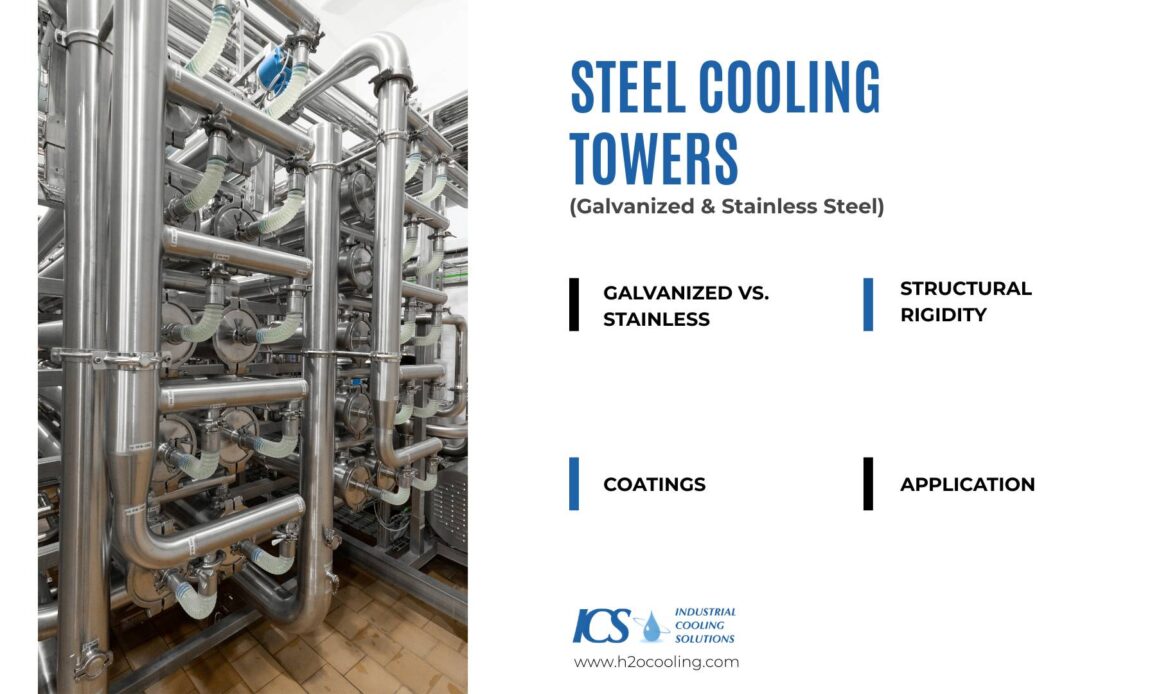
The performance of steel depends entirely on its grade and coating:
- Galvanized vs. Stainless: Galvanized steel uses a zinc coating for protection, while stainless steel relies on its alloy composition for superior corrosion resistance.
- Structural rigidity: Steel allows for precise fabrication and tight tolerances, essential for high-performance mechanical components.
- Coatings: Advanced metallurgical coatings extend the life of steel towers significantly.
- Application: Steel fits best in packaged systems where durability during transport and installation is critical.
Hybrid Cooling Tower Material Systems
Engineers increasingly design systems that utilize the strengths of multiple materials. Hybrid towers optimize cost and performance.
These combinations solve specific logistical and operational challenges:
- FRP and Steel: A common hybrid design uses a stainless steel basin for leak protection combined with an FRP superstructure for corrosion resistance.
- Concrete and FRP: Large facilities may pour a concrete basin but use FRP for the structural framework and fan deck to reduce weight and cost.
- Benefits: Hybrids address maintenance challenges by placing durable materials in wet zones and cost-effective materials in structural zones.
Cooling Tower Materials and Use Case
| Cooling Tower Material | Typical Industries | Operating Environment | Design Strength | Common Use Case |
| Wood | Power plants, legacy industrial sites | Moderate climates, low chemical exposure | Natural vibration damping | Fast-build or temporary industrial towers |
| FRP (Fiberglass Reinforced Plastic) | Chemical plants, manufacturing, HVAC | Corrosive or humid environments | Lightweight, modular construction | Modular industrial cooling towers |
| Concrete | Power generation, heavy industry | High thermal loads, permanent sites | High structural mass | Large, site-specific cooling towers |
| Galvanized Steel | Manufacturing, packaged systems | Mild to moderate corrosion risk | Rigid, factory-fabricated | Prefabricated cooling tower systems |
| Stainless Steel | Food processing, pharma, clean industries | High corrosion or hygiene demand | Corrosion resistance | Sanitary or high-purity applications |
| Hybrid Systems | Energy, process industries | Mixed environmental conditions | Material optimization | Custom-engineered cooling solutions |
How Cooling Tower Materials Affect Maintenance Planning
The materials you choose for your cooling tower directly influence your maintenance schedule and long-term costs. Understanding these material-specific needs is crucial for creating an effective maintenance plan.
Aligning your team's capabilities with the demands of the tower's structure will prevent unexpected failures and extend its operational life.
Inspection Accessibility
Different materials degrade in different ways.
- Inspection frequency: Wood requires frequent checks for rot and fastener looseness. Steel requires inspection for coating breaches.
- Testing methods: Visual inspections work for most surfaces, but some materials may require non-destructive testing to verify internal integrity.
Repair vs Replacement Philosophy
The material dictates how a facility handles failure, influencing durability, maintenance needs, and overall safety. Choosing high-quality, resilient materials ensures better performance and reduces long-term costs.
Always consider the specific demands of your facility when selecting materials to minimize risks and downtime.
- Component-based repairs: Modular towers (like FRP and steel) allow for the unbolting and replacement of specific damaged parts.
- Downtime expectations: Repairing a concrete structure often requires longer curing times and downtime compared to swapping a steel panel.
Cleaning and Fouling Behavior
The material's surface texture directly impacts how easily biological growth and scale can build up. A smoother surface will generally resist fouling and biofilm better than a rough or porous one. This makes cleaning easier and helps maintain the tower's thermal efficiency over time.
- Surface interaction: Smoother materials like stainless steel and FRP resist biofilm adhesion better than porous materials like wood or concrete.
- Cleaning limitations: Aggressive chemical cleaning may damage galvanized coatings or wood fibers, whereas FRP and stainless steel can generally withstand harsher cleaning protocols.
Material Selection Based on Industry Requirements
Choosing the right material for a cooling tower isn't a one-size-fits-all decision; different industries have unique priorities that dictate the best choice. For example, a power plant's needs differ significantly from those of an HVAC system or a chemical processing facility.
Power Generation Facilities
Power plants operate continuously and require immense heat rejection capacity. Because base-load operations demand long-term reliability and massive scale, concrete or heavy-duty wood/FRP hybrid towers are often the best choice for this industry.
Chemical and Petrochemical Plants
These environments often contain airborne contaminants and aggressive process water, making material compatibility a top priority.
To resist chemical attack and corrosion, cooling towers made from Fiber-Reinforced Polymer (FRP) or stainless steel are the ideal choice for these demanding conditions.
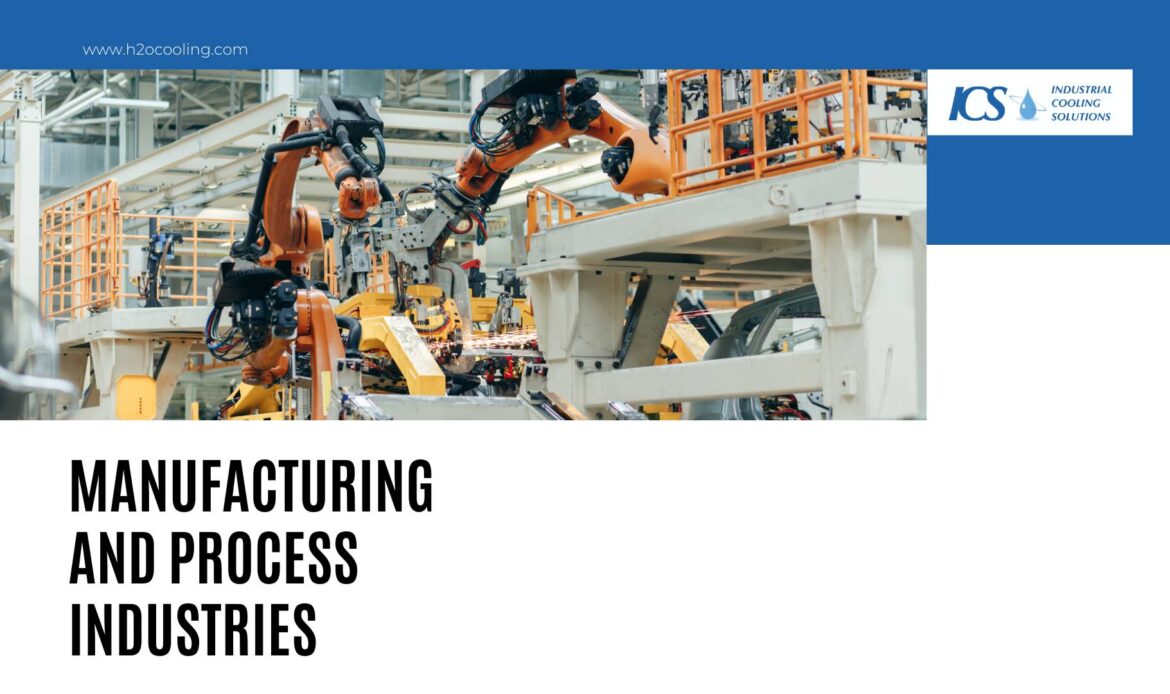
Manufacturing and Process Industries
Factories require systems that can adapt to changing production lines. Since flexibility and expandability are key priorities, modular steel or FRP units are the best choice. These allow for easy expansion as cooling loads increase over time.
HVAC and District Cooling Systems
In urban environments, space and aesthetics are major concerns. Because modular installation and noise control are critical, steel and FRP packaged towers are the best choice. They have a smaller footprint and are easier to deliver in congested areas.
Common Material Selection Mistakes in Cooling Tower Projects
Even experienced teams make errors during the specification phase. Avoiding these pitfalls saves significant capital.
- Selecting materials based only on upfront cost:
Choosing galvanized steel in a corrosive environment to save money initially often leads to rapid failure and total replacement within a few years.
- Ignoring water chemistry impacts:
Failing to analyze the specific makeup of the process water can result in selecting a material that dissolves or degrades chemically.
- Over-engineering material strength:
Specifying heavy concrete for a light-duty application wastes budget and complicates future demolition or modification.
- Underestimating maintenance access needs:
Selecting a material configuration that makes internal components inaccessible guarantees that maintenance will be neglected.
Final Thoughts
Cooling tower materials serve specific purposes. There is no single "best" material, only the best material for the specific application.
Correct material selection reduces operational risks significantly. It minimizes downtime, lowers maintenance costs, and prevents premature failure. A well-selected tower becomes a reliable asset rather than a maintenance burden.
Expert evaluation matters more than industry trends. Relying on specialized knowledge ensures the system meets the unique demands of the facility.
Industrial Cooling Solutions specializes in material-driven cooling tower design. Our team evaluates your specific environmental and operational needs to specify the optimal solution. Contact us today to ensure your next project is built to last.
Frequently Asked Question
What are the most common materials for industrial cooling towers?
FRP, concrete, wood, and steel are the most widely used materials, each with unique durability, maintenance, and cost characteristics.
How do I choose the right material for my cooling tower?
Consider factors like operating environment, water chemistry, structural loads, maintenance needs, and lifecycle cost.
Which Cooling Tower materials require the least maintenance?
FRP and stainless steel typically need less maintenance compared to wood or concrete, reducing downtime and operational costs.
Do industrial cooling tower materials affect energy efficiency?
Indirectly, yes. Lightweight, corrosion-resistant materials like FRP help maintain consistent water flow and minimize downtime, supporting efficient operation.