

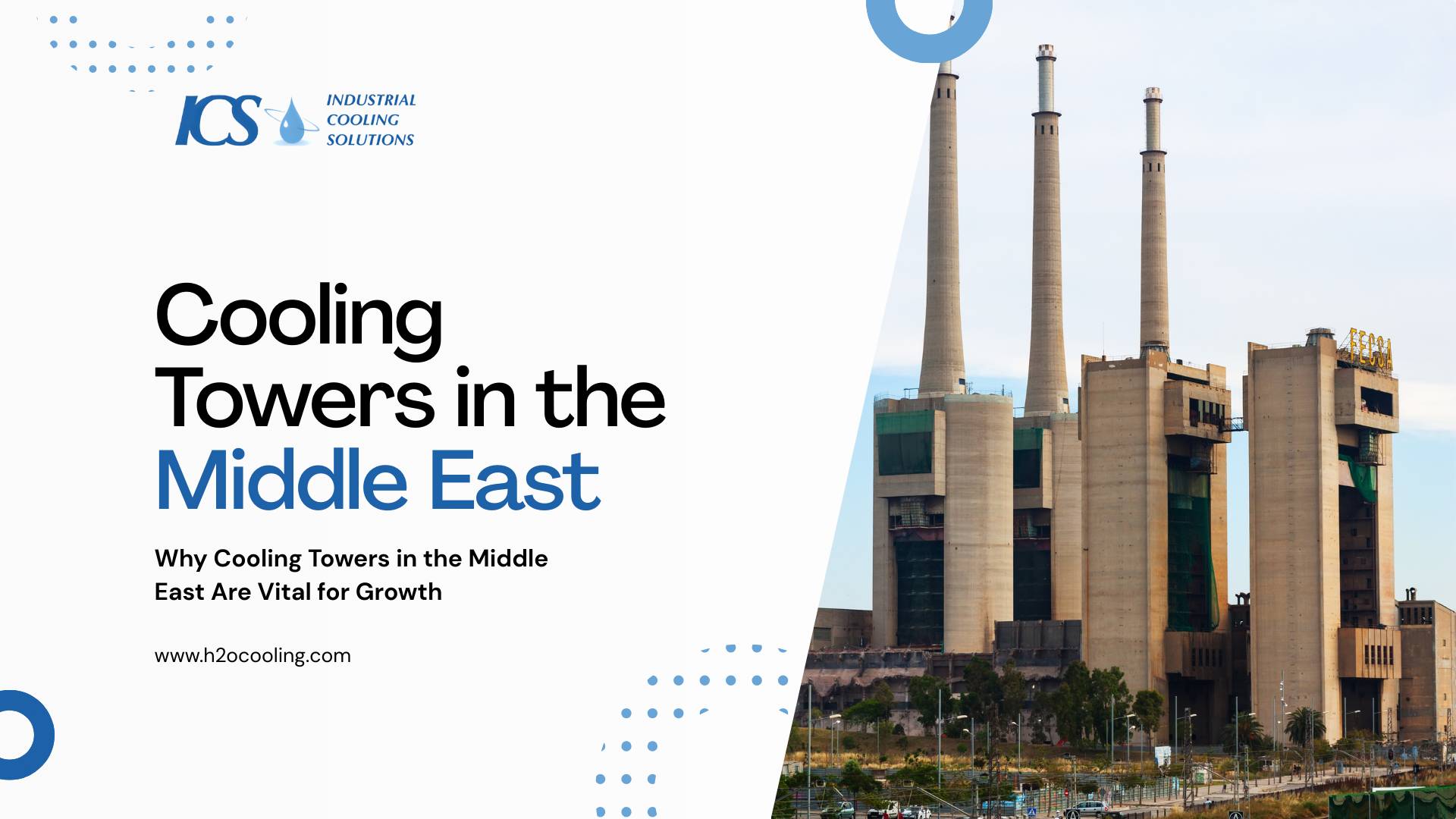
The Middle East presents one of the most challenging environments for industrial operations on Earth. Rapid infrastructure development and intense climatic conditions create a unique reliance on thermal management systems. Efficient cooling towers in the Middle East applications are not just optional accessories; they serve as the backbone for sustainable industrial expansion and urban comfort.
In a region defined by soaring ambient temperatures and scarce water resources, the ability to reject heat effectively determines the success of critical infrastructure. From petrochemical plants to district cooling networks, maintaining operational stability is key to their success.
In this blog post, we’ll explore how understanding the unique requirements of this region allows industries to overcome harsh environmental challenges and thrive.
Why Cooling Towers Are So Critical in the Middle East
The necessity of cooling towers in this region stems directly from the extreme thermal load placed on all mechanical systems. Ambient temperatures regularly exceed limits that standard equipment can handle without assistance. This creates a scenario where heat rejection becomes a primary safety and operational priority rather than a secondary concern.
Here's why active cooling is necessary:
- 24/7 Demand: Industrial and urban cooling systems must run continuously, no matter the outside temperature.
- Ineffective Passive Cooling: Passive cooling methods are not powerful enough to handle the massive heat produced by activities like power generation and heavy manufacturing.
- Essential for Operation: Active heat rejection from cooling towers is the only practical way to avoid system overloads, failures, and costly production shutdowns.
Climate Conditions That Shape Cooling Tower Use in the Middle East
The distinct meteorological patterns of the region dictate strict design and operational parameters for heat rejection equipment. In addition to high temperatures, engineers must also consider other regional climate factors when designing cooling systems. These include:
- Persistent High Dry-Bulb Temperatures: For much of the year, the region experiences high ambient temperatures, which place a continuous, heavy load on cooling equipment.
- Extreme Wet-Bulb Temperatures: In coastal areas, high humidity combines with high heat, raising the wet-bulb temperature. This reduces the efficiency of evaporative cooling, making heat rejection more challenging.
- Frequent Sandstorms: Airborne sand and dust can infiltrate cooling towers, clogging fills, fouling components, and eroding mechanical parts. This requires specialized filtration and robust construction.
- High Air Salinity: In coastal zones, the air contains corrosive salts that can accelerate the degradation of metal components, leading to premature failure if not properly addressed.
- Intense Solar Radiation: The strong desert sun adds a significant heat load to structures and equipment, increasing the overall cooling demand.
These environmental factors mean that cooling towers in the Middle East must be specifically engineered for durability. They require heavy-duty filtration systems to handle particulates and must be built with corrosion-resistant materials to withstand saline and abrasive conditions, ensuring they can operate reliably without frequent failures.
Water Availability and Its Impact on Cooling Towers
Water scarcity shapes every engineering decision in this arid landscape. Cooling towers in the Middle East, while relying on evaporative cooling for energy-efficient heat rejection, face the challenge of consuming a resource the region desperately lacks. This creates a complex engineering paradox that calls for innovative solutions
To address water scarcity in the Middle East while maintaining thermal performance, modern cooling tower designs integrate key strategies:
- Maximizing water reuse: Designs emphasize increasing cycles of concentration to optimize water efficiency, essential in arid regions.
- Utilizing alternative water sources: Treated sewage effluent (TSE) and seawater are commonly used as makeup water, reducing reliance on limited freshwater supplies.
- Advanced materials and treatments: The use of alternative water sources necessitates durable materials and advanced chemical treatments to prevent system damage and ensure sustainable water management in water-stressed environments.
Industries Driving Cooling Tower Demand Across the Middle East
The rapid diversification of regional economies fuels a continuous need for reliable thermal management across various sectors. These industries require massive heat rejection capabilities to function safely and efficiently within the local climate.
The demand for cooling towers in the Middle East projects comes primarily from five key sectors that form the economic pillars of the region:
- Oil and Gas Processing: Refining crude oil and processing petrochemicals generate immense heat loads that require immediate and constant dissipation to prevent catastrophic hazards.
- Power Generation: Turbines and generators operate at lower efficiencies in high ambient heat, requiring massive cooling capacities to maintain electrical output for the grid.
- District Cooling: Large-scale commercial and residential developments rely on centralized cooling plants to provide air conditioning more efficiently than individual units.
- Desalination Plants: The process of converting seawater into potable water involves significant thermal exchanges that require reliable cooling infrastructure.
- Manufacturing Zones: Heavy industries, including steel and aluminum production, depend on process cooling to protect machinery and ensure product quality.
How Cooling Tower Technology Has Adapted for Middle Eastern Conditions
Manufacturers have evolved their designs to meet the specific regional criteria for cooling towers in the Middle East, which differ significantly from European or North American standards. Standard off-the-shelf units often fail to meet the efficiency mandates required by local regulations.
To address this, engineers now prioritize configurations that minimize drift loss and maximize thermal transfer, even during peak summer months.
Here are some famous cooling tower technologies:
Innovative Fan Design:
- Advanced fan technology enhances cooling efficiency, even under extreme heat.
- Motors are equipped with robust protection to prevent overheating and ensure smooth performance.
Thermal Adaptation:
- Cooling towers, a renowned technology in industrial cooling, play a critical role in maintaining optimal temperatures.
- These systems are engineered to dissipate heat effectively, preventing thermal trips and efficiency losses.
Adaptation to Middle Eastern Conditions:
- Cooling towers have been specifically adapted to handle the intense heat and arid climate of the Middle East.
- Materials used are resistant to high temperatures and corrosion caused by the region's environment.
- Enhanced airflow and water circulation systems ensure reliable cooling, even during the hottest parts of the day.
This combination of innovation and adaptation enables facilities in the Middle East to maintain production targets without compromising on efficiency or reliability.
Cooling Towers and Sustainable Development in the Middle East
Sustainability is no longer a buzzword but a regulatory requirement in the Gulf Cooperation Council (GCC) and beyond. The integration of modern cooling towers in the Middle East developments plays a central role in green building certifications and energy reduction goals.
Cooling towers contribute to sustainable development in several key ways:
- Reduced Carbon Footprint: Optimizing these systems lowers the energy required for heat rejection, which in turn reduces the overall carbon footprint of large-scale facilities.
- Water Stewardship: To support responsible industrial growth, modern cooling infrastructure incorporates advanced drift eliminators and automated blowdown systems. These technologies help operators minimize water waste.
- Alignment with National Goals: By operating cooling towers in line with national sustainability visions, industries can expand their capacity while respecting environmental limitations.
Challenges of Operating Cooling Towers
Operational realities present distinct hurdles for facility managers in this part of the world. High temperatures accelerate biological growth and mineral scaling within the fill media, which can rapidly degrade thermal performance.
- Heat Stress on Components: Prolonged exposure to UV radiation and heat can cause premature fatigue in structural components and moving parts.
- Scaling and Fouling: High evaporation rates lead to a rapid concentration of dissolved solids, requiring aggressive water treatment to prevent scale buildup.
- Airborne Particulates: Sand and dust are prevalent in the air and can clog fill media and strain air intake systems, diminishing airflow and cooling capacity.
- Water Scarcity and Quality: Access to clean water for makeup and blowdown processes can be limited and costly, making water conservation and effective treatment strategies essential.
- Maintenance Intensity: The harsh environment necessitates more frequent inspections and cleaning to remove sand and debris that accumulate in basins and fill.
Conclusion
As the Middle East's economy diversifies, the need for efficient thermal management will grow. Operating cooling towers in this region presents unique challenges, including heat stress on components, scaling due to high evaporation rates, and clogging from airborne sand and dust. Water scarcity and the need for intensive maintenance further complicate operations.
Successfully deploying cooling towers in the Middle East, designed for the region’s specific conditions, is crucial for industrial resilience and future growth. By embracing advanced, region-specific technology and sustainable practices, industries in the Middle East can ensure reliability and productivity.
For expert cooling tower repair and maintenance tailored to the demanding Middle East environment, visit H2ocooling.com today to secure your operations.
Frequently Asked Questions
Why are cooling towers essential in the Middle East?
Cooling towers are essential in the Middle East due to extreme heat, high cooling demand, and the need to maintain industrial and HVAC system efficiency.
What type of cooling towers are best for Middle East climates?
FRP, concrete, and hybrid cooling towers with corrosion-resistant materials perform best in Middle East environments.
How do sandstorms impact cooling towers in the Middle East?
Sand and dust clog fill media, restrict airflow, increase maintenance needs, and reduce overall cooling efficiency.
How is water scarcity managed in Middle East cooling towers?
Water scarcity is managed through high cycles of concentration, water reuse, treated sewage effluent, and advanced blowdown control.
Which industries rely most on cooling towers in the Middle East?
Oil and gas, power generation, district cooling, desalination plants, and heavy manufacturing rely heavily on cooling towers.