

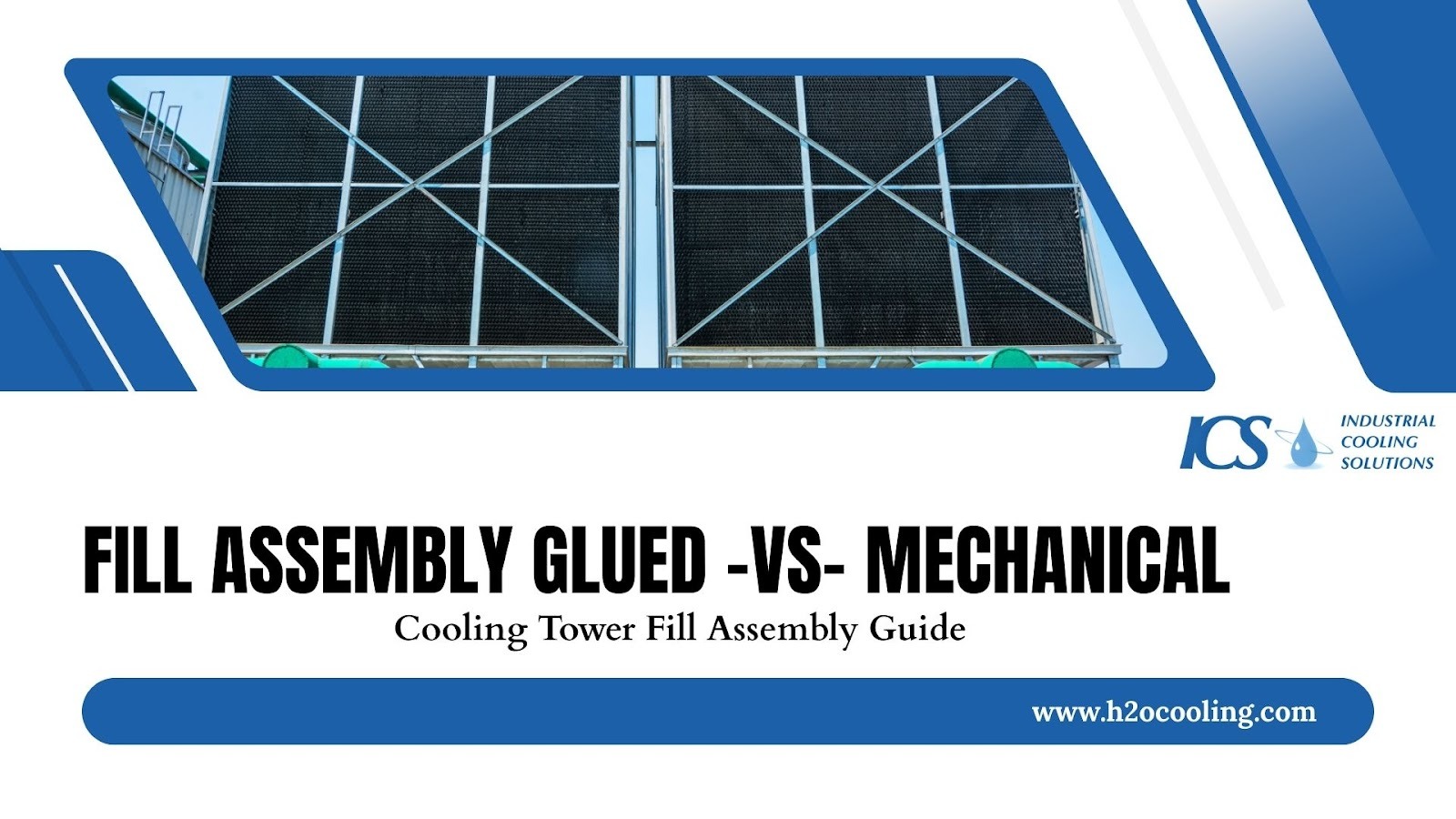
The efficiency of a heat rejection system largely depends on its components, particularly the cooling tower fill assembly. One of the most critical decisions engineers and facility managers face is selecting the right Fill Assembly Glued-vs-Mechanical method.
This decision impacts more than just construction—it influences shipping logistics, on-site safety, maintenance, and long-term system performance. Choosing the wrong method can increase freight costs, create unsafe conditions, or lead to early failure of the cooling system.
This guide compares glued and mechanical assemblies, addressing practical considerations like ocean freight, retrofitting, and installation environments. It offers clarity to help you make an informed decision for your next project, ensuring optimal performance and durability.
Understanding Cooling Tower Fill Assembly
A cooling tower fill assembly consists of textured sheets of plastic, usually PVC or Polypropylene, arranged to create a large surface area. This structure facilitates the evaporation process by allowing water to spread into thin films or droplets as air passes through it. The "assembly" refers specifically to how these individual sheets are secured to one another to form a cohesive block or module.
Why the Assembly Integrity Matters
- Thermal Capacity: The stability of the assembly affects the tower’s thermal performance.
- Cooling Efficiency: Misaligned or separated sheets can reduce heat transfer efficiency.
- Structural Support: Proper assembly ensures the fill can support water weight, scaling, and biological growth without collapsing.
Why Fill Assembly Method Matters
Choosing the right Fill Assembly Glued-vs-Mechanical approach directly affects how efficiently a cooling system is installed, operated, and maintained. The method used to join fill sheets determines installation complexity, workforce requirements, and the overall project timeline.
Several practical factors influence project outcomes when selecting an assembly method:
- Installation speed: Glued assemblies require curing time, while mechanical assemblies allow immediate installation, which can significantly impact construction schedules.
- Labor requirements: Certain assembly methods demand skilled labor and controlled conditions, which may not be readily available at all locations.
- Project location: Remote sites, offshore installations, or congested rooftops often favor assembly methods that offer flexibility and minimal on-site constraints.
How Glued Tower Fill Assembly Works
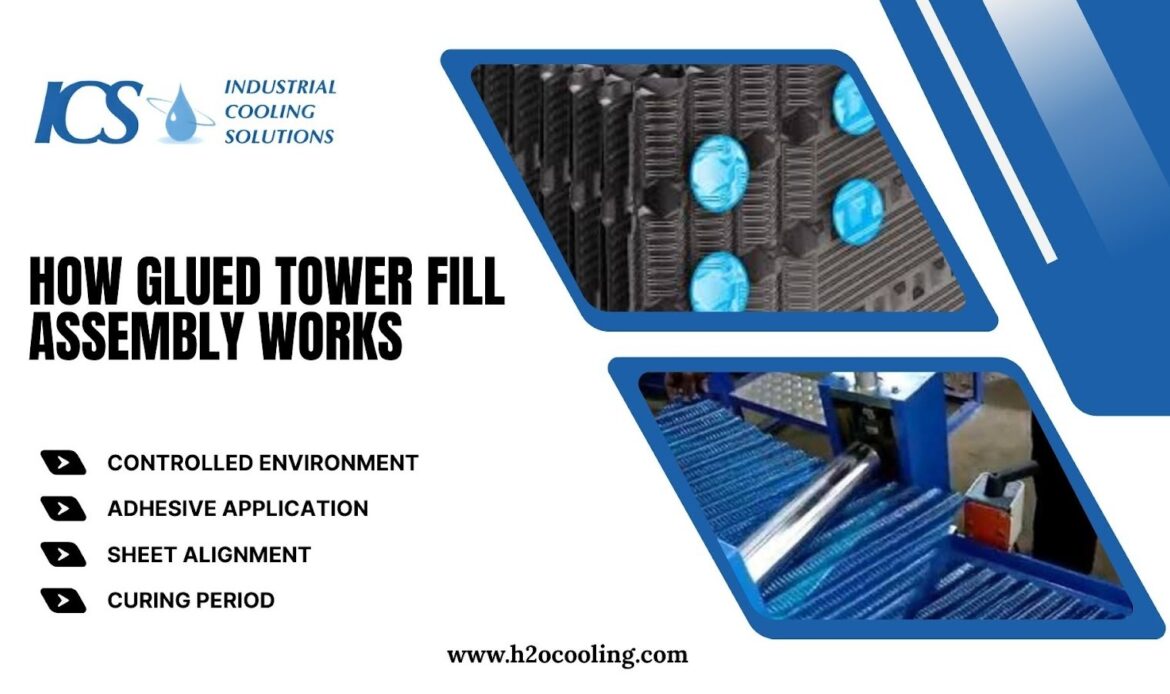
Glued fill assembly relies on chemical bonding to permanently fuse individual fill sheets into a rigid block. Solvent-based adhesives are applied at specific contact points, slightly softening the plastic surface to create a strong bond once cured.
Key Steps in the Glued Assembly Process
- Controlled environment: Assembly is performed in factory settings where temperature, humidity, and airflow are tightly regulated.
- Adhesive application: Specialized solvents are evenly applied to ensure consistent bonding across the fill sheets.
- Sheet alignment: Precise alignment prevents airflow disruption and ensures uniform thermal performance.
- Curing period: The assembled fill packs are left to cure until the adhesive reaches full bonding strength.
Materials and Chemicals Used in Glued Assembly
The bonding agents used in this process are specialized solvents designed to attack the specific plastic polymer of the fill. These are not simple household glues but industrial chemical agents that require careful handling.
Review the specific characteristics of these bonding agents before specifying them for a project:
- Solvent-based bonding agents: These chemicals must be compatible with the specific fill material to ensure a permanent structural bond.
- Sensitivity to temperature and humidity: High humidity or low temperatures can inhibit the curing process, leading to weak bonds that may fail under load.
Installation Challenges with Glued Fill
Although glued fill packs provide structural rigidity, they present limitations once transported to the job site. Pre-assembled blocks are bulky and difficult to modify if field dimensions differ from original designs.
Furthermore, applying glue on a job site involves significant risks.
- Limited field assembly flexibility: Adjusting the size of a glued block requires cutting the entire module, which is labor-intensive and creates debris.
- Safety considerations during handling: If field gluing is required, workers face exposure to hazardous fumes, requiring strict ventilation and personal protective equipment.
How Mechanical Tower Fill Assembly Works
Mechanical cooling tower fill assembly utilizes physical fasteners or interlocking designs to secure the sheets. Instead of relying on a chemical reaction, this method uses engineered geometry to hold the pack together. This approach allows the fill to be assembled anywhere, from a factory floor to the tight confines of a cooling tower plenum.
Here are some key features to consider:
- Modular design allows for easy movement and expansion without losing structural integrity.
- Perfect for projects with unpredictable site conditions.
- Meets environmental regulations by avoiding the use of solvents.
Components Used in Mechanical Fill Assembly

The strength of a mechanical assembly comes from its hardware and sheet design. Engineers utilize various fastening systems to ensure the sheets remain spaced correctly and securely locked.
These components ensure the pack maintains its shape under the weight of water and airflow:
- Locking rods, pins, or clips: These distinct fasteners pierce through multiple sheets or clip onto edges to hold the assembly in a fixed position.
- Interlocking sheet structures: Some modern fill designs feature thermoformed knobs and sockets that snap together, eliminating the need for separate hardware.
Installation Benefits of Mechanical Assembly
Mechanical assembly offers significant advantages regarding logistics and site management. Because the process is physical rather than chemical, it is not subject to the same environmental constraints as gluing.
Project managers often prefer mechanical assembly for the following reasons:
- Faster on-site installation: Crews can assemble packs immediately without waiting for adhesives to cure, allowing for rapid deployment.
- Reduced dependency on factory conditions: Assembly can proceed in cold, humid, or hot weather without affecting the final strength of the fill pack.
Fill Assembly Glued-vs-Mechanical Comparison Table
| Comparison Factor | Glued Fill Assembly | Mechanical Fill Assembly |
| Assembly method | Uses chemical bonding to join fill sheets | Uses clips, locks, or fasteners to secure fill |
| Installation location | Mostly assembled in a factory setting | Can be assembled in the field or factory |
| Shipping requirements | Requires pre-assembled blocks and careful handling | Ships flat, reducing freight volume |
| Field installation flexibility | Limited flexibility once bonded | Allows on-site adjustment and customization |
| Safety considerations | Involves volatile solvents during assembly | Eliminates chemical exposure risks |
| Maintenance access | Difficult to separate bonded sections | Allows easy removal of individual blocks |
| Repair and replacement | Often requires replacing entire sections | Supports targeted replacement of damaged fill |
| Retrofit suitability | Less adaptable to existing towers | Fits retrofit and upgrade projects well |
| Long-term serviceability | Bond integrity can weaken over time | Mechanical joints remain stable and accessible |
Shipping and Logistics Considerations
The logistics of getting materials to the site are often the single largest cost driver in cooling tower projects, particularly for international shipments. When evaluating Fill Assembly Glued-vs-Mechanical options, transportation efficiency becomes a decisive factor. Glued fill blocks occupy a vast amount of volume but carry very little weight. Essentially, you pay to ship air.
Mechanical assembly fundamentally changes this equation.
- Space requirements for glued fill blocks: Pre-assembled blocks require significantly more truck or container space, leading to higher transportation fees.
- Freight cost impact of pre-assembled fill: The inefficiency of shipping expanded blocks can double or triple the freight budget compared to flat materials.
- Flat-pack advantages of mechanical assembly: Sheets can be nested tightly and shipped flat, allowing for four to five times more material in a single container.
Safety Implications During Installation and Maintenance
Safety protocols differ drastically between the two methods. Glued assembly involves volatile organic compounds (VOCs). These solvents present fire hazards and respiratory risks. Storing large quantities of flammable adhesive on a construction site requires special permits and safety lockers.
Mechanical assembly eliminates the chemical hazard.
- Chemical exposure risks in glued assembly: Workers must manage ventilation and flammability concerns, adding complexity to the site safety plan.
- Reduced hazard profile of mechanical assembly: The process involves only manual assembly or simple tools, removing the risk of chemical burns or inhalation injuries.
- Ease of repair and section replacement: A damaged mechanical pack can be disassembled and fixed, whereas a glued pack usually requires total replacement.
Maintenance and Long-Term Performance Impact
Maintenance schedules depend heavily on the long-term reliability of the tower fill assembly. The demanding environment inside a cooling tower, characterized by continuous water flow, chemical treatments, and temperature swings, eventually impacts the integrity of the assembly connections.
Glued bonds degrade. As plastics age and chemicals leach out, the glue joints often become the weak point. If a bond fails, sheets can delaminate, collapsing into the basin and clogging the pumps.
- Bond degradation risks over time: Chemical attacks and thermal cycling can weaken adhesive joints, leading to structural failure of the pack.
- Ease of cleaning and inspection: Mechanical packs can often be taken apart for deep cleaning, while glued packs are impossible to access internally without destroying them.
- Replacement procedures for damaged fill sections: Facility teams can replace individual sheets in a mechanical assembly, saving costs compared to discarding an entire glued block.
When to Choose Glued Tower Fill Assembly
Despite the logistical challenges, glued assembly remains the standard for specific applications. It is often the preferred choice for smaller, factory-assembled towers where the fill is installed before the unit ships.
Select a glued assembly if your project meets the following criteria:
- Factory-built cooling tower applications: When the tower arrives fully assembled, the volume efficiency of the fill during shipping is irrelevant.
- Controlled production environments: If the assembly occurs in a facility with proper ventilation and temperature controls, glued bonds are reliable.
- Projects with minimal field work: If the priority is to crane a unit into place with zero onsite assembly time, pre-glued fill is appropriate.
Final Thoughts
Selecting the right Fill Assembly Glued-vs-Mechanical method is a strategic choice that directly affects the budget, schedule, and safety of a cooling project. Glued assemblies offer rigidity and convenience for factory-built units but may face logistical limitations over time. Mechanical assemblies, in contrast, provide flexibility, safer installation, and freight savings, making them ideal for large or remote projects.
By carefully evaluating site conditions and maintenance requirements, engineers can ensure the long-term performance and reliability of the cooling tower fill assembly.
For cooling tower fill assembly solutions, maintenance, or expert guidance, contact ICST to ensure long-term performance, safety, and reliability.
Frequently Asked Question
What is a cooling tower fill assembly?
It is a structured arrangement of PVC or polypropylene sheets that maximizes surface area for heat transfer. Its integrity directly impacts cooling efficiency, thermal capacity, and long-term reliability of the tower.
What are the main types of cooling tower fill assembly
The two primary types are glued (chemically bonded) and mechanical (fastened or interlocking). Each method has distinct advantages and limitations regarding installation, maintenance, and shipping.
How do glued and mechanical cooling tower fill assemblies differ?
Glued assemblies use solvent-based adhesives for a rigid factory-built block, while mechanical assemblies rely on clips, locks, or interlocking designs. Mechanical assemblies allow field adjustments, easier repairs, and safer handling.
Which tower fill assembly is better for retrofitting existing towers?
Mechanical fill assemblies are generally preferred for retrofits because they can be adjusted on-site, replaced individually, and fit irregular spaces without major modifications.