


Cooling tower drift eliminator types are structural components that capture physical water droplets escaping the exhaust air stream. These components stop massive water loss and ensure compliance with environmental regulations. Controlling these droplets reduces health risks, providing necessary Legionella control.
Plant engineers must choose between blade designs, cellular formats, and the PVC eliminator. The best choice depends entirely on your target drift rate, airflow geometry, and maintenance capacity. Selecting a high-efficiency drift eliminator will dictate your schedule for future eliminator replacement.
What Drift Eliminators Actually Do in a Cooling Tower System
Drift vs Evaporation vs Blowdown (Critical Difference)
It's common for cooling tower operators to mix up the different ways water is lost from the system. Here’s a simple breakdown:
- Evaporation: This is the intentional loss of water as vapor. It’s the primary cooling process that removes heat from the system.
- Blowdown: This is a deliberate process to control water chemistry. Highly concentrated water is drained to prevent scale and mineral buildup inside the tower.
- Drift: This is the unintentional escape of liquid water droplets carried out of the tower by the moving air. These droplets contain treatment chemicals and potential biological contaminants, posing a risk to the surrounding area.
Drift eliminators are specifically designed to address drift by serving as a physical barrier. Depending on the cooling tower drift eliminator types used, they can effectively catch escaping water droplets from the airstream and return them to the cooling tower.
How Drift Eliminators Capture Water Droplets
These components force the exhaust air to change direction multiple times before exiting the tower roof. Water droplets carry much more mass than microscopic air molecules. The heavy droplets cannot navigate the sharp turns and crash directly into the solid structural surfaces.
The water then forms larger drops and falls back into the cooling tower basin below. Consider these exact physical mechanisms:
- Airflow redirection forces sudden momentum shifts in the fast air stream.
- Surface contact traps the heavy moisture against the solid plastic walls.
- Droplet coalescence combines small mists into heavy drops that fall downward.
Why Drift Control Is Critical (Cost + Compliance)
Losing physical water droplets costs industrial facilities significant money daily. Every single gallon of drift carries away expensive chemical treatments meant to protect the cooling tower internals. Replacing those lost chemicals increases operating budgets massively over a fiscal year.
Furthermore, strict environmental compliance standards penalize facilities that release chemical-laden mist into adjacent properties. The most dangerous factor remains the public health risk. Drift droplets transport dangerous bacteria directly to public spaces.
Types of Cooling Tower Drift Eliminators (Design Breakdown)

Understanding the various cooling tower drift eliminator types helps engineers match the correct hardware to their specific system load.
Blade Type Eliminators
Engineers often find blade-type units installed in older cooling towers across industrial parks. This simple design uses wide-spaced panels to deflect the vertical airflow.
Look at these system factors:
- Low initial capital cost makes them appealing for tight maintenance budgets.
- High drift rate output makes them unsuitable for strict compliance zones.
- Limited overall efficiency requires more frequent chemical inventory adjustments.
Cellular Drift Eliminators
Cellular structures utilize a rigid honeycomb geometry to guide the exhaust air upward. The tightly packed cells create multiple contact points for rapid moisture capture.
How does the cellular design compare to older blade models? What operational advantages do they provide to operators? Evaluate these functional traits:
- Moderate capture efficiency suits mid-range cooling operations perfectly well.
- Better airflow control distributes the exhaust evenly across the tower top.
- Superior structural rigidity helps the unit withstand high wind velocities.
PVC High-Efficiency Drift Eliminators
The modern industrial standard relies heavily on the PVC eliminator. This specific design features complex paths that maximize the internal surface area. The PVC material strongly resists chemical corrosion and physical degradation over time.
What makes PVC the preferred material for modern facilities? How does it impact safety? Review these specific advantages:
- Environmental Protection: With minimal droplet escape, you can safeguard the surrounding environment and maintain regulatory compliance.
- Enhanced Durability: High corrosion resistance prevents material breakdown, even when exposed to harsh water treatments, ensuring a longer service life.
- Improved Safety: The clean, smooth surfaces of the PVC eliminators simplify cleaning and effectively support mandatory Legionella control protocols.
Multi-Pass High-Efficiency Designs
High-performance cooling towers require advanced multi-pass airflow paths to meet strict emissions standards. Within the various cooling tower drift eliminator types,
Why do critical industrial sites invest in multi-pass units? What operational trade-offs do they accept? Consider these engineering realities: multi-pass designs are complex structures that force the air through three or more distinct directional changes.
- Maximum droplet capture ensures complete environmental regulatory compliance.
- Higher pressure drop requires more fan motor energy to push the air.
- Best application fit involves chemical plants and dense urban environments.
Performance Comparison of Drift Eliminator Types
Evaluating cooling tower drift eliminator types requires a direct look at operational metrics. Plant managers must balance capture efficiency against fan energy consumption.
| Parameter | Blade Type | Cellular | PVC High-Efficiency | Engineering Insight |
| Drift Rate | High | Medium | Very Low | Dictates environmental compliance |
| Air Resistance | Low | Medium | Medium to High | Directly impacts fan energy costs |
| Durability | Low | Medium | High | PVC resists harsh water chemicals |
| Maintenance | Low | Medium | Low | Depends entirely on biological fouling |
| Best Use Case | Old systems | Mid range upgrades | Modern towers | Must align with facility goals |
How to Select the Right Drift Eliminator for Your Cooling Tower
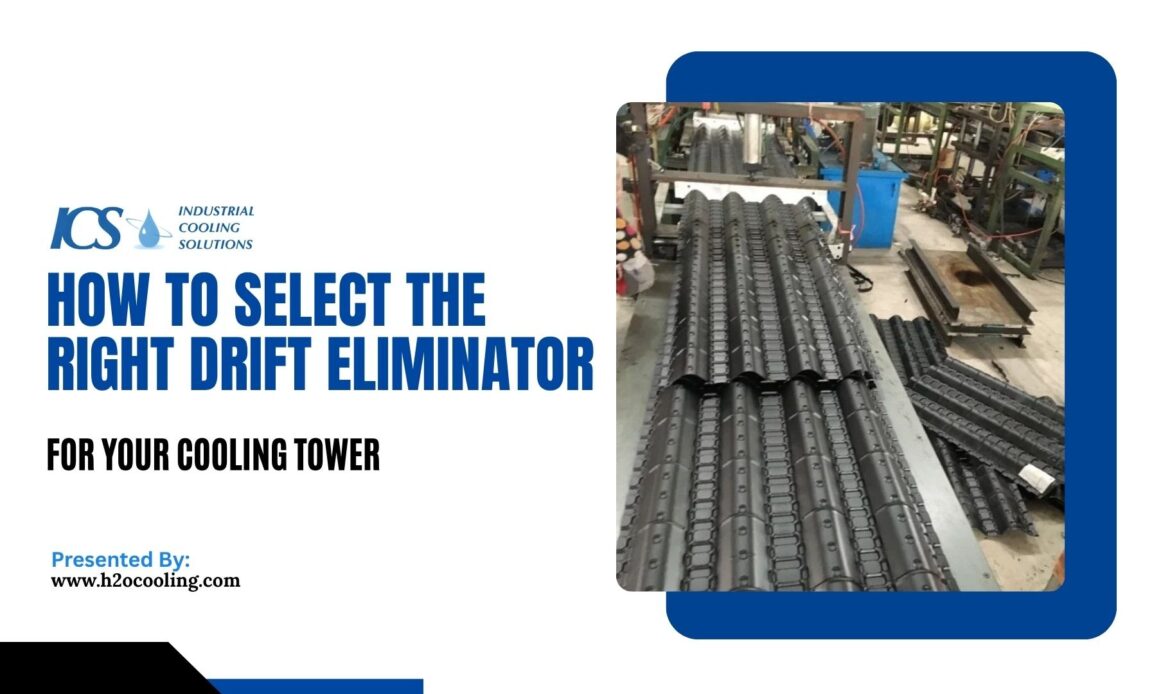
Choosing among the different cooling tower drift eliminator types demands careful system analysis. You must evaluate your specific environmental rules along with your structural layout and water chemistry.
Based on Drift Rate Requirements
Regulatory limits often dictate your component selection entirely. Many industrial standards require droplet escape rates below specific percentage thresholds.
How do these percentages translate into actual equipment choices? What numbers should engineers target? Review these performance benchmarks:
- Rates above 0.02 percent represent outdated technology requiring immediate upgrade.
- Rates below 0.005 percent provide acceptable capture for standard industrial parks.
- Rates below 0.001 percent define high-efficiency, ultra-dense multi-pass operations in urban centers.
Based on Tower Design and Airflow
The physical shape of your cooling system impacts your component options directly. Crossflow towers pull air horizontally through the falling hot water. Counterflow towers pull air vertically against the downward water path.
The air velocity in each design interacts differently with the eliminator structure. High velocity systems require robust heavy materials to prevent physical deformation.
Based on Water Quality and Fouling Risk
Dirty makeup water creates significant clogging risks for tightly packed cellular designs. Suspended solids and biological matter will accumulate rapidly in the narrow airflow passages.
Biofilm growth causes severe performance loss and restricts the exhaust air. Facilities with poor water filtration should avoid ultra-dense multi-pass designs to prevent rapid blockages.
Common Drift Eliminator Failures and When to Replace
Even the best cooling tower drift eliminator types will eventually degrade in harsh industrial environments. Recognizing the early warning signs prevents catastrophic system failures.
Physical Damage and Deformation
Constant exposure to high air velocities and fluctuating temperatures causes deep structural stress. Plastic components will warp and crack, and sag over time. This physical damage creates large open gaps where air and water bypass the capture surfaces entirely.
Fouling and Blockage
Mineral scale and biological biofilm accumulate rapidly on continuously wet surfaces. This heavy fouling blocks the narrow airflow channels completely. As the passages shrink, the air velocity increases rapidly, forcing water droplets straight through the remaining open spaces.
Increased Drift Loss Symptoms
Operators must watch for physical evidence of component failure during daily rounds. A thick visible plume carrying heavy moisture indicates severe droplet escape.
You will also notice increased chemical consumption and rapidly dropping basin water levels. Surrounding steel equipment may show sudden signs of accelerated rust and corrosion.
Installation and Replacement Best Practices
Properly installing your cooling tower drift eliminator types ensures they perform at their rated manufacturer specifications. Poor installation practices ruin the effectiveness of even the most expensive hardware.
Correct Positioning and Sealing
Technicians must nest the individual modules tightly together across the entire tower opening. Any gaps left between the modules create a massive air bypass issue. The high-velocity exhaust air will always take the path of absolute least resistance. The air will rush through these unsealed gaps while carrying thousands of water droplets with it.
Avoiding Air Leakage Paths
Common installation mistakes include cutting the plastic modules too short or failing to secure the perimeter edges. Installers must seal the edges where the plastic meets the structural walls of the cooling tower tightly.
Leaving outer edge gaps guarantees that heavy moisture will escape the system completely undetected.
Conclusion
Choosing the right cooling tower drift eliminator is crucial for your water treatment program's efficiency. Factors like design, capture efficiency, and pressure drop must be considered. While blade and cellular models exist, we strongly recommend modern facilities upgrade to high-efficiency PVC eliminators.
This multi-pass design offers superior droplet capture, ensuring compliance with environmental regulations and reliable Legionella control. The chemical savings and risk mitigation justify the investment.
For high-quality drift eliminators and expert cooling tower maintenance and repair, visit H2ocooling.com to ensure long-term efficiency and operational peace of mind.
Frequently Asked Questions
What is the best drift eliminator type for cooling towers?
The best option is the PVC high-efficiency multi-pass design. This structure provides maximum droplet capture and exceptional chemical resistance. It effectively reduces water loss and minimizes environmental risks. Facilities prioritizing strict regulatory compliance and absolute safety rely on this specific geometry to protect their surrounding environment.
What is an acceptable drift rate?
An acceptable measurement depends heavily on local regulations and facility location. Standard industrial applications usually require rates below 0.005 percent of the total circulating water flow.
How often should drift eliminators be replaced?
Industrial facilities typically schedule complete replacement every five to eight years. However this timeline changes based on water quality and maintenance practices. Severe mineral scaling or unmanaged biological fouling will destroy the plastic components much faster. You must replace the modules immediately if you observe physical warping or heavy moisture plumes.
Can drift eliminators reduce Legionella risk?
Yes these components act as a critical physical barrier against airborne bacteria. They strip the contaminated water droplets out of the exhaust air stream. Keeping the bacteria contained within the cooling tower basin prevents community exposure. This mechanical capture strongly supports your primary chemical biocide treatments.
Do drift eliminators affect airflow?
Yes every internal component creates some level of air resistance within the cooling tower. High efficiency models with complex geometric paths restrict airflow more than simpler designs. This increased resistance requires the fan motor to consume more electrical power. Engineers must account for this pressure drop during the system design phase.