

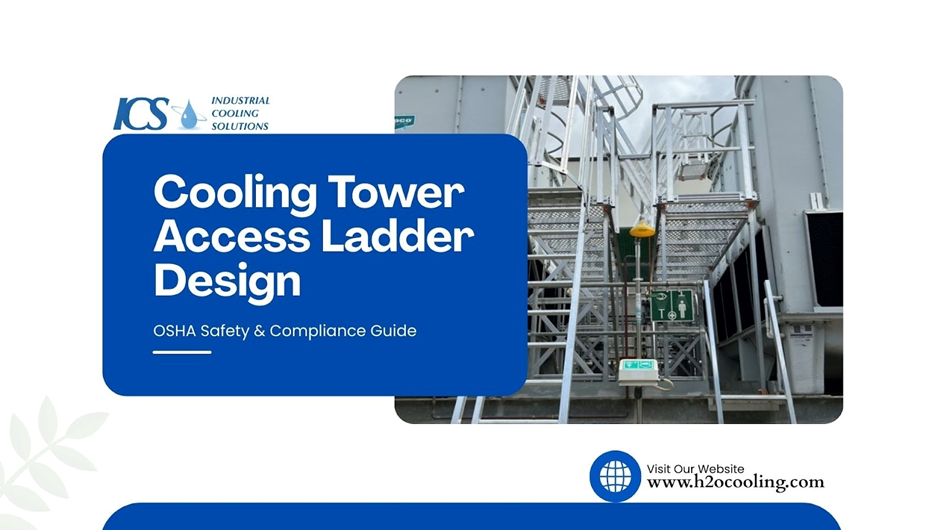
Cooling towers require consistent maintenance to ensure efficient operation, and proper access systems are critical for worker safety and productivity. Routine tasks like inspecting components, cleaning surfaces, servicing mechanical systems, and checking structural integrity become hazardous and time-consuming without adequate systems in place.
Poor cooling tower access ladder design, insufficient platforms, and a lack of proper maintenance walkways create significant risks, including falls from height, one of the leading causes of workplace fatalities in industrial settings. Beyond safety concerns, inadequate access can result in longer maintenance windows, costly operational downtime, and compliance issues.
Failure to meet OSHA access requirements or adhere to safety railing specifications exposes organizations to liabilities. In this article, we’ll explore how modern cooling tower designs prioritize safe and efficient access to address these challenges.
Why Safe Access Systems Matter in Cooling Towers
Cooling towers operate in challenging environments. Water exposure, chemical treatment, and temperature fluctuations create corrosive conditions. Workers navigate these environments to perform essential maintenance tasks. Without proper access infrastructure, routine inspections become dangerous operations.
Safe access systems provide multiple benefits:
- Worker safety and fall prevention: Properly designed ladders, platforms, and guardrails reduce fall risks and create secure working areas
- Faster maintenance operations: Clear access paths and strategically placed platforms allow technicians to reach equipment quickly
- Reduced downtime: Efficient access systems minimize the time required for inspections and repairs
- Compliance with safety regulations: Meeting OSHA standards and industry guidelines protects organizations from violations and liability
- Improved equipment lifespan: Regular maintenance becomes more feasible when access is safe and convenient
Organizations that invest in quality access systems see measurable returns. Maintenance teams work more confidently and efficiently. Equipment receives timely attention. Compliance audits proceed smoothly. These factors contribute to reliable cooling tower performance and reduced operational costs.
Cooling Tower Access Ladder Systems
Types of Access Ladders Used
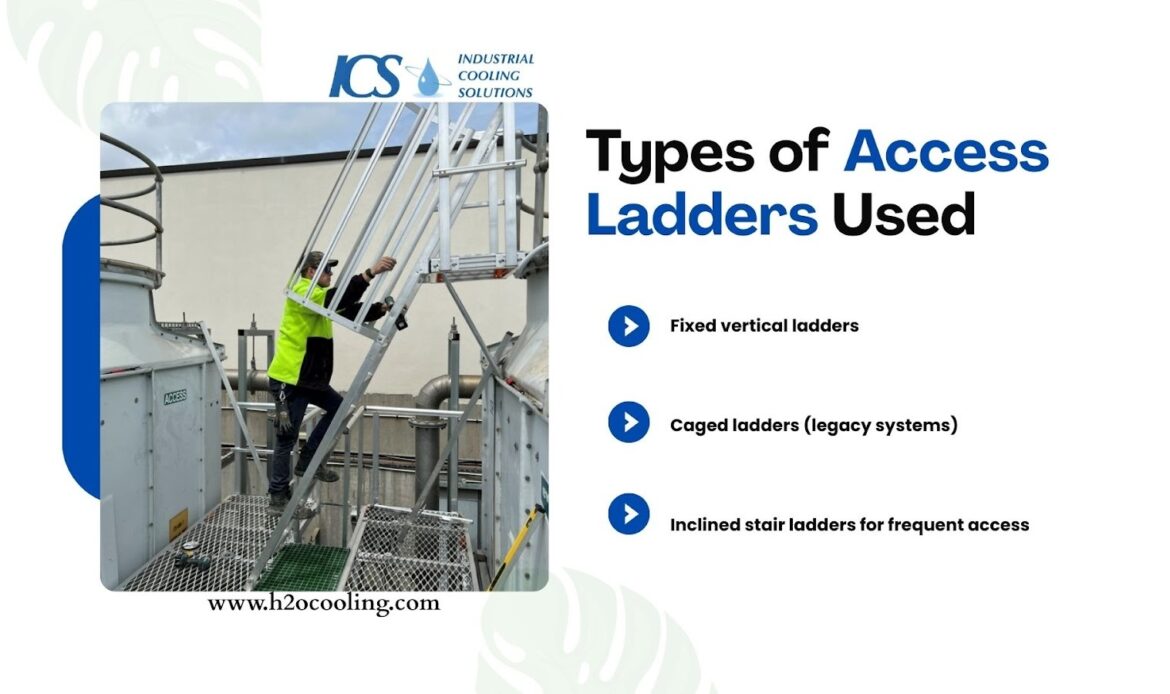
Selecting the appropriate cooling tower access ladder depends on tower height, maintenance frequency, and regulatory requirements. Each ladder type offers specific advantages for different applications.
What determines the best ladder configuration for your cooling tower? Consider how often workers need access, the vertical distance involved, and current safety standards.
- Fixed vertical ladders: Standard option for towers with moderate heights, providing direct vertical access to platforms and equipment areas
- Caged ladders (legacy systems): Older fall protection method featuring enclosing cages, though modern regulations favor alternative systems
- Inclined stair ladders for frequent access: Angled ladder systems or stair towers that reduce worker fatigue during regular maintenance
Vertical ladders work well for occasional access needs. When maintenance teams visit the tower daily or multiple times per week, inclined systems or stair towers provide better ergonomics. Legacy caged ladders remain common in older installations, but many facilities upgrade to ladder safety systems during modernization projects.
Ladder Design Requirements
Proper ladder engineering ensures safety and longevity. Design failures lead to structural issues, accelerated deterioration, and potential accidents.
How do you ensure a cooling tower access ladder withstands years of service in harsh conditions? Focus on these engineering fundamentals.
- Load-bearing capacity: Ladders must support worker weight plus tools and equipment, typically designed for concentrated loads exceeding 200 pounds
- Corrosion-resistant materials: Material selection must account for constant moisture exposure and chemical treatments used in cooling tower operations
- Proper ladder pitch and rung spacing: Vertical ladders require consistent spacing (typically 12 inches between rungs) for safe climbing
- Secure anchoring to structure: Mounting points need adequate strength and corrosion protection to maintain structural integrity over time
Engineers calculate load requirements based on anticipated use patterns. Anchoring systems receive particular attention in cooling tower applications. The structure supporting ladder mounts must handle dynamic loads from climbing workers and resist corrosion from water exposure.
OSHA Access Requirements for Fixed Ladders
Federal regulations establish minimum standards for fixed ladder installations. These requirements protect workers and provide clear guidelines for compliance.
What do current regulations require for the installation of cooling tower access ladders? Understanding these standards helps facilities avoid violations while protecting workers.
- Fall protection systems for heights above compliance thresholds: Fixed ladders extending more than 24 feet require personal fall arrest systems or ladder safety systems
- Ladder safety systems vs cages: Current standards favor rail-mounted or cable-based systems over traditional ladder cages for new installations
- Clearance requirements: Minimum distances from wall surfaces and adequate space for safe climbing and dismounting
- Landing platforms for tall ladders: Intermediate platforms at regular intervals reduce climbing fatigue and provide rest points
Regulations distinguish between existing installations and new construction. While grandfathering provisions apply to some older systems, modifications or new installations for facilities planning must follow current standards.
Cooling Tower Access Platforms & Maintenance Walkways
Purpose of Access Platforms
Platforms create safe working areas at critical service points. These structures allow technicians to perform maintenance tasks while standing securely rather than working from ladders.
Why do cooling towers need dedicated maintenance platforms? Consider the variety of inspection and service activities required throughout the structure.
- Safe inspection zones: Platforms positioned for visual examination of fill media, eliminators, and structural components
- Equipment servicing access: Dedicated working areas near motors, gearboxes, fans, and mechanical systems
- Safe motor and gearbox maintenance: Sufficient space for tools, parts, and worker movement during mechanical repairs
- Structural inspection support: Platforms that facilitate examination of support columns, beams, and connection points
Platform placement follows equipment layout and maintenance requirements. Facilities with frequent maintenance needs benefit from larger, more accessible platforms. Basic inspection platforms can be smaller but must still provide a secure footing and adequate guardrails.
Maintenance Walkway Design
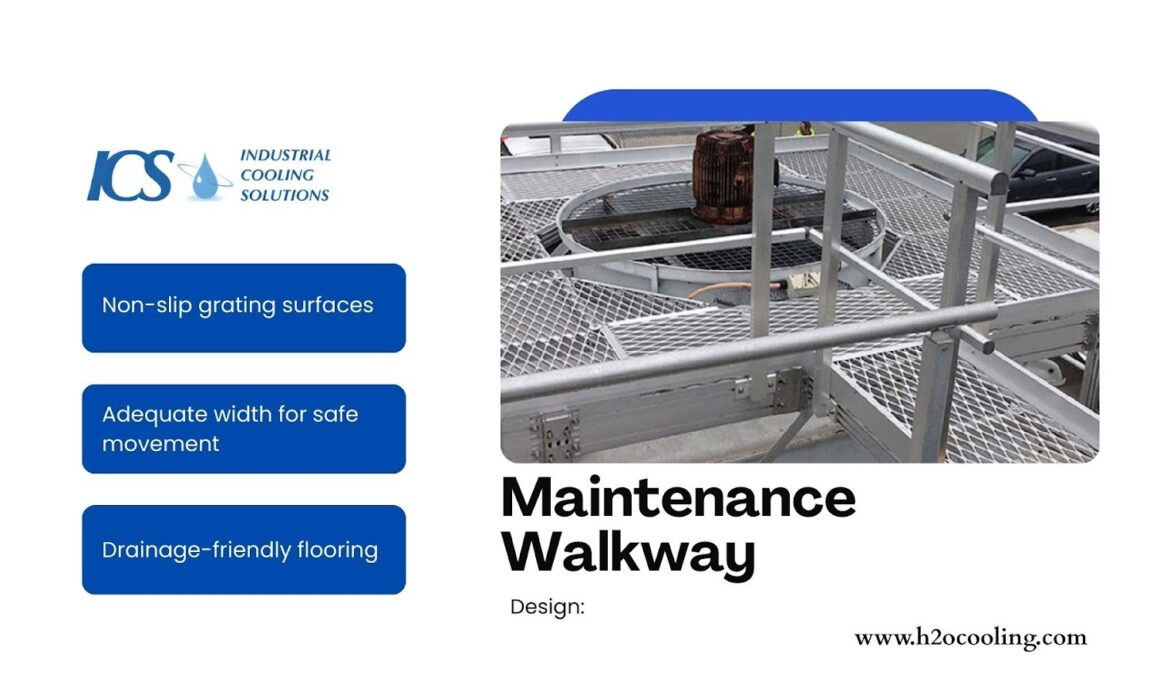
Walkways connect platforms, equipment areas, and access points. These pathways must handle foot traffic while resisting environmental degradation.
What makes an effective maintenance walkway in cooling tower environments? Design considerations extend beyond basic structural requirements.
- Non-slip grating surfaces: Perforated or expanded metal grating with raised patterns that maintain traction when wet
- Adequate width for safe movement: Minimum walkway widths (typically 24-36 inches) that allow workers to pass and carry tools safely
- Drainage-friendly flooring: Open grating designs that prevent water accumulation and reduce slip hazards
- Corrosion-resistant construction: Material selection appropriate for constant moisture exposure and chemical treatment effects
Walkway design balances several priorities. Wider paths improve safety and efficiency but add structural load and cost. Grating selection affects slip resistance, drainage, and maintenance. Many facilities use galvanized steel grating for durability, while others specify aluminum or stainless steel in highly corrosive environments.
Platform Design Standards & Structural Considerations
Load Capacity & Structural Integrity
Platforms must support anticipated loads without deflection or failure. Design calculations account for both static and dynamic forces.
How much load capacity do cooling tower platforms require? Engineering standards provide minimum values, but actual requirements depend on equipment weight and maintenance activities.
- Worker load capacity: Design for multiple workers simultaneously, typically 50-100 pounds per square foot for maintenance platforms
- Equipment and tool loads: Additional capacity for portable equipment, parts, and heavy tools used during service operations
- Dynamic loads during maintenance: Impact forces from moving equipment or workers, requiring safety factors beyond static load calculations
- Structural anchoring points: Connection details that transfer platform loads to the main tower structure without creating stress concentrations
Engineers specify load ratings based on worst-case scenarios. A platform serving a large motor might need capacity for lifting equipment plus multiple technicians. Inspection platforms with lighter duty cycles can use lower design loads.
Material Selection for Durability
Cooling tower environments challenge materials. Constant moisture, chemical exposure, and temperature variations accelerate the degradation of unsuitable materials.
Consider the specific environment and maintenance budget for your facility.
- Galvanized steel: Cost-effective option providing good corrosion resistance through zinc coating, suitable for many industrial cooling towers
- Stainless steel: Superior corrosion resistance in aggressive environments, with higher initial cost offset by extended service life
- Aluminum structures: Lightweight construction with excellent corrosion resistance, beneficial where structural load capacity limits steel options
- FRP (fiberglass reinforced plastic): Non-metallic alternative offering corrosion immunity, though requiring careful design for structural applications
Material selection affects initial cost, maintenance requirements, and replacement frequency. Galvanized steel dominates general industrial applications. Facilities using aggressive chemical treatments or experiencing rapid galvanizing failure often specify stainless steel or aluminum.
FRP platforms suit specific applications where metal corrosion proves problematic, though designers must account for different structural properties compared to metals.
Safety Railing Specifications & Fall Protection
Guardrail System Requirements
Railings prevent falls from platforms and walkways. Design standards specify dimensions and strength requirements that protect workers effectively.
What makes a guardrail system compliant withe uration, and strength.
- Top rail height standards: Top rails positioned 42 inches above walking surfaces (with allowable tolerance of plus or minus 3 inches)
- Mid-rail protection: Intermediate rail located approximately midway between the top rail and the walking surface, preventing workers from falling through openings
- Toe boards for tool protection: Four-inch minimum height barriers at platform edges that prevent tools and materials from falling to lower levels
- Impact resistance: Structural capacity to withstand 200 pounds of force applied in any direction along the top rail
Guardrail systems work as integrated assemblies. Top rails, mid-rails, posts, and toe boards must function together to provide continuous protection.
Fall Protection Enhancements
Beyond basic guardrails, additional safety features reduce accident risks and improve usability.
Facilities can exceed minimum safety standards for platform access by considering enhancements that provide extra protection.
- Ladder safety systems and lifelines: Vertical fall arrest systems on access ladders, with anchorage points on platforms for horizontal lifelines
- Self-closing safety gates: Spring-loaded gates at ladder entrance points that prevent accidental falls through access openings
- Anti-slip surfaces: Textured grating, coatings, or overlay materials that maintain traction in wet conditions
- Visibility markings and hazard striping: High-contrast paint on platform edges, obstacles, and low-clearance areas
Self-closing gates provide reliable protection at ladder access points. Workers opening these gates to reach platforms find them automatically closing behind, eliminating reliance on manual latching. Anti-slip treatments suit walkways and platforms where standard grating proves insufficient.
OSHA & Industrial Safety Compliance
Regulatory compliance protects workers and organizations. Federal and state regulations establish minimum standards for access systems, fall protection, and workplace safety.
Understanding OSHA access requirements helps facilities avoid violations while creating genuinely safe work environments. Compliance involves both initial design and ongoing maintenance.
- Worker fall protection standards: Requirements for personal fall arrest systems, guardrails, and safety nets based on fall distances and work activities
- Platform guardrail compliance: Specific height, strength, and configuration standards for railings on elevated platforms
- Safe access and egress requirements: Provisions ensuring workers can reach work areas and evacuate during emergencies without hazardous conditions
- Routine inspection requirements: Regular examination of access systems, fall protection equipment, and structural components with documentation of findings
Compliance extends beyond initial installation. Facilities must maintain access systems in a safe condition, replace worn components, and document inspection activities.
Common Access Design Mistakes to Avoid
Even experienced designers can make errors when creating a cooling tower access ladder system, compromising safety or functionality. Learning from these common mistakes can help prevent costly corrections and potential accidents down the line.
What design failures most frequently affect cooling tower access systems? These issues appear repeatedly in facilities with problematic access infrastructure.
- Inadequate platform space: Insufficient room for workers to maneuver during maintenance tasks, forcing awkward positions or unsafe work practices
- Poor ladder placement: Access points positioned incorrectly relative to equipment or platforms, requiring dangerous transfers or reaches
- Missing fall protection systems: Installations lacking required guardrails, ladder safety devices, or other protective measures
- Slippery walking surfaces: Smooth grating or solid platforms that become hazardous when wet, increasing slip and fall risks
- Ignoring corrosion risks: Material selections unsuited to cooling tower environments, leading to premature failure and safety hazards
When designing platforms, it's crucial to prioritize proper sizing from the start. Avoid the common mistake of allocating just enough space for workers to stand. Instead, consider the real needs of maintenance activities—space for tools, parts, and safe worker movement.
By planning, you can ensure the platform is functional, efficient, and safe for all tasks.
Choosing the Right Access Design for Your Cooling Tower
Every cooling tower presents unique access challenges, and the right cooling tower access ladder or platform is key. Design decisions must account for tower configuration, operational requirements, and site-specific constraints.
What factors determine optimal access system design for a particular cooling tower? Consider these elements when planning new installations or major retrofits.
- Assess Tower Dimensions and Layout: The height and overall shape of your cooling tower are fundamental. For taller structures, consider multi-level platforms and stair towers to ensure safe, easy access. In contrast, simpler ladder systems may suffice for low-profile towers.
- Factor in Maintenance Schedules: How often will your teams need access? Towers requiring daily checks benefit from robust platform systems and comfortable, ergonomic stairways, which streamline routine tasks and enhance worker safety.
- Evaluate Environmental Conditions: Consider your tower's surroundings. Is it near the coast, exposed to harsh chemicals, or in an area with extreme weather? These factors will dictate the best materials and protective coatings to use to prevent corrosion and ensure longevity.
- Plan for Future Growth: Think ahead. Do you anticipate expanding your facility or modifying the tower? Designing an access system with future needs in mind can save you from costly upgrades and ensure your system remains effective for years to come.
Involve maintenance staff in design for insights on access and workflow, avoiding costly changes later. Prioritize OSHA-compliant ladders and platforms to ensure safety, even on a tight budget.
Building Access Systems That Protect and Perform
Your cooling tower access infrastructure is crucial for both worker safety and operational efficiency. By investing in high-quality cooling tower access ladder systems, platforms, and walkways, you can significantly reduce accidents, speed up maintenance, and improve equipment reliability.
Effective access design begins with a thorough understanding of OSHA access requirements and established platform design standards. Choosing corrosion-resistant materials and robust structural designs ensures long-term performance and reduces future maintenance burdens. Prioritizing safety railing specifications and fall protection features, such as self-closing gates, creates a secure environment where your team can work confidently.
By designing access systems early, you can guarantee decades of safe and efficient operation. Ready to upgrade your cooling tower access for maximum safety and efficiency? ICS specializes in retrofitting and maintenance to meet top OSHA standards. Contact us today to protect your team for years!
Frequently asked Questions
What is the safest ladder type for cooling tower access?
For ultimate safety, choose ladder systems with rail-mounted or cable-based fall arrest devices, as they meet current OSHA standards. While traditional caged ladders are acceptable for existing structures, modern systems offer far superior worker protection.
When are platforms required for maintenance safety?
Platforms are required whenever workers need a stable surface to perform tasks that can't be done safely from a ladder. This includes most equipment servicing, inspections, and any job requiring tools, making them essential for safe maintenance.
What OSHA requirements apply to access ladders?
OSHA requires fixed ladders over 24 feet to have a fall protection system, such as a ladder safety device. Key standards also dictate proper rung spacing, clearance, and secure mounting to ensure worker safety.
What materials are best for corrosion-resistant walkways?
Galvanized steel is a durable and cost-effective choice for most cooling towers. For environments with aggressive corrosion, consider using stainless steel or fiberglass reinforced plastic (FRP) for maximum longevity.
Can existing towers be retrofitted with safer access systems?
Yes, most cooling towers can be retrofitted with modern safety upgrades like compliant ladders, guardrails, and service platforms. These retrofits enhance safety and ensure the tower meets current OSHA standards.