

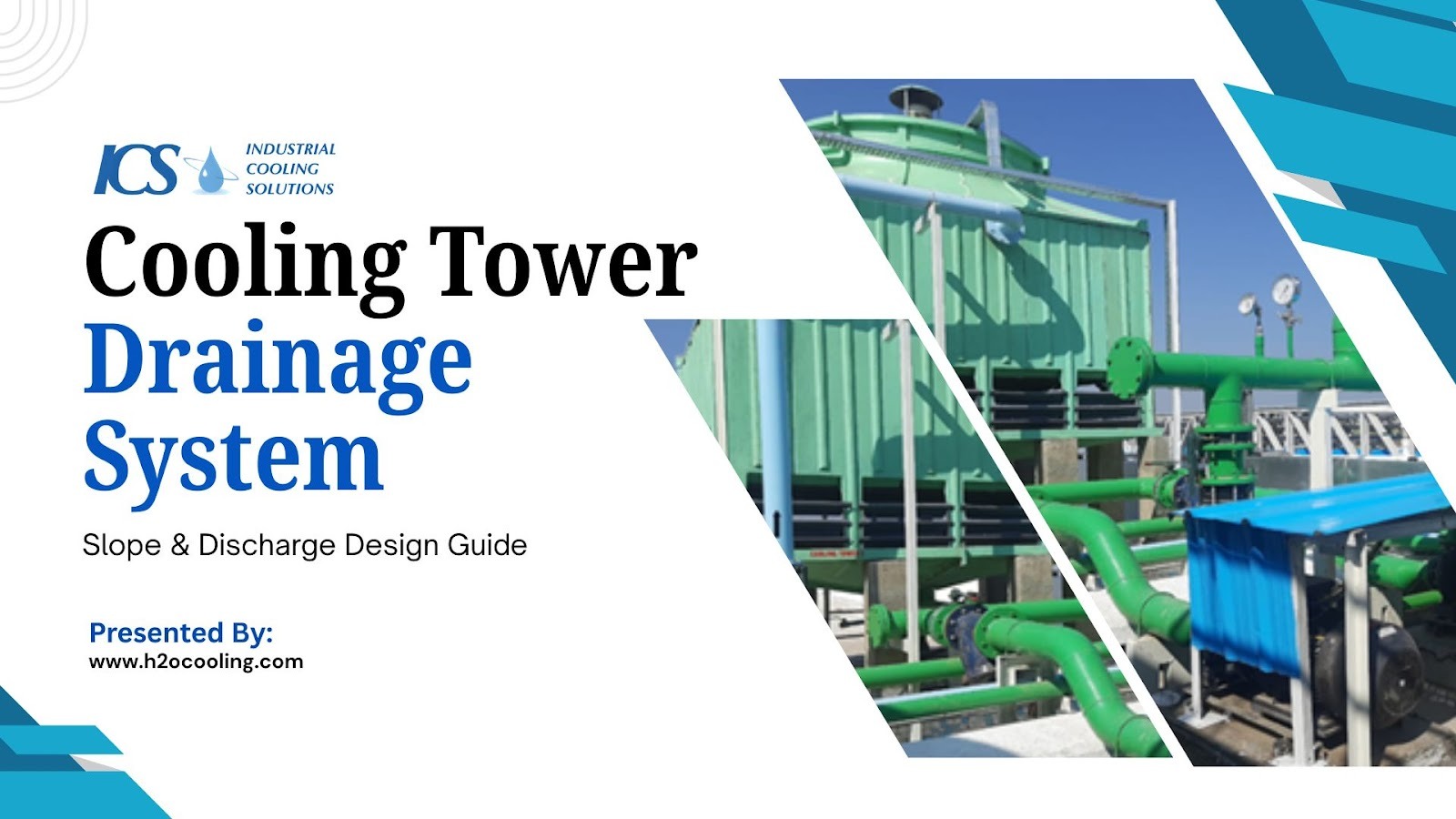
A cooling tower drainage system is essential for protecting equipment, preventing contamination, and ensuring operational reliability. Without it, water accumulation can lead to bacterial growth and corrosion, compromising performance and causing costly repairs.
Effective basin drainage design. and meeting proper slope requirements is crucial. Engineers must plan for routine blowdown, emergency overflow, and stormwater runoff. Every detail, from the basin floor to the discharge piping design, is vital for system integrity. Poor planning creates vulnerabilities during peak demand or severe weather.
This guide covers the principles for reliable cooling tower drainage. We will explore how to calculate slopes, design overflow channels, and implement drainage best practices to extend equipment life. We'll also cover overflow drainage and stormwater drainage compliance to meet operational and regulatory standards.
Basics of Cooling Tower Drainage
A Cooling Tower Drainage System serves multiple critical functions that directly influence system performance and longevity. Understanding these functions allows engineers to design drainage systems that effectively handle both routine operations and emergency conditions.
Primary Tasks of the Drainage System
- Removes water during routine blowdown cycles to control dissolved solids and maintain water quality.
- Enables complete basin clean-out during scheduled maintenance to remove sediment, algae, and debris.
- Manages stormwater during heavy rainfall to prevent overflow and structural damage.
Three Distinct Drainage Pathways
- Normal Drainage: Handles routine blowdown and controlled water removal during regular operations.
- Overflow Drainage: Activates when water levels exceed capacity, redirecting excess flow away from equipment and foundations.
- Emergency Drainage: Provides rapid water removal during critical events like shutdowns or catastrophic failures.
Impact of Drainage on Tower Performance
- Inadequate drainage leads to pooling water, creating stagnant zones where bacteria like Legionella thrive, posing health risks.
- Standing water accelerates corrosion of steel supports, concrete, and mechanical components.
- Over time, this deterioration weakens structural integrity and increases maintenance costs.
Key Design Considerations for Cooling Tower Drainage Systems
Several factors determine whether a drainage system will perform reliably throughout its service life. Engineers must evaluate these considerations during initial design and account for site-specific conditions that influence system behavior.
Flow Rate Calculations: This is the foundation of drainage design. Engineers must accurately project flow to ensure the system can handle peak demands without backups. This includes considering:
- Blowdown rates: These vary based on tower capacity, water chemistry, and operational cycles.
- Basin capacity: This determines the volume of water the system must manage during fills or after pump failures.
- Stormwater inflow: This depends on the tower's location, local rainfall, and the size of surfaces draining into the basin.
Hydraulic Continuity: To prevent restrictions and ensure smooth water movement, there must be no interruptions in the flow path from the basin to the discharge point. Discontinuities like undersized pipes, sharp bends, or elevation changes create turbulence and lower drainage efficiency.
Site Topography: The landscape and grading affect drainage routing and discharge locations. Towers on high ground might use gravity for drainage, whereas those in low-lying areas will need pumped systems. The elevation difference between the tower and the discharge point dictates pipe slope requirements and material choices.
Proper Slope Requirements for Basin Drainage
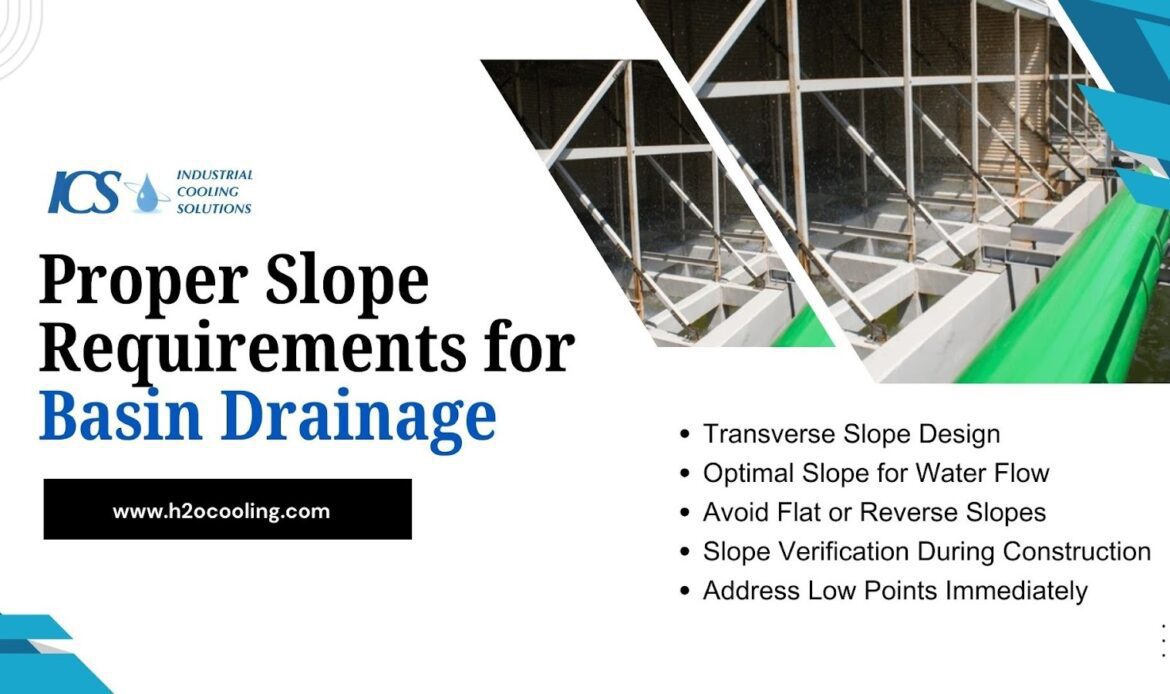
The slope of the basin floor in a Cooling Tower Drainage System directly impacts how effectively water drains during blowdown and maintenance cycles. If the slope is inadequate, water can collect in low spots, leading to persistent issues that compromise the overall performance of the system.
Most engineering standards recommend minimum slopes between 1% and 2% toward drain inlets. This translates to a drop of approximately 1 to 2 inches per 10 feet of horizontal distance. For large basins, designers often specify radial slopes that direct water from all points toward a central drain.
- Transverse Slope Design: Ensure rectangular basins have transverse slopes that direct water effectively toward side drain channels.
- Optimal Slope for Water Flow: Design steeper slopes to increase water velocity, aiding in the movement of sediment and debris toward drain inlets. This promotes self-cleaning and minimizes manual maintenance.
- Avoid Flat or Reverse Slopes: Prevent flat or reverse slopes that create stagnant areas where solids settle, water stagnates, and chemical treatments lose effectiveness.
- Slope Verification During Construction: Use tools like laser levels or transits to confirm proper slopes during construction, avoiding costly corrections later.
- Address Low Points Immediately: Identify and fix any low points during inspections before the concrete cures to prevent the need for extensive demolition and reconstruction.
Basin Drainage Design | Inlets, Grates, and Debris Control
Strategic placement of drain inlets ensures complete water removal and minimizes maintenance requirements. The number and location of inlets depend on basin size, shape, and expected debris loads.
Here are some key considerations for basin drainage design:
Drain Placement:
- Circular/Square Basins: A central drain is effective as radial slopes can direct water to a single point.
- Large Rectangular Basins: Multiple drain inlets may be needed along one side or at corners. This prevents long slopes where water could pool. Each inlet must be sized to manage its share of the total water flow without creating high velocities that could damage grates or concrete.
Grate and Screen Design:
- Fine Mesh Screens: These block small particles but can clog easily and need frequent cleaning.
- Coarse Grates: These allow for higher flow but might let debris pass through and accumulate in the pipes.
- Two-Stage Approach: A common solution is to use coarse grates over the drain opening with removable fine screens on top, allowing for easy cleaning without shutting down the tower.
Sediment Traps:
- Install these upstream of drain inlets to catch heavy particles before they enter the piping. They work by creating an enlarged chamber where water velocity decreases, allowing solids to settle.
- Include access ports for easy cleaning without needing to take the piping apart.
Overflow Drainage Planning & Capacity Design
Overflow events occur when water input exceeds removal capacity or when control failures lead to uncontrolled filling. Proper overflow planning is a critical aspect of a robust Cooling Tower Drainage System, preventing property damage and protecting structural components from water exposure.
Causes of Overflow Events
Overflows can be triggered by several conditions, such as heavy rainfall overwhelming normal drainage or equipment failures. For instance, pump malfunctions can reduce evaporation and cause water levels to rise, while fill valve failures might lead to continuous water addition beyond the system's design limits.
Overflow Routing and Safety
It is crucial to keep overflow channels separate from routine basin drains to avoid cross-contamination and ensure reliability during emergencies. Overflow should be routed away from tower footings, electrical equipment, and building foundations to prevent water damage to these critical components.
Calculating Overflow Capacity
To calculate the necessary overflow capacity, you must know the maximum anticipated flow rates and apply appropriate safety factors. Engineers often add a 50% to 100% safety margin above peak flow calculations to account for uncertainties like extreme weather or equipment failure.
Discharge Piping Design | Sizing, Routing & Support
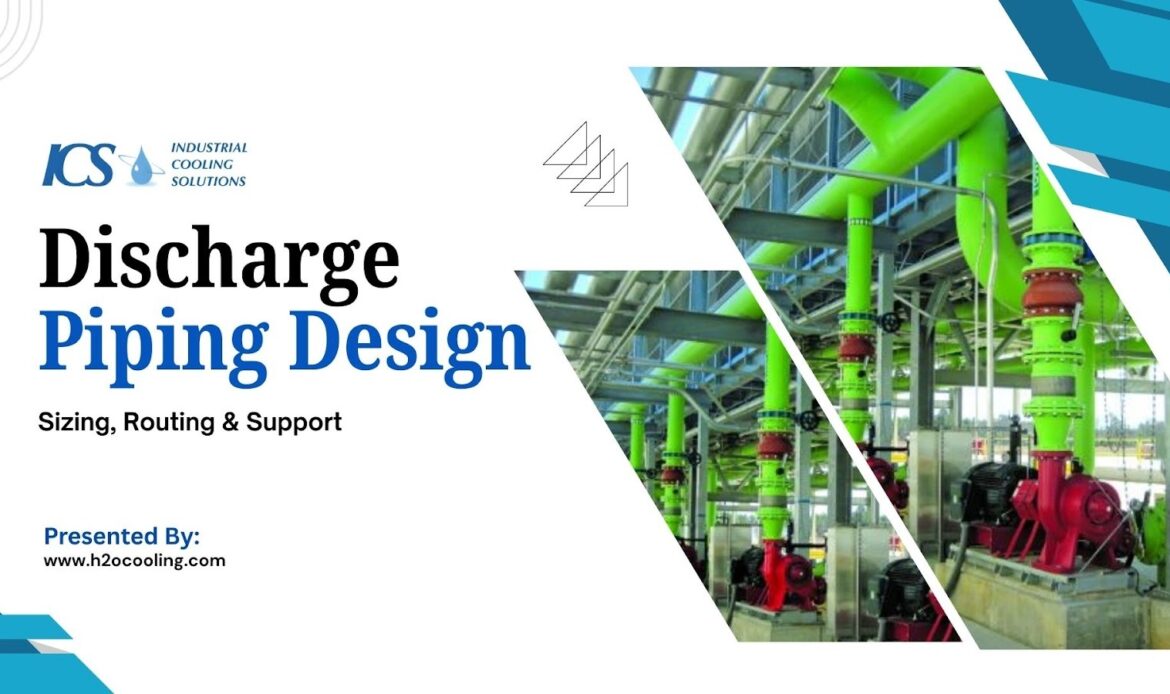
Discharge piping carries water from basin drains to final discharge points, and proper design ensures reliable flow under all operating conditions. Undersized piping creates backups that defeat the drainage system's purpose, while oversized piping increases costs without providing meaningful benefits.
Sizing: Pipe sizing is based on peak flow rates, available hydraulic head, and friction losses. Manning's equation and engineering tables are used to find the minimum diameter for design flows, typically aiming for velocities between 3 and 8 feet per second. This speed helps prevent sediment buildup without causing too much turbulence.
Material Selection: The choice of material depends on water chemistry, temperature, and budget.
- PVC: Offers good corrosion resistance and low friction at a moderate cost.
- HDPE: Provides better impact resistance and flexibility, simplifying installation in tight spaces.
- Stainless Steel: Handles higher temperatures and pressures but is more expensive.
- Carbon Steel: Needs protective coatings to prevent rust and is best for short or temporary runs.
Routing: Proper routing is crucial for effectiveness. Pipes should have a continuous downward slope for gravity flow and to avoid air pockets. It's important to avoid routes that could create siphons or backflow. Supports and hangers must be spaced correctly to prevent sagging where solids could collect.
Vents and Valves:
- Air Vents: Installed at high points to prevent vacuum formation that could slow drainage or damage seals.
- Check Valves: Placed near the discharge point to stop backflow from sewer lines or retention basins during high water events.
Stormwater & Environmental Compliance Considerations
Discharge from cooling tower drainage systems must comply with local regulations governing stormwater management and industrial wastewater. These requirements vary by jurisdiction and depend on tower water chemistry and discharge destination.
Regulations for Discharge to Storm Sewers
Many municipalities regulate discharge into public storm sewers through permits that outline acceptable water quality parameters. Cooling tower blowdown, which can contain high levels of dissolved solids, treatment chemicals, or biocides, often requires proper treatment before it can be discharged.
Treatment Methods for Cooling Tower Blowdown
To meet discharge regulations, treatment systems like separators and retention basins are used. Separators allow suspended solids to settle, while retention basins provide time for dissolved contaminants to degrade or neutralize.
Oil separators are particularly effective at removing lubricants and petroleum products from mechanical equipment. Sediment traps also play a critical role in capturing particulates that might clog downstream drainage systems.
Erosion Control During Construction and Maintenance
Erosion control measures are essential to prevent sediment from entering storm sewers during cooling tower construction or maintenance activities. Strategies like silt fences, temporary retention basins, and vegetative buffers help protect receiving waters from excessive sediment loads.
Installation Best Practices & Field Verification
Construction quality determines whether a well-designed drainage system performs as intended. Several verification steps during installation catch errors before they become permanent problems.
Proper installation is crucial to ensure a Cooling Tower Drainage System functions correctly. Verifying key details during construction can prevent common failures before they become permanent issues.
Here are some best practices for installation and field verification:
- Verify Basin Floor Slope: Before pouring concrete, confirm the basin floor's slope. Use grade stakes and surveying equipment to check elevations at multiple points. Correct any deviations from the design slope by adjusting formwork or adding fill material. This is crucial to prevent the most frequent cause of drainage failure.
- Check Drain Inlet Elevations: Ensure drain inlet elevations match the design specifications. Inlets that are too high can cause water to pool, while those that are too low may not capture all the flow during peak times. Verify these elevations during the rough-in stage for easy adjustments.
- Conduct Water Testing: Before the system goes live, test the drainage with a controlled water discharge. Fill the basin to its normal operating level and open the drains. This helps identify any flow restrictions, leaks, or routing errors. Water flow should be smooth and complete, without any persistent pooling except in designated sediment traps.
Common Drainage Problems & Engineering Fixes
Despite careful design and installation, a cooling tower drainage system can sometimes develop problems that require engineering solutions. Understanding the common failure modes of a cooling tower drainage system helps identify the most appropriate corrective measures.
Here are some common drainage problems and their engineering solutions:
- Slow Drainage: Often caused by an improper slope, this can be difficult to fix. Solutions include installing drainage pumps, repouring sections of the basin, grinding down high spots, or filling low areas with polymer-modified concrete.
- Clogged Drains: Debris buildup can be managed with better filtration and more frequent cleaning. Upgrading grates and screens can prevent debris from entering pipes, while cleaning sediment traps more often removes material before it becomes a problem. For severe clogs, you might need to install larger or additional drains.
- Undersized Piping: This usually requires replacement. If flow rates have increased, installing parallel drain lines or adding drainage pumps can increase capacity, though pumps add energy and maintenance costs.
- Backflow: If this occurs during heavy storms, it suggests poor overflow capacity. Solutions include adding dedicated overflow channels, increasing the size of existing overflow pipes, or installing check valves or backflow preventers to stop reverse flow from storm sewers.
Conclusion
Reliable cooling tower drainage systems require careful attention to water movement and system design principles. Proper slopes support complete water removal during operations and maintenance, while strategic basin drainage design ensures inlets efficiently capture flow with minimal upkeep.
Effective overflow drainage prevents property damage during equipment failures or extreme events. Thoughtful discharge piping design ensures smooth water flow to the final discharge point, avoiding restrictions or backflow risks. Success comes from site-specific evaluations, accurate flow calculations, and integrated system design.
By following drainage best practices and incorporating stormwater drainage controls, you can protect equipment, maintain water quality, and extend system longevity. Visit ICS to learn how our solutions ensure optimal drainage performance for your cooling towers.
Frequently Asked Questions
What slope is recommended for cooling tower basin drainage?
Most installations specify slopes between 1% and 2% toward drain inlets. This translates to approximately 1 to 2 inches of fall per 10 feet of horizontal distance. Steeper slopes improve drainage and help move sediment, but may not be practical in all basin configurations.
How should overflow drainage be designed?
Overflow systems should be separate from normal basin drains and sized to handle peak anticipated flows with appropriate safety margins. Route overflow channels away from structural foundations and electrical equipment. Calculate capacity based on maximum rainfall rates, pump failure scenarios, and control system malfunctions.
Why is the discharge piping slope important?
Continuous downward slope ensures gravity flow and prevents air pockets that can slow drainage or stop flow entirely. Proper slope also helps move sediment through piping and prevents accumulation that gradually reduces capacity.
What materials are best for drainage pipes?
PVC offers excellent corrosion resistance and low cost for most installations. HDPE provides superior impact resistance and flexibility. Stainless steel handles higher temperatures and pressures but costs more. Material selection should consider water chemistry, ambient conditions, and budget constraints.