


Facility managers and engineers frequently seek ways to lower energy costs and extend equipment life. One metric stands above the rest when analyzing system efficiency and operational reliability. That metric is the cooling tower approach.
Understanding this concept is essential for maintaining an optimized heat rejection system. A high approach temperature indicates that the tower cannot reject heat effectively, which forces chillers to work harder. This results in higher energy consumption and increased operational costs. You must understand the relationship between ambient conditions and tower performance to maintain system reliability.
This guide covers calculation methods, influencing factors, and thermal performance metrics to help you achieve peak efficiency. We will also explore the critical wet bulb approach to ensure you understand the theoretical limits of your equipment.
What Is Cooling Tower Approach? (Technical Foundation)
The cooling tower approach represents the difference between the cold water temperature leaving the tower and the ambient wet bulb temperature entering it. This value indicates how close the tower output gets to the theoretical limit of the surrounding air.
Formula:
You can calculate it using this formula:
Cooling Tower Approach = Cold Water Temperature – Ambient Wet Bulb Temperature
Consider this practical example to visualize the concept. If the cold water leaving the tower is 29°C and the ambient wet bulb temperature is 25°C, the approach is 4°C. A lower approach temperature signifies that the tower operates more efficiently and cools the water closer to the wet bulb temperature.
Difference Between Approach and Range
Distinguishing between the tower approach and range is crucial for accurately diagnosing performance issues and optimizing your system's efficiency. While both are key performance indicators, they measure different aspects of the cooling process. Understanding this difference allows for more effective troubleshooting.
- Range: This is the difference between the hot water temperature entering the tower and the cold water temperature leaving it. It measures the heat load removed from the system.
- Approach: This is the difference between the cold water temperature leaving the tower and the ambient wet bulb temperature. It measures the tower's performance capability against the theoretical limit of the surrounding air. A tower with a designated range might still underperform if the approach is too high.
The Role of Wet Bulb Temperature in Approach Performance
The wet bulb approach dictates the theoretical lowest temperature a cooling tower can achieve. It's impossible to cool water below the ambient wet bulb temperature through evaporative cooling alone. Several factors related to wet bulb temperature influence your system's performance.
- Humidity's Impact: High humidity lowers the evaporation rate, which in turn limits how much heat the tower can reject.
- Seasonal and Climate Variations: Engineers need to consider how seasonal changes affect performance. For example, a hot but dry day (low humidity) still allows for excellent cooling because the wet bulb temperature remains low.
- Capacity Restriction: Conversely, a moderately warm but humid day can significantly reduce the cooling tower's capacity.
What Is Considered a “Good” Cooling Tower Approach?
Design engineers and facility managers often ask what constitutes an acceptable approach temperature. The answer depends on the specific design criteria and the balance between capital investment and operating costs.
Understanding these benchmark ranges helps you evaluate your current system performance:
- 2–4°C: This indicates a high-performance tower, often oversized to maximize energy savings.
- 4–6°C: This represents standard industrial performance and is typical for most HVAC and process cooling applications.
- Above 6°C: This likely signals inefficiencies, fouling, or undersized equipment that requires attention.
A lower approach temperature correlates with higher efficiency but requires a larger tower surface area. This increases the initial capital cost. You must weigh this economic trade-off against long-term energy savings.
Approach Improvement Methods (Optimization Techniques)
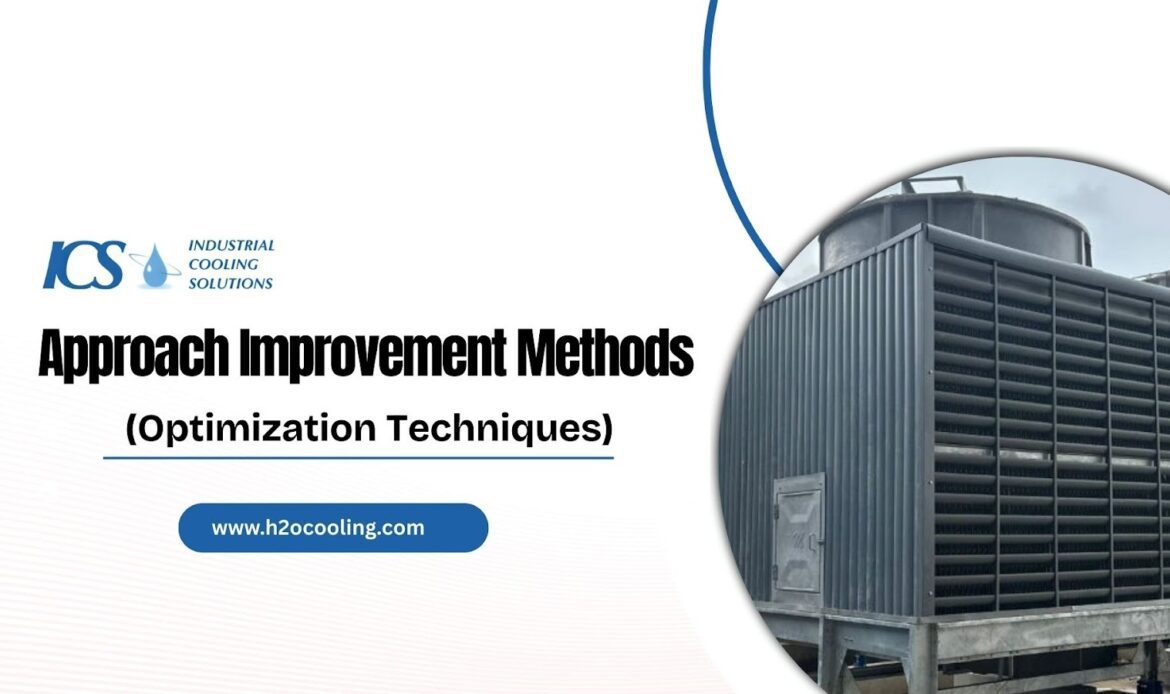
Optimizing a tower approach requires a strategic mix of mechanical upgrades and operational adjustments. Implementing these approach improvement methods yields significant energy savings.
Optimize Fan Speed with VFD Controls
Fans consume a large portion of the energy in a cooling tower system. Precise control ensures they only work as hard as necessary.
- Wet bulb tracking allows the fan to adjust speed based on real-time potential.
- Automated setpoint adjustments prevent over-cooling or under-cooling.
Improve Fill Performance
The fill is the core component of the tower, playing a crucial role in its efficiency and performance. Regular maintenance or upgrades to the fill not only restore the tower's original design capacity but also enhance its overall functionality.
Proper care ensures optimal operation and extends the lifespan of the system.
- Upgrade to high-efficiency film fill to increase surface area density.
- Implement scheduled cleaning cycles to remove scale and biological growth.
- Ensure proper fill installation to prevent air or water bypass.
- Replace any damaged or sagging fill sections to maintain uniform airflow and water distribution.
Improve Water Distribution Uniformity
Uniform water distribution is crucial for maximizing the cooling efficiency of the tower. When water evenly coats the fill media, it maximizes the surface area available for heat exchange, ensuring the tower operates at its peak potential.
Regular inspections and maintenance of the spray nozzles and distribution system prevent channeling and dry spots, which can significantly reduce performance.
- Nozzle inspection programs identify clogged or broken sprayers.
- Flow balancing ensures all cells receive equal water volume.
Implement Predictive Maintenance
Reactive maintenance often leads to higher costs and unexpected downtime, disrupting operations and impacting efficiency. By transitioning to a predictive maintenance model, businesses can save money, minimize unplanned outages, and extend the lifespan of critical assets.
- Track the tower approach daily to identify subtle performance shifts.
- Monitor temperature differential trends to predict cleaning intervals.
- Regularly inspect water quality to prevent scaling and corrosion.
- Schedule routine maintenance to ensure optimal system efficiency.
Upgrade Control Systems
Modern controls provide the intelligence needed to optimize complex systems. Old analog thermostats cannot match the efficiency of digital integration.
- Real-time thermal monitoring provides instant feedback to the Building Management System (BMS).
- BMS integration allows for holistic system coordination between chillers and towers.
Optimize Water Treatment Program
Chemistry control preserves the physical integrity of the tower components. A robust program prevents the issues that cause high approach temperatures.
- Anti-scale control keeps heat transfer surfaces clean.
- Biofilm prevention maintains airflow paths.
- Conductivity monitoring manages blowdown to save water.
Key Factors That Influence Cooling Tower Approach
Several variables impact the ability of a cooling tower to reach its design approach. Identifying these factors allows engineering teams to target specific areas for improvement.
Ambient Conditions
The environment surrounding the tower dictates its maximum potential. You cannot control the weather, but you must understand its impact.
- Wet bulb variations directly shift the target cold water temperature.
- High humidity reduces evaporation rates and increases the approach.
- Seasonal effects require control system adjustments to maintain efficiency.
Airflow Efficiency
Air movement is the vehicle that carries rejected heat away from the water. Any restriction in this flow degrades performance immediately.
- Fan speed determines the volume of air moving through the fill.
- Variable Frequency Drive (VFD) control allows for precise modulation.
- Blocked air intakes starve the tower of necessary airflow.
- Drift eliminator condition affects static pressure and air resistance.
Water Distribution Quality
The water must spread evenly over the fill media to maximize air-to-water contact. Poor distribution leads to dry spots and air bypass.
- Nozzle clogging creates uneven spray patterns.
- Uneven spray concentrates the water load in specific areas.
- Basin hydraulics issues cause air entrainment or pump cavitation.
Fill Media Condition
The fill media provides the surface area for heat exchange. Degradation here results in an immediate loss of thermal capacity.
- Scaling builds an insulating layer that prevents heat transfer.
- Biofouling blocks airflow channels and disrupts water patterns.
- Age degradation causes fill sheets to become brittle or collapse.
Water Treatment and Scaling Control
Chemical treatment is vital for maintaining the heat transfer surfaces. Neglect leads to rapid performance decline.
- Poor chemical treatment allows biological growth and scale formation.
- Mineral buildup increases thermal resistance and raises the approach.
System Load Variations
The cooling tower must match the heat load applied by the process. Deviations cause the system to operate outside its design curve.
- Heat load mismatch forces the tower to handle more energy than designed.
- Pump flow issues alter the liquid-to-gas ratio in the tower.
Thermal Performance Metrics That Matter
Operators must track specific data points to understand the true health of their cooling system. Neglecting these thermal performance metrics leads to undetected inefficiencies and eventual equipment failure.
Approach Temperature
This remains the primary indicator of tower capability. It tells you how well the heat transfer surfaces work relative to the atmospheric conditions.
Range Temperature
This indicates the actual heat load on the system. It varies based on the flow rate and the heat generated by the process or chiller.
Cooling Tower Efficiency Formula
You can calculate the overall efficiency percentage to benchmark performance over time. Use this standard formula:
Efficiency (%) = Range / (Range + Approach) × 100
A higher efficiency percentage indicates the tower is utilizing the available range and ambient conditions effectively.
Troubleshooting High Cooling Tower Approach
Diagnosing the root cause of a high approach requires a systematic analysis of symptoms. Use this table to guide your inspection process.
| Symptom | Possible Cause | Recommended Action |
| Sudden approach spike | Fill blockage | Inspect and clean fill media |
| Gradual increase | Scaling buildup | Adjust the chemical treatment program |
| Seasonal increase | High humidity | Adjust fan control setpoints |
| Uneven cooling | Distribution issue | Check and clean spray nozzles |
Conclusion
Optimizing your cooling tower approach is one of the most effective ways to enhance system efficiency and reduce operational costs. You ensure that your facility runs at peak performance by distinguishing between range and approach and by monitoring the temperature differential.
Operators who implement consistent approach improvement methods protect their equipment and lower energy consumption. You must pay close attention to the wet bulb approach to understand the true capabilities of your system. Start tracking your metrics today to identify areas for improvement.
Ready to boost your system's efficiency and slash operational costs? Visit h2ocooling.com to unlock the full potential of your cooling systems today.
Frequently Asked Questions
What is the cooling tower approach temperature?
It is the difference in temperature between the cooled water leaving the tower and the ambient wet bulb temperature entering the tower.
How is approach different from range?
Range measures the temperature drop of the water as it passes through the tower. Approach measures how close the leaving water temperature gets to the ambient wet bulb temperature.
What is a good cooling tower approach value?
A standard industrial tower typically operates with an approach of 4°C to 6°C. High-efficiency towers may achieve 2°C to 4°C.
Why does wet bulb temperature affect cooling tower performance?
The wet bulb temperature represents the theoretical limit of evaporative cooling. As wet bulb temperature rises, the ability of the tower to cool water decreases.
How can I reduce high approach temperature?
You can reduce approach temperature by cleaning fill media, unclogging spray nozzles, optimizing fan speeds, and ensuring proper water flow rates.