

Facilities managers frequently view valves and piping as static infrastructure, overlooking the critical role of cooling tower flow balancing in system performance. However, the water circulating through these components creates a dynamic, living system. Flow balancing serves as the circulatory health of an industrial cooling setup. Without precise hydraulic equilibrium, the entire system suffers efficiency losses.
The relationship between water flow and energy consumption remains critical. A flow imbalance of merely 10% can trigger a 15% spike in chiller energy consumption. This inefficiency compounds daily, leading to inflated operating costs and reduced asset lifespan.
At ICS Engineering, the mission focuses on achieving uniform water loading. We ensure your system meets its design Approach Temperatures through rigorous optimization. This guide explores the science of hydraulic balancing and provides actionable protocols for restoring efficiency.
The Anatomy of Imbalance: Why Distribution Systems Fail
Cooling towers rarely maintain perfect flow distribution independently. Physical laws and mechanical wear constantly work against equilibrium. Understanding these failure points serves as the first step toward correction.
The Path of Least Resistance
Water naturally follows the path of least resistance. In a multi-cell cooling tower bank, this often causes asymmetrical piping issues. The tower cells closest to the pump receive excessive flow, while the furthest cells starve. This uneven distribution reduces the thermal capacity of the entire bank.
Orifice and Nozzle Fouling
Debris and scale accumulation alter the internal geometry of nozzles. Even minor fouling changes local pressure drops. This restricts flow in specific areas, forcing water to surge elsewhere. The result is a chaotic spray pattern that fails to cover the fill media evenly.
Variable Load Challenges
Variable Frequency Drives (VFDs) offer excellent energy savings but complicate hydraulic balance. As VFDs adjust fan speed or pump operation to match load demand, header pressure fluctuates. These changes shift distribution patterns, often creating low-flow zones that the original design did not anticipate.
The Short-Circuit Effect

Poor distribution creates dry spots on the wet fill. Air, like water, follows the path of least resistance. It bypasses the wet fill where heat transfer happens and rushes through these dry channels. We call this "short-circuiting." The fan energy creates airflow, but that air does not cool any water.
Hydraulic Balancing Techniques: The ICS Protocol
Correcting these issues requires more than guesswork. It demands a professional calibration method. We utilize a structured protocol to restore optimal performance.
1. The Proportional Balancing Method
We begin by identifying the "Reference Cell." This represents the cell with the highest hydraulic resistance, typically the one furthest from the pump.
Once we establish this baseline, technicians adjust the branch valves sequentially. The goal is to achieve a flow distribution within ±5–10% of the design specifications. This precise adjustment ensures every cell carries its fair share of the thermal load.
2. Nozzle Distribution Patterns and Pressure Calibration
There often exists a conflict between gravity and pressure in distribution systems.
- Gravity Systems: Rely on hot water basins to distribute flow.
- Spray Systems: Rely on pressurized headers.
For pressurized systems, we verify lateral pressure. The nozzle discharge pressure must meet the manufacturer’s "Sweet Spot." This ensures optimal droplet size for maximum heat transfer. If the droplets become too large, they reduce surface area. If they are too small, drift eliminators may fail to capture them.
3. Sump and Equalizer Harmonization
Balancing the water entering the tower represents only half the battle. We must also manage the water at the bottom.
- External Equalizers: We size these lines to handle transient surges. A target capacity of 15% of the largest cell flow allows the system to absorb fluctuations without overflow conditions.
- Float Valve Calibration: We synchronize makeup water entry. If float valves fight each other, one basin may flood while another starves. Proper calibration prevents this "basin starving."
The Role of Ultrasonic Diagnostics
Modern engineering moves beyond invasive inspections. We utilize ultrasonic technology to diagnose flow issues without shutting down your operation.
Non-Invasive Flow Rate Optimization
"Clamp-on" ultrasonic meters allow us to measure Gallons Per Minute (GPM) accurately from the outside of the pipe. This provides real-time data on flow rates, allowing for immediate adjustments.
Transit-Time Technology
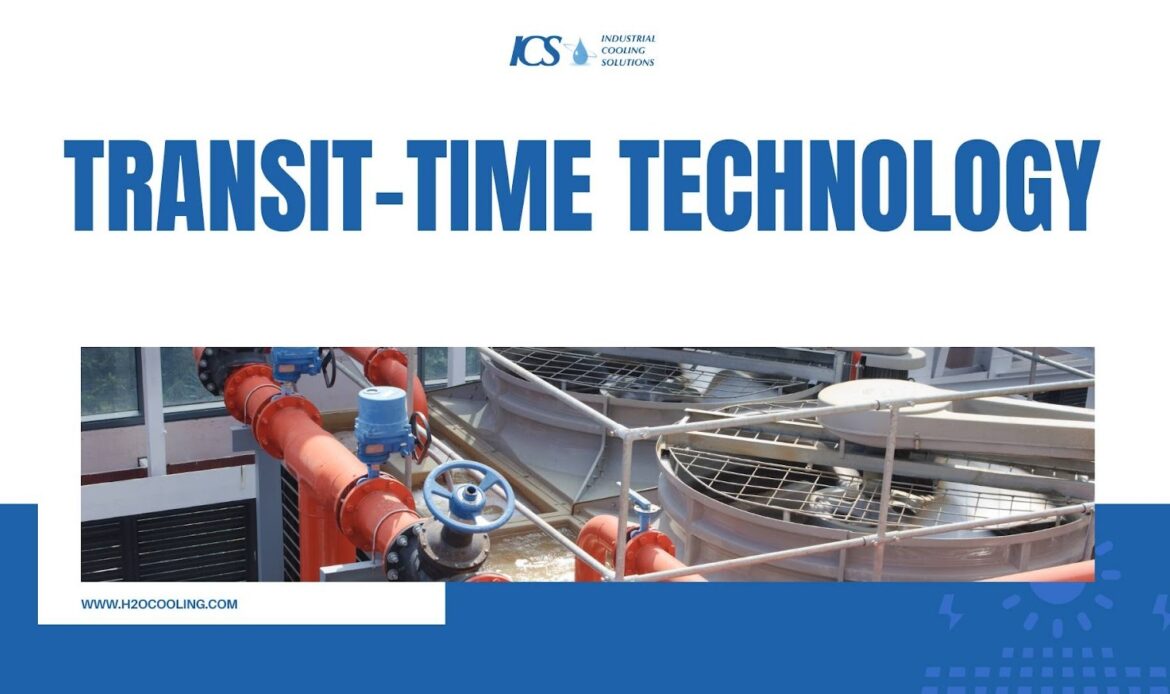
Sound waves travel differently through moving liquid. By measuring these transit times, we identify "Ghost Flows." These occur when bypass valves leak, allowing water to circulate unintentionally. Identifying these leaks stops energy waste instantly.
Vortex Identification
Turbulence and vortices within the pipe can damage pumps. We use flow data to predict these conditions. Early detection prevents pump cavitation, protecting the impeller and seals from catastrophic failure.
Consequence Matrix: The Cost of Flow Imbalance
Justifying maintenance budgets requires clear data on costs. The following table outlines the direct financial and operational impacts of ignoring flow balance.
| Symptom | Hydraulic Cause | Impact on Efficiency / Cost | Strategic Fix |
|---|---|---|---|
| Localized Scaling | Low flow velocity in specific fill zones | High chemical and descaling costs; reduced heat transfer efficiency | Flow Rate Optimization: Adjust flow distribution to achieve uniform velocity across all fill zones |
| Cooling Tower Overflow | High flow exceeds gravity drain capacity | Wasted water and treatment chemicals; potential structural or environmental issues | Cooling Tower Overflow Issues: Modify flow rates, install overflow controls, or enhance drainage capacity |
| Pump Cavitation | Imbalanced sump levels causing air entrainment | $5,000+ in pump/seal repairs; reduced pump lifespan; vibration and noise issues | Equalizer Line Audit: Rebalance sump levels, check for air leaks, and optimize pump suction conditions |
| Thermal Bottleneck | Dry spots on fill media, resulting in no air-water contact | Excessive chiller energy bills; inefficient heat rejection | Nozzle Replacement: Ensure uniform water distribution, replace or upgrade nozzles to restore optimal air-water contact |
Interlocking Flow with Chemistry and Compliance
Hydraulics and chemistry are inseparable. A change in flow velocity directly impacts your water treatment program.
Chemical Distribution
Poor flow leads to localized "under-dosing." If water moves too slowly through a section, corrosion inhibitors may not reach the metal surfaces effectively. Conversely, stagnant areas encourage scale formation. Maintaining correct velocity ensures chemicals distribute evenly throughout the loop.
Bio-Security and Legionella
Stagnant water kills safety compliance. Dead-legs and oversized equalizer lines often harbor motionless water. These areas become breeding grounds for bacteria, including Legionella. Active flow balancing eliminates stagnation, supporting your bio-security protocols.
Advanced 2026 Optimization: IoT and Digital Twins
Looking toward 2026, the industry shifts toward automated intelligence.
- Automated Balancing Valves (ABVs): These dynamic valves adjust to header pressure fluctuations in real-time. They maintain design flow rates regardless of system changes.
- Predictive Flow Alerts: We integrate Building Automation Systems (BAS) to detect "Balance Drift." The system alerts operators before a slight imbalance impacts production, allowing for proactive maintenance.
Conclusion: Engineering the Perfect Equilibrium
Precision cooling tower flow balancing serves as the foundation of energy efficiency and asset longevity. It represents an engineering necessity rather than a simple maintenance task. By ensuring uniform distribution, you protect your equipment, lower energy bills, and maintain safety compliance.
Do not let invisible flow issues drain your budget. If you currently experience uneven basin levels or poor cooling performance, take action now.
Contact the ICS engineering team for a professional Ultrasonic Flow Audit and Balancing service today.
Frequently Asked Questions (FAQs)
What is cooling tower flow balancing?
Cooling tower flow balancing ensures even water distribution across all tower cells, optimizing performance and reducing energy consumption.
Why is hydraulic balance important in cooling towers?
Hydraulic balance prevents issues like dry spots, overflow conditions, and pump cavitation, ensuring efficient operation and extended equipment lifespan.
How does flow imbalance affect cooling tower performance?
Flow imbalance can lead to uneven cooling, increased operating costs, and reduced efficiency of heat exchangers and chillers.
What are the benefits of ultrasonic diagnostics for cooling towers?
Ultrasonic diagnostics provide non-invasive flow rate optimization, detect bypass valve leaks, and prevent pump cavitation without system downtime.
How can I improve my cooling tower’s efficiency?
Regular flow audits, nozzle calibration, and proportional balancing methods can enhance cooling tower performance and reduce energy costs.