

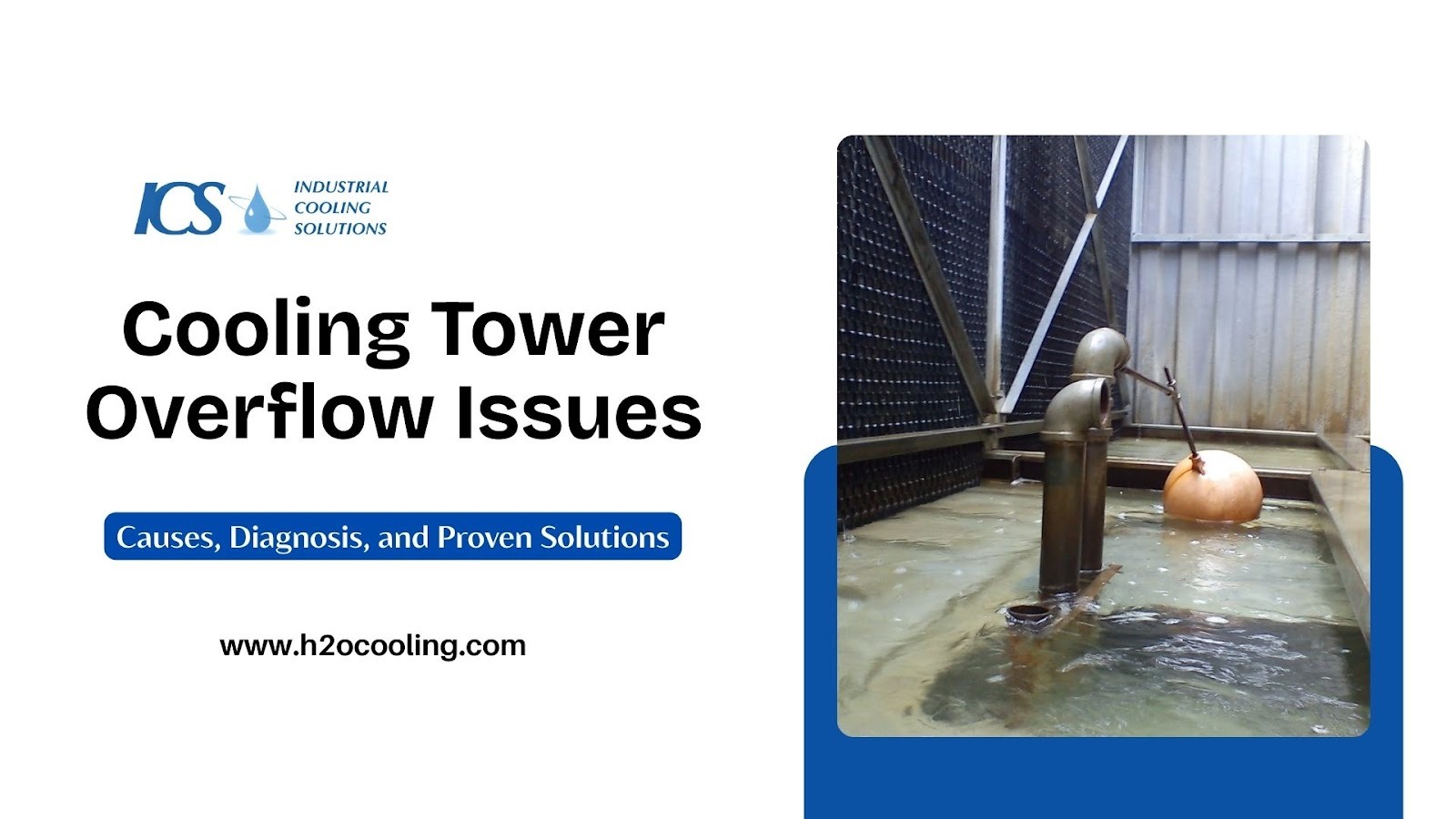
Managing industrial water systems demands precision, especially when it comes to preventing cooling tower overflow. Overflowing basins aren’t just a minor inconvenience; they signal a deeper system imbalance that can result in significant water waste, higher operational costs, increased safety risks, and even equipment damage due to accelerated corrosion.
Additionally, facilities could face costly regulatory fines if these issues go unaddressed. Understanding the causes of cooling tower overflow is crucial for maintaining system efficiency, ensuring safety, and minimizing expenses.
In this blog post, we’ll explore the underlying causes of Cooling Tower Overflow Issues, from mechanical failures to control logic errors, and provide actionable, step-by-step solutions to resolve them. With the proper insights, you can protect your equipment, conserve resources, and optimize your industrial water system.
What Is Cooling Tower Overflow?
Cooling tower overflow is the unintentional discharge of water from the tower's collection basin. In a perfectly balanced system, the water level remains within a specific operating range, usually controlled by mechanical or electronic devices. When the level rises above the designed maximum, water spills out through an overflow pipe or over the basin walls.
Overflow is more than just "too much water"; it signals a critical imbalance in your system. Here is why it happens:
- System Imbalance: It occurs when the makeup water entering the system exceeds the volume leaving through evaporation, drift, and blowdown.
- Physical Displacement: Pump dynamics can cause sudden shifts in water levels, breaching the basin’s capacity.
- Balance Failure: Effective resolution requires viewing overflow as a total system balance failure rather than a minor plumbing leak.
How Cooling Tower Water Level Should Be Controlled
To prevent wastage, cooling towers rely on water level control loops to maintain equilibrium. This system ensures that water lost during the cooling process is replenished at a suitable rate.
The control loop generally functions through three primary mechanisms:
- Sensing: A device, such as a float or electronic sensor, detects the current water surface level in the cold water basin.
- Decision: The controller compares the detected level against a setpoint. If the water is too low, it signals the need for more; if it is too high, it signals the valve to close.
- Action: The makeup valve opens to admit fresh water or closes to stop the flow.
In a functional system, makeup water regulation matches the heat load and evaporation rate. When this synchronization fails, cooling tower overflow issues inevitably follow.
Common Causes of Cooling Tower Overflow Issues
Pinpointing the exact source of a leak requires investigating both mechanical components and control strategies. While the result is always water on the ground, the root causes vary significantly.
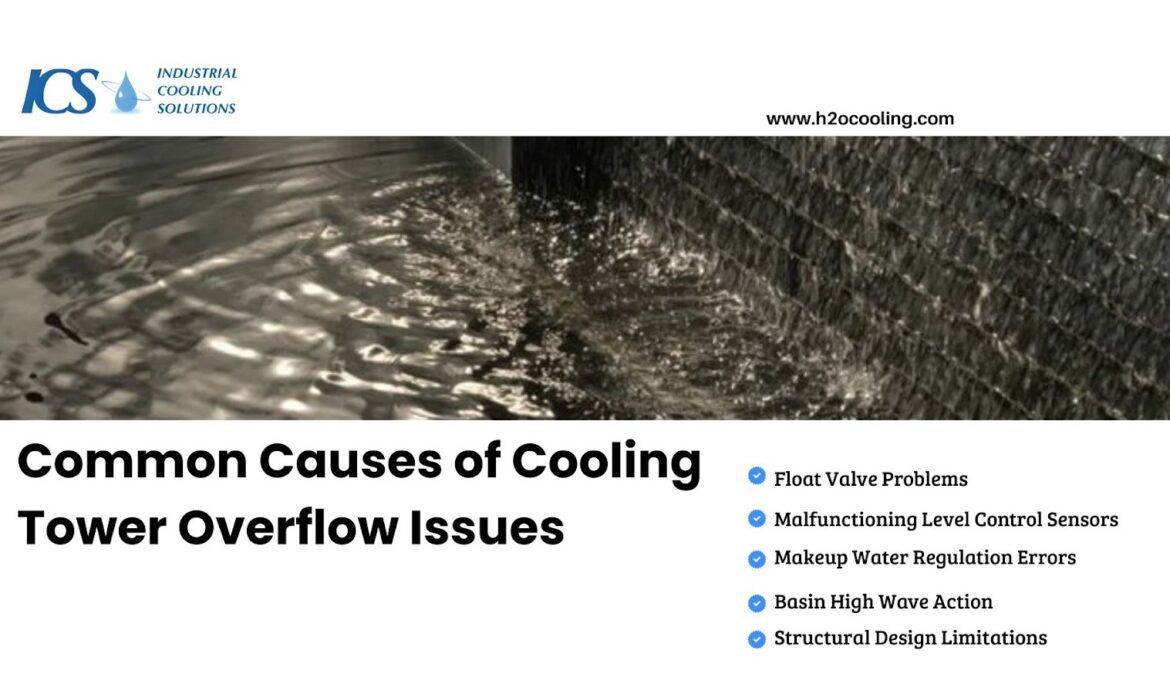
Float Valve Problems
The mechanical float valve is the most traditional method of level control, but it is also prone to physical failure. Because these valves are constantly exposed to water and chemicals, they degrade over time.
Common failure points include:
- Corrosion: Metal arms and pins rust, causing the float to seize in the "open" position.
- Waterlogging: Plastic or copper floats develop cracks, fill with water, and sink, permanently calling for makeup water.
- Seal Failure: The rubber washer or seat inside the valve degrades, allowing water to bypass the seal even when the arm is fully raised.
Malfunctioning Level Control Sensors
Modern towers often use electronic probes or ultrasonic sensors for precision, but these sophisticated devices introduce their own set of technical challenges, such as scale buildup or signal interference.
Electronic sensor issues often manifest as:
- Scale Buildup: Mineral deposits coat conductivity probes, insulating them from the water and preventing the signal to close the makeup valve.
- Drift: Sensors lose calibration over time, reporting a lower water level than actually exists.
- Fouling: Debris or algae blocks the stilling well or sensing port, causing delayed reactions to level changes.
Makeup Water Regulation Errors
Sometimes the sensing equipment works perfectly, but the regulation hardware fails to execute the command. This disconnect results in a continuous inflow of water regardless of the basin level.
Key regulation errors include:
- Solenoid Failure: Electrical valves may stick open due to debris or coil burnout.
- Pressure Variance: If supply water pressure spikes unexpectedly, it might force a mechanical valve open against the float's buoyancy.
- Logic Errors: In automated systems, incorrect programming or setpoints can command the valve to open when it should remain closed.
Basin High Wave Action (Splashing Overflow)
Not all cooling tower overflow issues are caused by excess water volume. Sometimes, the volume is correct, but the water is too turbulent.
Turbulence causes include:
- Pump Cycles: When large circulation pumps shut down, water in the piping drains back into the basin, causing a temporary surge.
- Wind Shear: High winds can push water to one side of the basin, causing it to crest over the lip.
- Disturbances: Poorly placed return inlets can create constant waves that splash out of the overflow trough.
Structural Design Limitations
In some frustrating scenarios, the tower is mechanically sound, but the design cannot handle the hydraulic conditions.
Design flaws might include:
- Undersized Overflow Piping: If the makeup valve fails wide open, the emergency overflow pipe must be large enough to drain the excess; if not, the basin floods.
- Low Basin Walls: If the freeboard (the distance between the water level and the basin rim) is too small, minor ripples result in spills.
Diagnosing Cooling Tower Overflow Problems
To effectively troubleshoot cooling tower overflow issues, a systematic approach is needed to isolate the variable causing the imbalance. Operators should start with visual inspections and then move on to verifying data.
Follow this field inspection checklist:
Check for Visual Signs of Overflow
Take a close look at the overflow pipe. Is water spilling continuously or splashing over the sides of the basin? Continuous flow typically indicates an issue with the water level control system, while occasional splashing might suggest minor adjustments are needed. Identifying the flow pattern can be your first clue to the problem.
Inspect the Makeup Water Line
Is the makeup water line actively adding water to the system while the basin is already overflowing? If so, the makeup valve is likely failing to shut off as it should. This could be due to a stuck float, a misalignment, or wear and tear on the valve mechanism. Addressing this issue promptly can prevent unnecessary water waste and system stress.
Validate the Water Level Sensors
Manually test the float arm by lifting it gently or check the electronic controller’s display (if applicable). Does the system detect the high water level and respond accordingly? If the sensors fail to register the correct water level, they may need recalibration, cleaning, or replacement. Faulty sensors are a common cause of overflow and should not be overlooked.
Isolate the Makeup Water to Identify Other Issues
Manually shut off the makeup water line and observe the basin. If the water level continues to rise, this points to backflow from other connected systems, such as a heat exchanger or external plumbing. A backflow prevention device or a system inspection may be necessary to address these hidden issues and restore proper function.
By methodically addressing each step, you can quickly narrow down the source of the problem and take the right course of action. Proactive monitoring and regular maintenance are key to preventing overflow issues and keeping your system running efficiently.
Proven Solutions for Overflow Issues
Once you have identified the root cause, you must implement a permanent fix. Band-aid solutions often lead to recurring problems and continued waste.
Float Valve Repair and Replacement
If the mechanical assembly is at fault, immediate repair is necessary to stop the leak. Float valve probthe
- Upgrade Materials: Replace copper floats with durable plastic or stainless steel to prevent corrosion.
- Proper Sizing: Ensure the float provides enough buoyancy to close the valve against the facility's water pressure.
- Adjustment: Re-align the float arm to close the valve at a lower water level, increasing the safety margin (freeboard).
Level Sensor Calibration & Upgrades
For electronic systems, accuracy is paramount. Regular maintenance ensures the controller sees the reality of the basin level.
- Cleaning Routine: Scrub conductivity probes regularly to remove scale and biofilm.
- Recalibration: Verify sensor readings against a physical tape measure measurement of the water depth.
- Damping: Adjust the controller's "damping" or delay setting to ignore momentary ripples caused by wind or pump startups.
Makeup Water System Regulation
To ensure the makeup water regulation is reliable, the physical valves must be robust and responsive.
- Install Strainers: Place Y-strainers upstream of solenoid valves to prevent debris from lodging in the seat and keep the valve open.
- Leak Checks: Periodically listen to the makeup line during "closed" cycles. A hissing sound indicates internal leakage that requires valve seat replacement.
Basin Flow & Wave Control
If turbulence is the culprit, you must calm the water within the basin.
- Baffles: Install baffle plates near the water return inlet to dissipate energy and reduce wave height.
- Extended Skirts: Add splash guards or extend the basin siding to contain water during high-wind events.
Design Upgrades for High-Demand Sites
When standard maintenance does not resolve the issue, structural changes may be required.
- Overflow Troughs: Enlarge the overflow piping to handle maximum potential makeup flow rates.
- Automated Alerts: Install a dedicated high-level alarm switch independent of the main controller to warn operators immediately when limits are breached.
Cooling Tower Overflow Problems & Recommended Actions
This reference guide links specific symptoms to actionable solutions for maintenance teams.
| Problem Category | Likely Cause | Recommended Action |
| Overflow despite normal makeup | Float valve stuck or waterlogged | Clean assembly or replace float |
| Erratic water level readings | Sensor fouling or scale | Clean probes and calibrate the sensor |
| Excess makeup water | Valve seat leakage | Tighten the packing or replace the valve |
| Overflow during high winds | Basin wave action | Install baffles or splash guards |
| Persistent overflow at high load | Design limitation / Low freeboard | Redesign the basin lip or overflow |
Preventing Cooling Tower Overflow (Best Practices)
The most effective strategy is basin overflow prevention, which relies on proactive maintenance rather than reactive repairs. By addressing potential Cooling Tower Overflow Issues through a robust prevention schedule, facilities can save thousands of gallons of water annually.
- Seasonal Tuning: Adjust water level setpoints seasonally. Lower the setpoint during windy seasons to allow more freeboard.
- Routine Inspection: Include float valve movement and sensor cleanliness checks in weekly rounds.
- Water Quality: Maintain proper chemical treatment to prevent scale, which creates float valve problems and fouls sensors.
- Training: Ensure all operators understand how to manually isolate makeup water in an emergency.
Calculating Water Loss and Cost Impact
Ignoring a "small" trickle from an overflow pipe is a costly mistake. The financial impact includes the cost of the water, sewage fees, and wasted treatment chemicals.
You can estimate the loss using this simple logic:
- Flow Rate x Duration = Total Loss
If a 1-inch overflow pipe leaks at 10 gallons per minute for 24 hours, you lose 14,400 gallons in a single day. At average municipal water and sewer rates, this single mechanical failure can cost a facility thousands of dollars per month, not including the cost of the chemicals that were washed down the drain.
Case Study: Resolving Chronic Overflow at a Plastics Plant
A plastics manufacturing facility in the Midwest struggled with daily overflow events. Their cooling tower basin would flood every afternoon, creating a safety hazard on the plant floor.
The Diagnosis:
Technicians discovered that the electronic level sensor was located directly next to the high-velocity return water inlet. The turbulence caused erratic readings. Additionally, the makeup water regulation valve was slow to close, allowing extra water to enter after the setpoint was reached.
The Fix:
- A stilling well was installed to shield the sensor from turbulence.
- The makeup valve was replaced with a fast-acting solenoid.
- The operating level setpoint was lowered by 2 inches to increase storage capacity for drain-back water.
The Result:
Overflow events ceased immediately. The facility saved an estimated 500,000 gallons of water in the first year and eliminated the slip hazard around the equipment.
Common Misconceptions About Cooling Tower Overflow
Several myths often delay effective repairs. Clearing up these misconceptions helps maintenance teams focus on the real issues.
- "It is just a float valve problem." Not always. While common, cooling tower overflow issues are often caused by sensor drift or control logic errors.
- "Overflow is harmless." Incorrect. It concentrates solids, alters chemical balance, and degrades concrete foundations.
- "More makeup water fixes everything." Adding water blindly masks leaks and increases operational costs without solving the root cause.
Conclusion
Resolving cooling tower overflow issues requires a shift from reactive cleanups to proactive system management. Whether the culprit is a corroded float valve, a fouled sensor, or poor makeup water regulation, the result is the same: wasted money and increased risk.
By implementing a systematic diagnosis routine and investing in basin overflow prevention strategies, facilities can maintain a balanced, efficient cooling loop. Regular maintenance, combined with smart monitoring, ensures that water stays in the system where it belongs, protecting both the equipment and the bottom line.
For any kind of cooling tower maintenance or repainting needs, visit h2ocooling.com.
Frequently Asked Questions
Can poor water quality cause overflow issues?
Yes. High levels of scale or biological growth can cause mechanical floats to stick and electronic sensors to fail. Maintaining clean water is essential for reliable water level control.
How often should float valves be maintained?
Float valves should be visually inspected weekly for freedom of movement and corrosion. A thorough cleaning and seal check should be performed at least quarterly or during seasonal shutdowns.
Is overflow a sign of control system failure?
Frequently, yes. If the makeup valve is open while water is spilling out of the overflow, the control loop has failed. This indicates that the system is not correctly sensing the level or not actuating the valve to close.
How much water does a cooling tower overflow waste?
A moderate overflow can waste anywhere from 5 to 50 gallons per minute, depending on the pipe size. Over the course of a week, this can amount to tens of thousands of gallons of treated water and chemicals.