

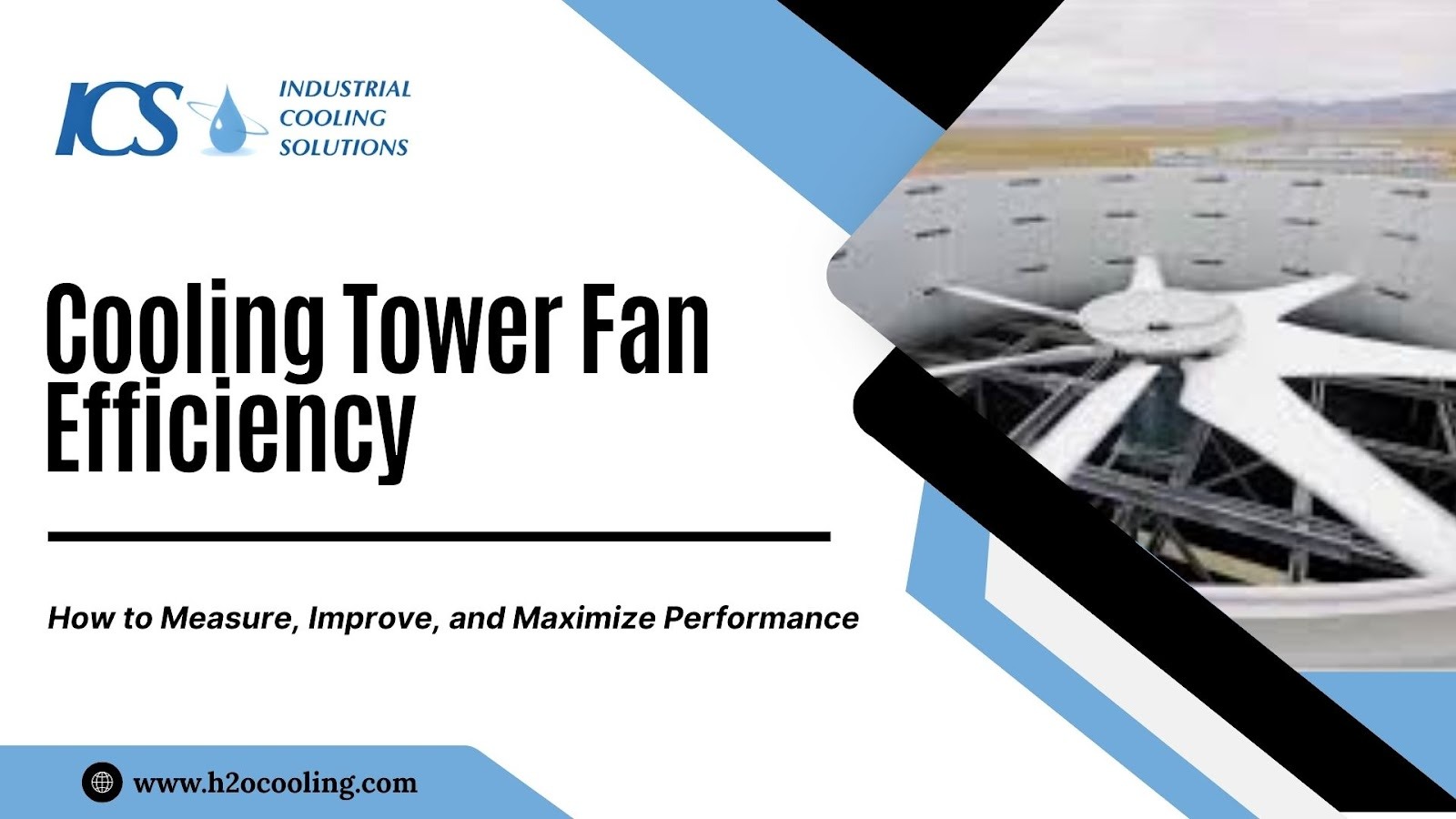
Facility managers often overlook the fan assembly when analyzing energy costs, yet it represents one of the largest power consumers in a cooling system. A decline in cooling tower fan efficiency directly correlates with inflated operational expenses and reduced thermal performance.
When a fan operates inefficiently, the motor draws more kilowatt-hours (kWh) to achieve the same cooling effect, or worse, fails to reject heat adequately during peak load conditions.
This inefficiency creates a domino effect throughout the mechanical system. It forces chillers to work harder due to warmer condenser water, and it accelerates mechanical wear on belts, gearboxes, and bearings.
This blog post will cover how to measure cooling tower fan performance, identify common loss points, and provide actionable strategies to maximize output.
What Is Cooling Tower Fan Efficiency?
True efficiency in this context refers to the ratio of air power output to shaft power input. It measures how effectively the fan converts rotational energy into airflow (CFM) against the system's static pressure.
To understand the real-world capabilities of your equipment, you must analyze the relationship between four critical variables. How do these elements interact to determine overall performance?
- Airflow (CFM): The volume of air the fan moves through the fill media to facilitate evaporation.
- Static pressure: The resistance the air encounters as it moves through inlet louvers, fill, and drift eliminators.
- Power input: The actual energy required by the motor to turn the fan at the desired speed.
- Heat rejection performance: The ultimate goal, defined by the ability to cool water to the design temperature.
Cooling Tower Fan Efficiency vs System Efficiency
Operators frequently make the mistake of blaming the fan component for poor results when the surrounding system causes the issue. You must distinguish between the performance of the blade assembly and the environment in which it operates.
Fan Efficiency (Isolated Component)
This metric looks strictly at the aerodynamics and mechanical design of the fan itself. What physical characteristics allow the fan to move air with minimal energy?
- Blade aerodynamics: The shape and twist of the blade determine how smoothly it slices through the air.
- Tip speed: The velocity at the end of the blade affects both noise levels and air movement capability.
- Fan material and profile: Lightweight materials and optimized profiles reduce the torque required to spin the assembly.
System Efficiency (Real-World Performance)
System efficiency measures how well the tower housing allows the fan to do its job. Even a highly efficient fan will fail if the tower design restricts airflow. What external factors typically sabotage performance?
- Inlet losses: Restrictions at the air intake require the fan to work harder to pull air in.
- Recirculation losses: Hot, moist air exiting the tower enters the intake again, reducing cooling capacity.
- Plenum and shroud design: The space between the fan tip and the cylinder wall (fan stack) has a significant impact on pressure recovery.
- Discharge losses: Obstructions at the fan outlet prevent air from dispersing correctly.
Key Factors That Reduce Cooling Tower Fan Efficiency
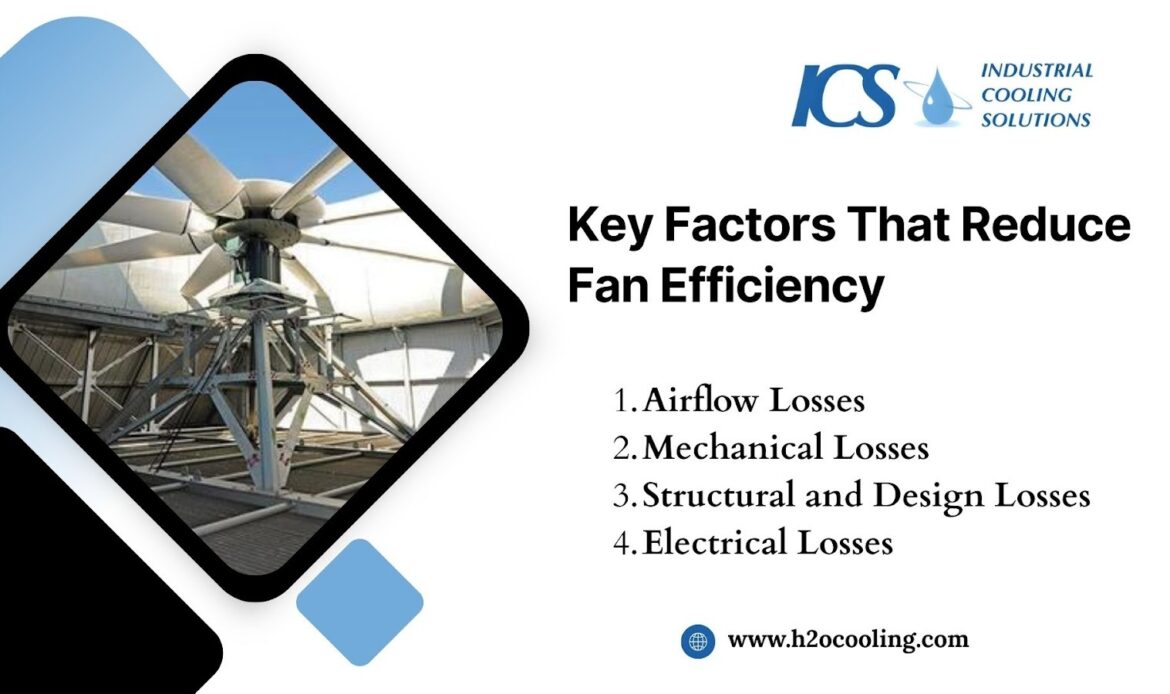
Identifying the root cause of energy waste requires a systematic inspection of the tower. Several specific physical and mechanical issues degrade fan efficiency over time.
Airflow Losses
Airflow issues often stem from the environment surrounding the tower rather than the equipment itself. How does poor airflow management ruin thermal transfer?
- Recirculation of hot discharge air: Prevents the intake of fresh, dry air needed for effective evaporation.
- Reverse airflow at the fan hub: Occurs in poorly designed hubs where air slips backward near the center of the fan.
- Poor inlet bell or fan stack design: Creates turbulence that disrupts the smooth flow of air through the blades.
Mechanical Losses
Physical wear converts useful energy into heat and vibration rather than air movement. Which mechanical components are the usual suspects?
- Shaft misalignment: Wastes energy through friction and destroys couplings.
- Worn gearboxes or bearings: Increases resistance, requiring the motor to draw more amperage to maintain speed.
- Excessive vibration: Indicates energy loss and threatens the structural integrity of the fan deck.
Structural and Design Losses
The physical geometry of the tower installation plays a massive role in fan performance. Are these structural flaws present in your system?
- Improper fan-to-shroud clearance: Large gaps allow air to leak around the blade tips, destroying static pressure.
- Obstructed plenums: Debris or structural supports in the airstream block flow and increase resistance.
- Aging or deformed fan blades: Altered aerodynamics reduce the lift-to-drag ratio of the airfoil.
Electrical Losses
The efficiency of the electrical drive system sets the baseline for power consumption. Do your electrical components match the mechanical load?
- Oversized or undersized motors: Operating motors outside their peak efficiency curve wastes electricity.
- Fixed-speed operation under variable load: Running at 100% speed when the system only requires 50% cooling capacity burns unnecessary energy.
How to Measure Cooling Tower Fan Efficiency in the Field
You cannot manage what you do not measure. Accurate field assessment relies on tracking key performance indicators (KPIs) that provide insight into the system's health and efficiency.
By regularly monitoring metrics such as productivity, utilization rates, and resource allocation, you can identify potential issues early, optimize operations, and make informed decisions to drive long-term success.
Performance Indicators to Monitor
Routine data collection allows you to spot trends before they become critical failures. What specific metrics provide the best insight into fan health?
- Motor amperage vs design load: Comparing actual draw against the nameplate rating reveals if the fan is doing too much or too little work.
- Airflow delivery vs thermal demand: Verifying if the fan moves the calculated cubic feet per minute (CFM) required for the heat load.
- Fan RPM stability: Inconsistent speed indicates belt slip or variable frequency drive (VFD) issues.
- Noise and vibration levels: Sudden increases suggest mechanical looseness or aerodynamic instability.
When Efficiency Loss Becomes a Problem
A significant drop in fan efficiency isn't just a number on a report; it's a tangible problem that impacts your daily operations and bottom line long before an official audit confirms it. These decreases often appear as seemingly unrelated operational headaches, but they are classic symptoms of a degraded system.
- Rising energy bills: A noticeable spike in electrical costs without a corresponding increase in load.
- Inability to maintain cold-water temperature: The tower fails to reach the setpoint on hot days.
- Increased maintenance frequency: Belts, bearings, and seals fail more often than the manufacturer predicts.
Fan Design Elements That Improve Cooling Tower Efficiency
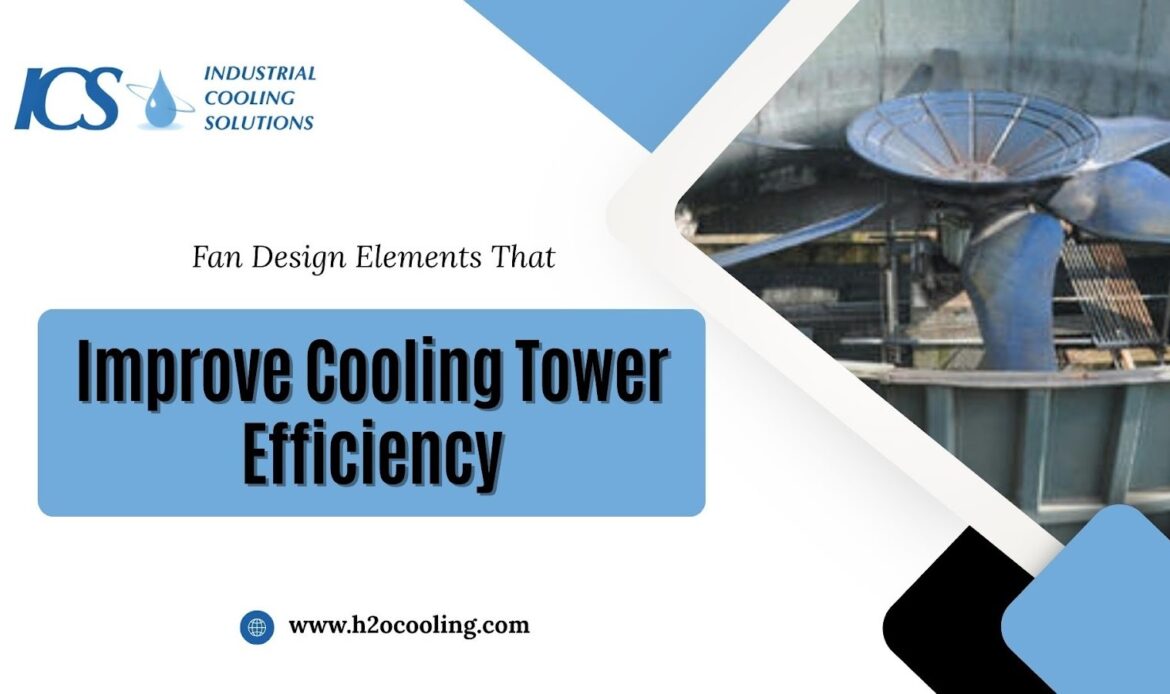
Modern engineering provides innovative solutions that far surpass legacy designs, delivering greater efficiency and performance. By upgrading specific components, businesses can achieve immediate improvements in airflow, significant energy savings, and reduced operational costs.
Blade Design and Aerodynamics
The profile of the blade dictates how much energy is transferred to the air. Why do modern airfoils outperform older designs?
- Optimized airfoil profiles: specialized shapes generate maximum lift with minimal drag.
- Adjustable vs fixed-pitch blades: Adjustable pitch allows operators to tune the fan to the exact horsepower of the motor.
Fan Material Selection
The choice of material for fan blades and hubs significantly influences not only the fan's initial cost but also its operational expenses over its entire lifespan. Factors such as weight, resistance to corrosion, and durability are all determined by the material.
Selecting the right material can lead to substantial long-term savings by reducing maintenance needs and extending the fan's service life, directly impacting your bottom line.
- FRP vs aluminum vs steel: Fiber-reinforced polymer (FRP) resists corrosion and fatigue better than metal alternatives.
- Weight reduction and motor load benefits: Lighter fans reduce the starting torque requirement and stress on the gearbox.
Shroud and Stack Optimization
The cylinder surrounding the fan, known as the shroud, plays a critical role in maximizing airflow and minimizing energy loss. When paired with a velocity recovery stack, it ensures a smooth air exit path.
This combination is essential for converting dynamic pressure into static pressure, a process that significantly reduces the fan's energy demands and improves overall efficiency.
- Role of fan stacks in pressure recovery: A well-designed velocity recovery stack smooths the air exit, reducing energy demand.
- Impact of discharge height on airflow stability: Taller stacks help throw moisture-laden air away from the inlets, preventing recirculation.
How to Improve Cooling Tower Fan Efficiency (Actionable Steps)
Improvement strategies typically fall into two key categories: immediate maintenance fixes and capital upgrades. Immediate fixes focus on addressing urgent issues, such as repairing broken equipment or resolving safety concerns, ensuring smooth day-to-day operations.
On the other hand, capital upgrades involve long-term investments like modernizing infrastructure or implementing new technologies, which drive efficiency and growth over time.
Short-Term Improvements
Maintenance teams can execute these tasks immediately to recover lost performance. What simple adjustments yield quick results?
- Fan and shroud inspection: Check for damage, debris, and corrosion.
- Clearance correction: Adjust the fan position to minimize the gap between the blade tip and the cylinder.
- Airflow balancing: Ensure pitch angles match across all blades to prevent vibration.
- Vibration correction: Tighten mounts and align shafts to ensure smooth rotation.
Long-Term Optimization
- Fan blade retrofits: Swap heavy, inefficient metal blades for modern FRP airfoils.
- Drive system upgrades: Replace V-belts with synchronous belts or direct-drive motors.
- VFD integration: Install drives to control motor speed based on the leaving water temperature.
- Full system airflow redesign: Modify inlet louvers and drift eliminators to reduce static pressure.
When to Call an Expert
Some challenges in cooling tower maintenance and repairs demand specialized diagnostic tools and in-depth engineering expertise. While internal teams can handle routine issues, complex problems often require external support to ensure accurate analysis and effective solutions.
At ICS, we specialize in cooling tower repair and maintenance. With expert diagnostics and tailored solutions, we ensure your systems stay efficient and reliable.
- Persistent airflow issues: When standard adjustments fail to correct low static pressure or turbulence.
- Recurring motor or gearbox failures: Chronic mechanical issues usually indicate a deeper systemic flaw.
- Inconsistent thermal performance: When the tower cannot meet design conditions despite appearing mechanically sound.
- Planning major upgrades or rebuilds: Ensure capital is spent on the right components for maximum gain.
Conclusion
To truly optimize your cooling tower fan efficiency, you need to look beyond just the fan blades. A comprehensive approach that considers the entire air movement system from the air inlet to the discharge stack is essential.
Facility managers can reduce energy consumption by focusing on key mechanical, structural, and electrical factors. This approach also helps extend the operational life of their equipment. This holistic strategy not only lowers utility costs but also enhances overall system reliability and performance, ensuring your cooling infrastructure operates at its peak potential.
Industrial Cooling Solutions stands ready to partner with you on this journey. Whether you require a detailed fan analysis, a component retrofit, or a full system performance upgrade, our experts possess the knowledge to maximize your cooling infrastructure.
Frequently Asked Questions
What is cooling tower fan efficiency?
It measures how effectively a fan converts the motor’s power into airflow against system resistance. Higher efficiency means more air moved with less energy, improving cooling performance and lowering costs.
Why does fan efficiency matter in cooling towers?
Fan efficiency directly affects energy consumption and heat rejection capacity. Poor efficiency increases electrical costs, forces chillers to work harder, and accelerates mechanical wear.
What are common causes of fan efficiency loss?
Major causes include airflow restrictions (recirculation, poor inlet design), mechanical wear (misalignment, worn bearings), structural issues (improper clearances), and electrical inefficiencies (incorrect motor sizing or fixed speed operation).
What key metrics should be monitored to assess fan efficiency?
Monitor motor amperage versus design load, delivered airflow versus thermal demand, fan RPM stability, and noise or vibration levels. These indicators reveal inefficiencies before major failures occur.