

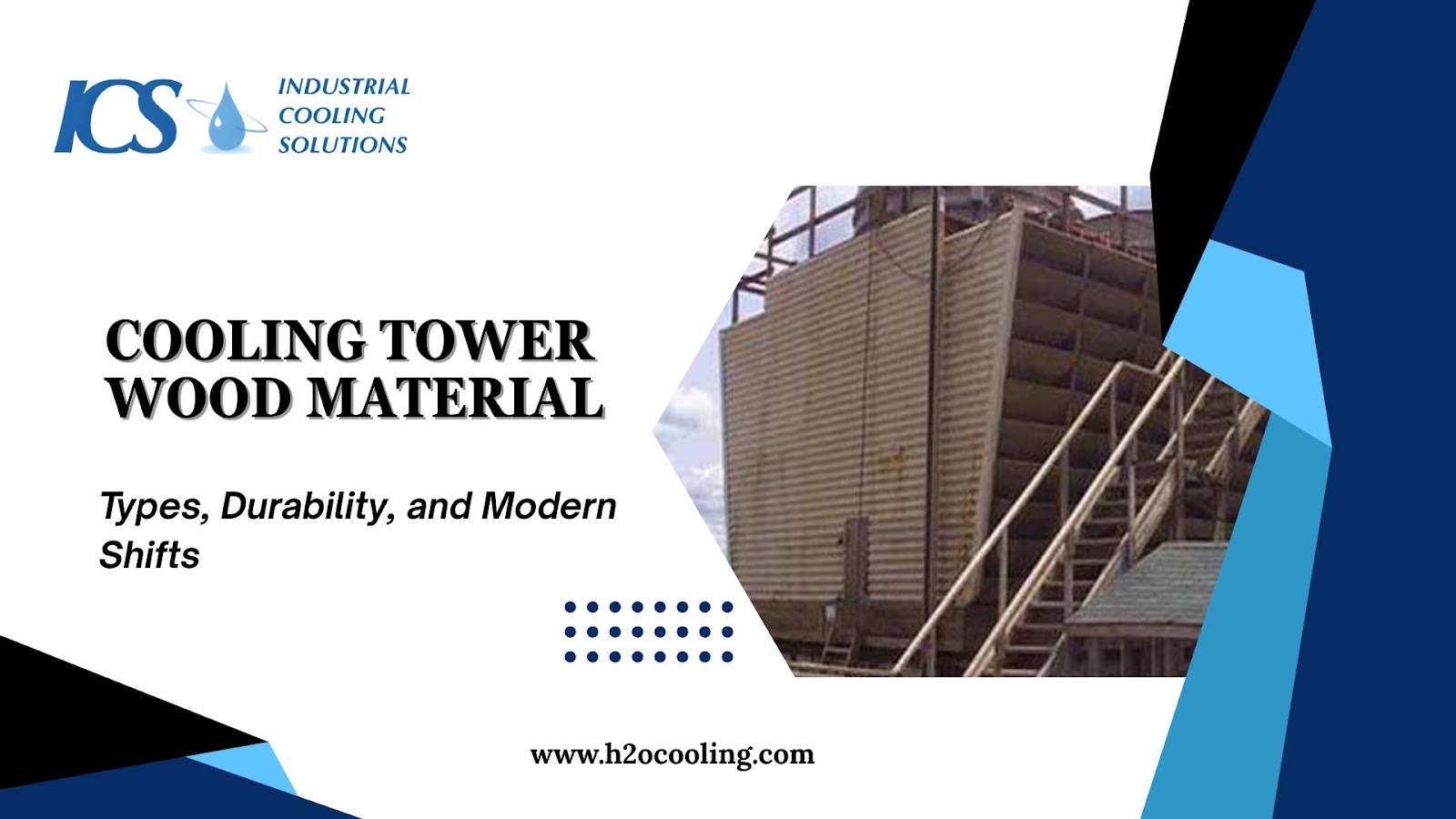
Ever wondered what keeps a power plant from overheating? For decades, the answer was wood. Though modern Cooling Tower Wood Material often use fiberglass or concrete, timber was the backbone of these colossal structures. Wood remains a crucial element in the history and ongoing maintenance of industrial cooling systems.
Historically, wood offered an accessible and cost-effective solution for large-scale construction. However, as industries demand higher efficiency and longevity, the limitations of traditional timber have become apparent.
In this blog post, we will examine the types of wood used in cooling towers, their advantages, the challenges they present, and why the sector is moving toward advanced alternatives.
Historical Use of Wood in Cooling Towers
Redwood was the backbone of early cooling tower construction due to its durability, flexibility, and affordability. Its natural resistance to rot and ease of on-site customization made it indispensable for industrial use. Even the internal "fill" material relied on wood until the 1960s.
- Redwood was chosen for cooling towers for its natural rot resistance and strength-to-weight ratio.
- Early designs used simple wooden structures relying on natural airflow.
- Wood's flexibility allowed for easy on-site customization without heavy machinery.
- Until the 1960s, wood was even used as the primary material for cooling tower "fill."
- Cooling towers built with Redwood dominated industries like power plants and chemical processing for decades.
Types of Wood Used in Cooling Towers
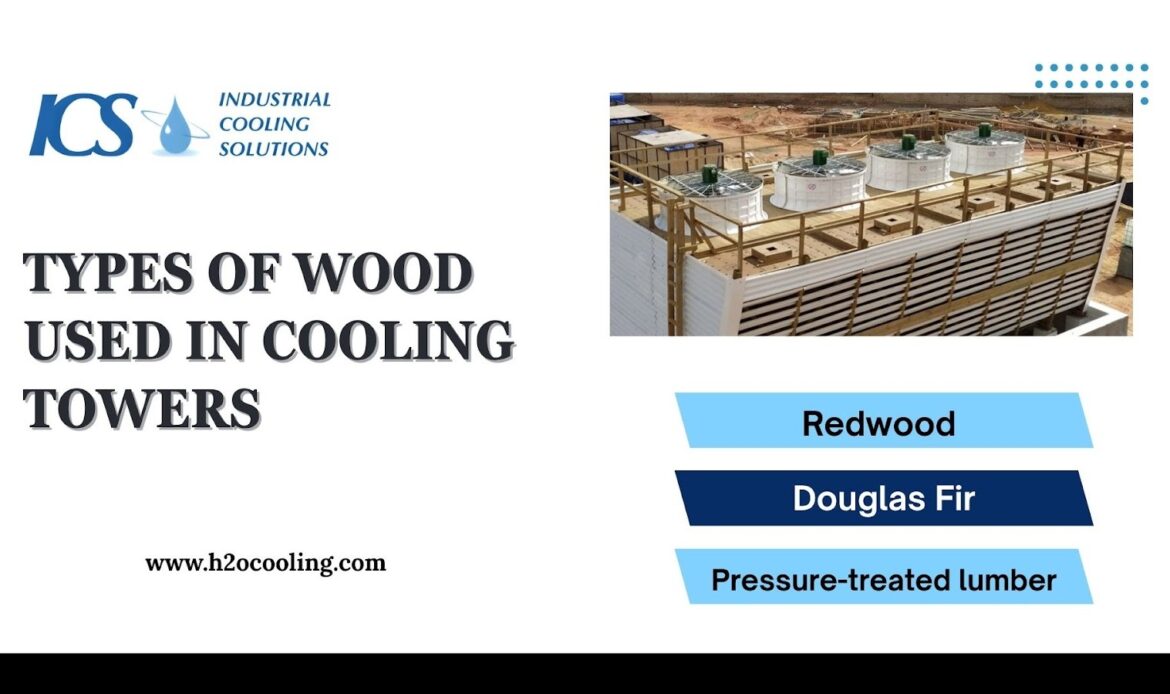
Not all lumber is suitable for the harsh, wet environment of a cooling tower. Manufacturers selected specific species based on their natural resistance to decay and structural integrity.
Redwood
Redwood was a top choice for decades. Its heartwood contains natural tannins that resist rot and insect damage. The material also demonstrates excellent dimensional stability, meaning it retains its shape better than other softwoods when exposed to fluctuating moisture levels.
Douglas Fir
Douglas Fir became a popular alternative when Redwood availability decreased. This species offers superior structural strength, making it ideal for the load-bearing framework of a tower. While less naturally resistant to decay than Redwood, it performs exceptionally well when treated with preservatives.
Pressure-treated lumber
To extend the lifespan of these structures, the industry adopted pressure-treated lumber. These treatments protect against fungal decay and termites, allowing species with lower natural resistance to function effectively in cooling applications.
Advantages of Wood as a Cooling Tower Material
Despite the shift toward newer composites, wood provided several benefits that sustained its popularity for nearly a century.
Natural structural strength and flexibility
Timber offers a high strength-to-weight ratio. It can support heavy loads from water distribution systems and fans while maintaining enough flexibility to withstand wind loads and minor seismic activity.
Ease of on-site fabrication and repair
Maintenance teams can repair wooden structures with standard carpentry tools. If a beam deteriorates, technicians can cut a replacement piece and install it without the need for welding or curing time. This minimizes downtime for critical industrial operations.
Moderate initial cost
For many years, the upfront cost of wood was significantly lower than steel or concrete. This economic advantage made it the preferred cooling tower wood material for budget-conscious projects, allowing facilities to allocate funds to other operational needs.
Limitations of Wood in Cooling Towers

The harsh environment inside a cooling tower eventually takes a toll on organic materials. Constant exposure to water, heat, and chemicals reveals several critical weaknesses.
Susceptibility to Rot, Decay, and Insect Damage
Biological attack is the primary enemy of wood. Fungi thrive in warm, moist environments, leading to soft rot that compromises structural integrity. Termites and other wood-boring insects can also cause unseen damage deep within the support members.
High Maintenance Requirements
Wooden towers demand rigorous upkeep. Owners must inspect components frequently and reapply protective coatings. Neglecting this maintenance leads to rapid failure, forcing costly emergency repairs.
Reduced Service Life
Even with excellent maintenance, wood has a finite lifespan. A well-maintained wooden tower might last 20 to 25 years, whereas concrete or fiberglass structures can exceed 50 years of service with minimal degradation.
Environmental Concerns
The chemicals used to treat wood, such as chromated copper arsenate (CCA) or creosote, pose environmental risks. These substances can leach into the cooling water and eventually into the blowdown discharge, creating regulatory compliance issues.
Vulnerability to Warping, Swelling, and Cracking in Wet Conditions
Wood is hygroscopic; it absorbs and releases moisture. This constant cycle causes the material to swell and shrink. Over time, this movement loosens connections and causes fasteners to fail, leading to structural instability.
Modern Alternatives to Wood
The industry is shifting towards advanced materials designed for greater durability and cost efficiency. These modern solutions not only reduce maintenance needs but also extend product lifespans, offering significant long-term savings.
By investing in these materials, companies can improve performance while minimizing environmental impact. It's a smarter, more sustainable approach to meet evolving market demands.
Fiber-Reinforced Polymer (FRP)
FRP has become a leading material for new cooling towers due to its superior properties. It is completely immune to corrosion, making it perfect for long-term use in harsh, wet environments.
- Reduced Maintenance: Its corrosion resistance eliminates the need for regular painting or treatment, lowering long-term costs.
- Design Flexibility: FRP can be molded into complex shapes, allowing for more efficient and customized tower designs.
- Low Conductivity: It has low thermal and electrical conductivity, which can be an advantage in certain operational environments.
Steel
Steel, particularly stainless and galvanized varieties, remains a popular choice for key cooling tower components. Its exceptional strength and durability make it ideal for structural elements that must withstand heavy loads and operational stress.
- High Strength-to-Weight Ratio: Steel offers robust structural support without excessive bulk.
- Proven Reliability: As a traditional construction material, steel's performance and lifecycle are well-documented and trusted.
Aluminum
Aluminum is often used for non-structural components like fan blades, casings, and louvers. Its lightweight properties reduce the load on the tower's structure and motor, improving energy efficiency.
- Corrosion Resistance: Aluminum naturally forms a protective oxide layer that guards against corrosion.
- Excellent Thermal Conductivity: It is effective in components that require heat dissipation, such as motor casings.
- Ease of Fabrication: Aluminum can be easily formed and welded, simplifying the manufacturing of intricate parts.
Concrete
Concrete is the material of choice for large-scale, natural draft cooling towers due to its immense compressive strength and durability. It provides the stability needed to support massive hyperbolic structures designed to last for decades.
- Exceptional Durability: Concrete can withstand extreme weather conditions and the harsh internal environment of a cooling tower.
- Vibration Damping: Its mass helps to absorb vibrations from large fans and water flow, enhancing structural stability.
- Fire Resistance: Concrete is inherently non-combustible, adding a layer of safety to the overall structure.
Short explanation of why industries are transitioning away from wood
Facilities prioritize reliability and long-term value. While the initial cost of FRP or concrete may be higher, the dramatic reduction in maintenance costs and the extended service life make them the smarter financial choice.
Side-by-Side Comparison: Wood vs Modern Materials
Choosing the right material requires a direct comparison of performance metrics. This table illustrates why modern engineers often move away from traditional timber.
Comparison Table:
| Material | Corrosion Resistance | Strength-to-Weight | Lifespan | Maintenance | Installation |
| Wood | Low (Rot/Decay) | Moderate | 15-25 Years | High | Easy |
| FRP | Excellent | High | 40+ Years | Low | Moderate |
| Steel (Galvanized) | Moderate | High | 20-30 Years | Moderate | Moderate |
| Concrete | Excellent | Very Low | 50+ Years | Very Low | Difficult |
FRP clearly outperforms wood in corrosion resistance and lifespan. While wood remains easy to install, the high maintenance burden often outweighs the initial savings. Concrete offers the best longevity but comes with a high price tag and complex construction requirements.
Factors to Consider When Choosing Cooling Tower Materials
Engineers must evaluate several variables before selecting materials for a new build or retrofit, including durability, cost-effectiveness, and environmental impact. The choice of materials can significantly influence the project's performance, safety, and long-term maintenance requirements.
Environmental conditions
The water chemistry and local climate dictate material success. If the circulating water contains high levels of chlorides or acids, wood and standard steel will fail quickly. FRP or specialized concrete mixes withstand these aggressive environments far better.
Structural requirements and tower height
Taller towers require materials with high compressive strength. Concrete excels here, whereas wood has limitations in height and load capacity. Seismic considerations also play a role; flexible structures like wood or FRP perform differently than rigid concrete during earthquakes.
Long-term maintenance and lifecycle costs
Stakeholders should calculate the total cost of ownership. A cheap wooden tower that requires annual chemically treated replacements will cost more over 20 years than a maintenance-free FRP structure.
Safety factors
Fire risk is a major concern with dry wooden towers during shutdown periods. Wood burns easily, whereas concrete and steel are non-combustible. FRP typically includes fire-retardant additives to meet safety codes.
Budget and installation constraints
Project timelines and available capital influence decisions. If a facility needs a rapid replacement with limited funds, wood might still be an option, provided the owner accepts the higher future maintenance costs.
Conclusion
Wood was the backbone of industrial cooling for the last century. Its availability and ease of use made it the go-to cooling tower wood material for countless power plants and factories. However, the susceptibility to rot, high maintenance demands, and environmental concerns have pushed the industry toward more durable solutions.
Today, materials like FRP and concrete offer superior longevity and performance. For facility managers dealing with aging wooden towers, the choice often lies between rigorous, costly maintenance and a strategic upgrade to modern composites.
By understanding the properties of these materials, stakeholders can ensure their cooling systems run safely and efficiently for years to come. Visit h2ocooling.com to learn how to optimize your system today
Frequently Asked Questions
Why was wood originally used in cooling towers?
Wood was affordable, easy to work with, and naturally resistant to moisture and decay. It supported heavy loads and allowed quick on-site repairs, making it ideal for early cooling tower designs.
What type of wood lasts longest in cooling tower environments?
Redwood typically lasts the longest due to its natural rot resistance and dimensional stability. Douglas Fir also performs well when pressure-treated with preservatives.
How long does a wooden cooling tower usually last?
A well-maintained wooden tower lasts around 15–25 years, but its lifespan varies based on water chemistry, climate, and maintenance frequency.
Is pressure-treated lumber better for cooling towers?
Yes. Pressure treatment forces preservatives deep into the wood, improving resistance to fungi, decay, and termites. It extends service life but still requires ongoing maintenance.
Why are industries replacing wood with FRP or concrete?
Modern materials offer longer lifespan, lower maintenance, and better corrosion resistance. They reduce downtime and long-term costs, making them more reliable for industrial operations.