


Industrial facilities face a critical choice regarding heat rejection. The method they select dictates their operational efficiency and their ecological footprint. While once-through systems (OTC) were once the standard for large-scale cooling, the industry shift toward recirculating towers offers a distinct advantage. We explore the specific cooling towers' environmental benefits in this detailed guide.
Consider this staggering reality: OTC systems often withdraw up to 100 times more water from local sources than recirculating alternatives. This massive discrepancy highlights why facility managers and engineers must understand the mechanics and ecological impacts of their cooling infrastructure.
How Industrial Cooling Systems Work
To appreciate the environmental differences, one must first understand the mechanical divergence between these two primary cooling methods.
Once-Through Cooling (OTC)
Once-through cooling systems are widely used in industries due to their simplicity and cost-effectiveness, but they have substantial environmental consequences. These systems rely heavily on natural water sources, leading to excessive water consumption and thermal pollution, which can disrupt aquatic ecosystems.
Understanding how they work highlights both their advantages and drawbacks.
How it works:
- Water is drawn from natural sources like rivers, lakes, or oceans to cool industrial processes.
- The heated water is discharged back into the source, raising its temperature.
- Minimal on-site equipment is needed, but it results in extremely high water usage.
Cooling Towers
Cooling towers offer a more sustainable alternative to once-through systems by significantly reducing water withdrawal and thermal pollution. By using a recirculating process, they minimize their impact on local water bodies while effectively managing industrial heat. This makes them a crucial technology for environmentally conscious industrial operations.
How it works:
- A closed-loop system repeatedly circulates water between the heat source and the cooling tower.
- Waste heat is released into the atmosphere through evaporation.
- A small amount of "makeup water" replaces what is lost to evaporation, resulting in far less water intake than OTC systems.
- Modern towers use drift eliminators to capture water droplets and smart controls to optimize efficiency.
Environmental Impacts of Once-Through Cooling
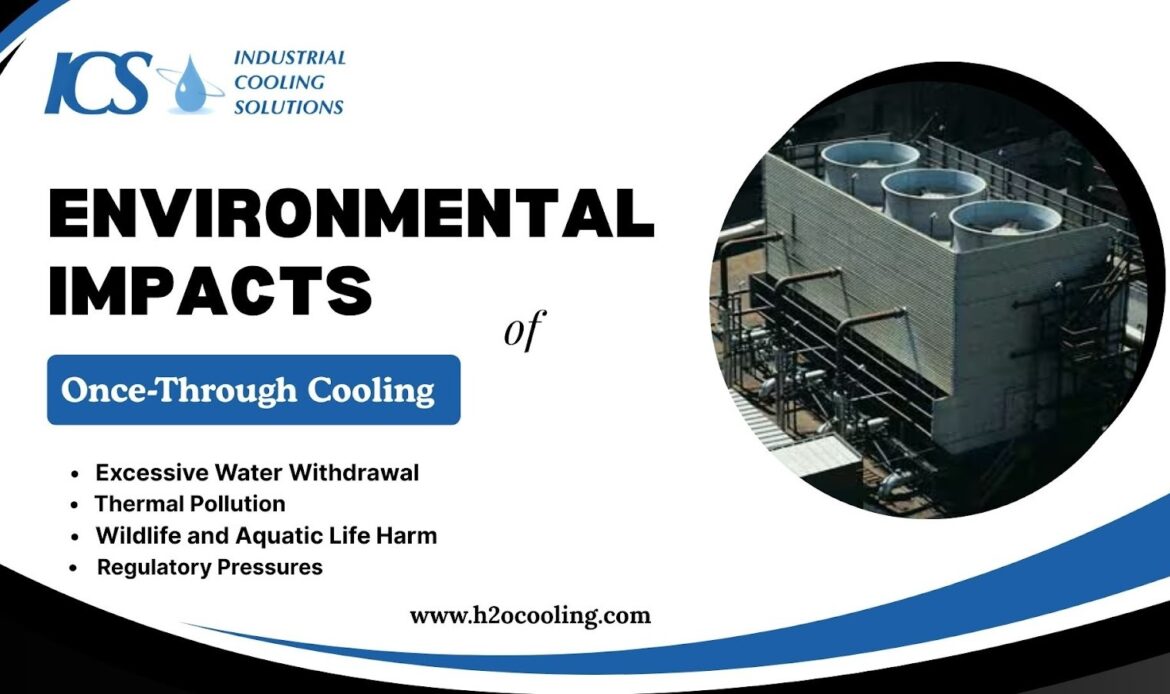
Once-through cooling systems pose significant risks to aquatic ecosystems, including thermal pollution and harm to marine life. Modern regulations aim to reduce these impacts by encouraging the adoption of environmentally friendly cooling technologies.
Transitioning to sustainable solutions not only protects ecosystems but also ensures compliance with stricter environmental standards.
Excessive Water Withdrawal
OTC systems demand a continuous, high-volume flow of water to maintain operations. This massive withdrawal rate puts immense pressure on local aquifers and waterways, especially during drought conditions. When a single facility monopolizes a water source, it threatens the availability of fresh water for downstream communities and agricultural use.
Thermal Pollution
The most immediate impact of an OTC system occurs at the discharge point. The system releases water back into the environment at temperatures significantly higher than the ambient water temperature. This thermal plume disrupts the natural balance of the ecosystem. Warmer water holds less oxygen, which creates hypoxic zones where aquatic life cannot survive.
Wildlife and Aquatic Life Harm
The intake structures of OTC systems pose a lethal threat to marine life through two primary mechanisms: entrainment and impingement. Entrainment occurs when the system pulls small organisms, such as plankton and fish eggs, into the machinery, where heat and pressure kill them. Impingement happens when larger fish and crabs become trapped against the intake screens by the force of the flowing water, leading to exhaustion and death.
Regulatory Pressures
Governments recognize the damage caused by these systems and now enforce strict regulations. In the United States, Section 316(b) of the Clean Water Act mandates that facilities reduce the environmental impact of their cooling water intake structures. These regulations make the operation of legacy OTC systems increasingly difficult and expensive.
The Cooling Towers Environmental Benefit
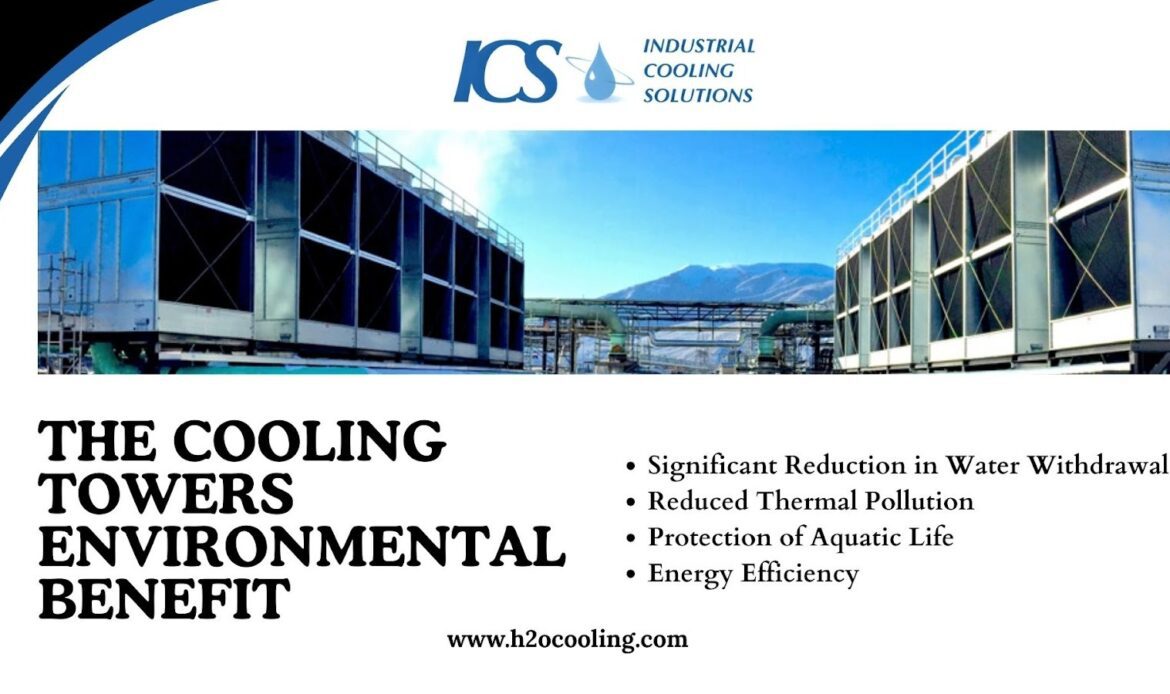
Transitioning to a recirculating system significantly reduces water waste and minimizes environmental impact. These systems enhance energy efficiency, lower operational costs, and decrease dependence on freshwater resources.
Significant Reduction in Water Withdrawal
Cooling towers reduce water withdrawal rates by 90% to 95% compared to once-through systems. By recycling the cooling water, the facility only needs to replace what it loses to evaporation and drift. This preservation of local water resources allows industrial plants to operate sustainably even in water-scarce regions.
Reduced Thermal Pollution
Because cooling towers reject heat into the atmosphere through evaporation, they eliminate the discharge of hot water into local waterways. The small amount of water that a tower might discharge (blowdown) is easy to manage and treat. This prevents the formation of thermal plumes that degrade water quality and harm aquatic ecosystems.
Protection of Aquatic Life
The dramatic reduction in water intake volume naturally lowers the velocity of water entering the system. Lower intake velocity allows fish and other organisms to swim away from intake structures, effectively minimizing impingement. Furthermore, because the system withdraws far less water, the number of eggs and larvae subject to entrainment drops precipitously.
Energy Efficiency and Carbon Footprint Benefits
Modern cooling towers contribute to overall plant efficiency. When a facility rejects heat effectively, the chillers and turbines operate at optimal levels, consuming less fuel. Reduced fuel consumption directly correlates to lower greenhouse gas emissions, shrinking the facility's carbon footprint.
Side-by-Side Comparison | OTC vs Cooling Towers
The following comparison illustrates the operational and environmental gap between the two technologies.
| Metric | Once-Through Cooling (OTC) | Cooling Towers | Improvement / Benefit |
| Water Withdrawal | Very high | 90–95% lower | Large water savings |
| Thermal Discharge | Hot water returned to the source | Heat rejected to the air | Protects rivers/lakes |
| Impact on Wildlife | High (entrainment/impingement) | Minimal | Safer habitats |
| Energy Efficiency | Moderate | Higher with modern controls | Reduced emissions |
| Regulatory Compliance | Difficult | Easier alignment | Lower risk |
Understanding these metrics helps stakeholders visualize the cooling towers' environmental benefit. While OTC systems offer simplicity, they fail to meet modern sustainability requirements. Cooling towers provide a solution that respects both production goals and environmental stewardship.
Retrofitting Once-Through Systems to Cooling Towers
Facilities operating on legacy OTC systems can transition to recirculating cooling through a structured retrofit process, offering a significant cooling tower environmental benefit by reducing water usage and minimizing ecological impact.
Conduct Water and Energy Audit
Start your transition process by conducting a detailed water and energy audit. This audit establishes a baseline for current consumption, highlighting inefficiencies and areas for improvement.
It provides precise data on water usage, energy consumption, and potential savings from upgrades or retrofits. With this information, you can identify opportunities to reduce resource usage and improve system efficiency.
Review Environmental Regulations and Permits
Compliance is key when making changes. Review local environmental regulations, such as discharge permits and thermal limits, to ensure the system meets legal standards and avoids fines or delays. This allows the engineering team to design a system that aligns with both regulatory and operational needs.
Evaluate Site Constraints (Land, Noise, Plume)
Site conditions are crucial for system design. You'll need to assess factors like available land, noise restrictions, and plume visibility. For example, a facility in a dense urban area might need a low-noise cooling tower, while a site with limited space may need a compact model.
Select Technology (Wet, Hybrid, Dry, Drift Eliminators)
Based on your audit and site evaluation, choose the best cooling technology for your needs. Options like wet, hybrid, or dry cooling towers each offer distinct benefits in efficiency and environmental impact.
Adding modern drift eliminators will also reduce water loss, helping your system operate sustainably while meeting performance targets.
Estimate CAPEX, OPEX, and Simple Payback
Prepare a financial model to evaluate the investment’s viability. Estimate the Capital Expenditure (CAPEX) for system installation and Operational Expenditure (OPEX) for its ongoing operation.
Calculate the simple payback period to determine how quickly the savings from increased efficiency will cover the initial costs.
Plan Phased Installation or Pilot Program
To minimize disruption, adopt a phased installation approach or implement a pilot program. A phased rollout allows the facility to continue operations while upgrading critical tower components.
Monitor and Verify Environmental and Operational Performance
After installation, continuous monitoring is key to ensuring the system performs as expected. Track water savings, energy efficiency, and environmental impact. Regular performance checks verify the system meets design goals, build confidence in the investment, and deliver measurable, long-term results.
Conclusion
The shift from once-through cooling to recirculating systems represents more than just a technological upgrade; it is a commitment to industrial stewardship. The cooling towers' environmental benefit is measurable and profound, offering a pathway to reduce water consumption, eliminate thermal pollution, and protect aquatic life.
Industries that cling to outdated OTC methods face increasing regulatory hurdles and operational risks. Transitioning to modern cooling towers provides a future-proof solution that enhances efficiency and ensures compliance.
For a comprehensive assessment of your facility's cooling infrastructure, contact our team at h2ocooling.com today. We provide detailed audits to help you design a system that meets your production needs and your environmental goals.
Frequently Asked Questions
What is the main environmental benefit of recirculating cooling towers?
Recirculating cooling towers drastically reduce water withdrawal (by 90–95%), minimize thermal pollution, and protect aquatic life compared to once-through systems.
How do once-through cooling systems harm the environment?
OTC systems withdraw massive amounts of water, return it at high temperatures, disrupt aquatic ecosystems, and can kill fish and larvae via entrainment and impingement.
How much water can a cooling tower save compared to OTC?
Cooling towers typically use only the water lost to evaporation and drift, reducing overall water consumption by up to 95%.
Do cooling towers reduce energy costs?
Yes, efficient heat rejection allows plant chillers and turbines to operate optimally, lowering fuel consumption and greenhouse gas emissions.
Can existing OTC systems be retrofitted to cooling towers?
Yes. Facilities can transition using audits, site evaluation, and phased installation or pilot programs, significantly reducing water use and environmental impact.