

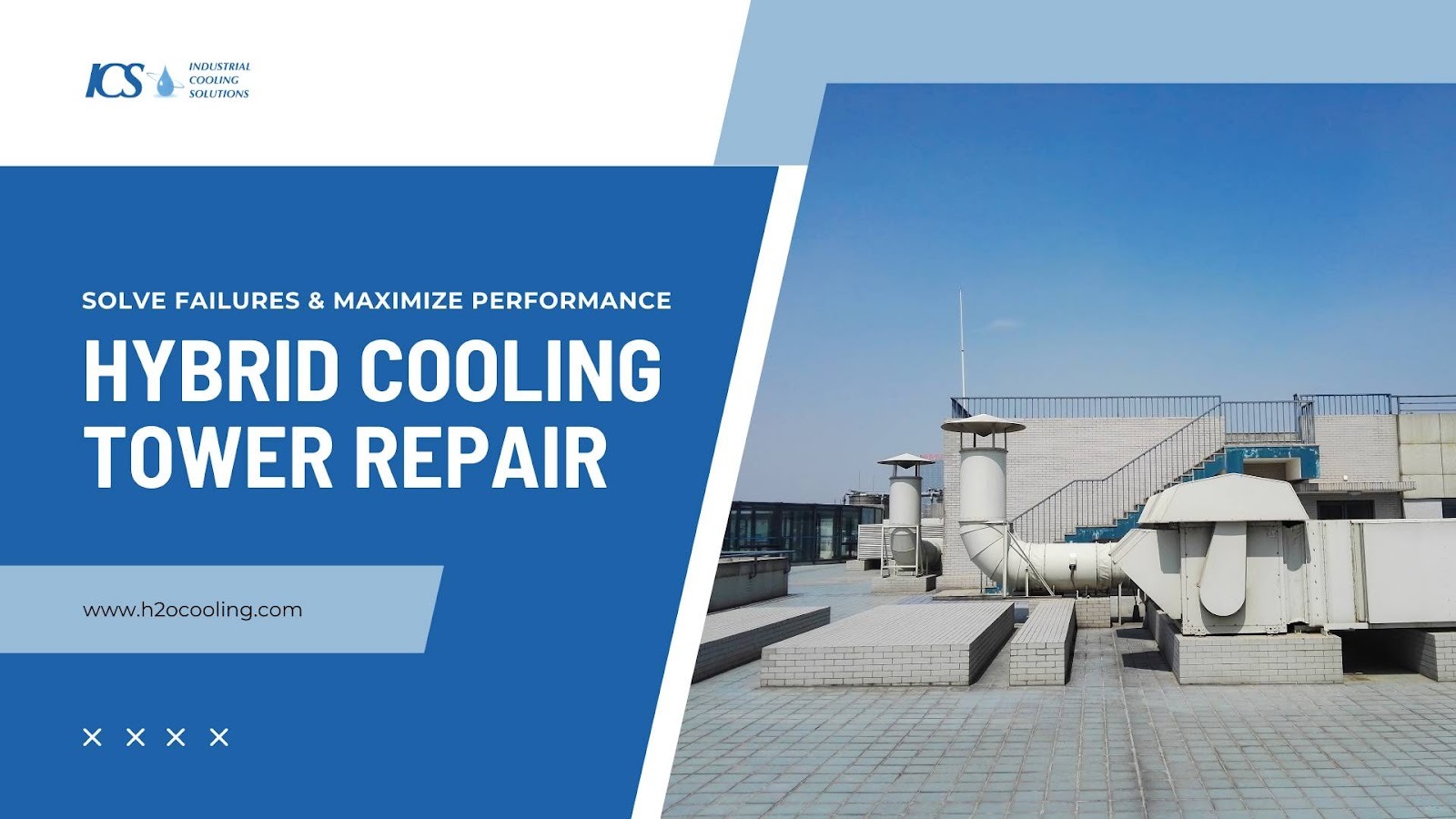
Hybrid Cooling Tower Repair represents the pinnacle of thermal rejection technology, blending the efficiency of evaporative cooling with the water savings of dry cooling. However, this complexity introduces unique points of failure.
Restoring hybrid cooling performance degradation requires more than standard maintenance; it demands mastering specific failure points that traditional towers do not possess. That is why comprehensive Repair, Upgrades, And Maintenance Services are essential for ensuring the ongoing reliability and efficiency of hybrid cooling towers.
The most critical vulnerability often lies at the wet/dry switchover failure point. When this mechanism falters, the system changeover control becomes compromised. This leads to immediate inefficiencies, such as water waste during dry modes or inadequate cooling during peak loads.
Understanding these nuances is the first step toward effective diagnosis and repair. Engaging with professional Repair, Upgrades, And Maintenance Services ensures each issue is expertly identified and addressed, safeguarding system performance and longevity.
Unmasking the Breakdown: Top 5 Secret Tips for Hybrid Tower Repair Diagnosis
Diagnosing a hybrid tower requires looking beyond obvious leaks or fan failures. The most debilitating issues often hide within the control logic and internal components. Here are five expert tips for accurate diagnosis.
Thermal Signature of Wet/Dry Switchover Failure
Visual inspections often fail to detect internal valve leaks. Instead, utilize thermography. When the system operates in "dry mode," use a thermal camera to scan the solenoid valves and bypass lines. If you detect heat leaking into the wet section, you have confirmed a wet/dry switchover failure.
This heat signature indicates that the system changeover control has been compromised, allowing process fluid to bypass the dry coil when it should not. Engaging professional Repair, Upgrades, And Maintenance Services at this stage ensures that not only are failures correctly identified, but solutions are swiftly implemented, restoring system reliability and peak operational performance.
Damper Actuator Malfunction Check
Dampers control airflow between the wet and dry sections. A stuck damper can cripple efficiency. To diagnose a damper actuator malfunction without invasive disassembly, analyze the current draw and sound.
A functioning actuator has a specific electrical signature. If the amperage spikes or drops to zero, or if you hear grinding noises during modulation, the actuator position or seal integrity is likely compromised.
Engaging expert Repair, Upgrades, And Maintenance Services for damper systems helps ensure these diagnostics are performed accurately and that any necessary repairs or adjustments are implemented efficiently. This method bypasses the need for immediate visual inspection, saving valuable downtime.
Non-Destructive Testing (NDT) for Dry Coil Fouling
Dry coils are susceptible to internal scaling and wall thinning, which are invisible from the outside. Waiting for a leak is a costly strategy. Implement Non-Destructive Testing (NDT) using eddy current or ultrasonic technology as part of comprehensive Repair, Upgrades, and Maintenance Services.
These methods quantify internal wall thinning and the extent of dry coil fouling. By identifying these issues before external leaks appear, facility managers can plan repairs proactively rather than reacting to catastrophic failures.
Monitoring Desiccant Wheel Degradation
For systems utilizing plume reduction technology, the desiccant wheel is a critical component. Often overlooked, desiccant wheel degradation leads to visible plumes and reduced water conservation.
Diagnosis involves checking for physical deterioration of the wheel matrix and a reduction in moisture adsorption capacity. Repair, Upgrades, and Maintenance Services play a key role by ensuring that repairing this component follows specific material replacement protocols that differ significantly from standard coil repairs.
Choosing the Right Repair Method
Not every failure requires a full replacement. You must define clear criteria for choosing between specialized composite patches and complete dry coil section replacement. This decision hinges on the Remaining Useful Life (RUL) of the surrounding components. If the base metal is sound, a patch works well.
If the surrounding area shows widespread fatigue, replacement is the only viable option. Relying on experienced Repair, Upgrades, and Maintenance Services ensures these choices are made based on expert assessment, which saves capital expenditure without sacrificing reliability.
Structural Integrity and Advanced Repair Strategies in a Hybrid Context
Once you have diagnosed the issue, execution becomes the priority. Hybrid cooling tower repair requires specialized techniques and comprehensive Repair, Upgrades, And Maintenance Services to ensure structural integrity and performance recovery.
Repairing and Calibrating System Changeover Control
The brain of a hybrid tower is its control logic. Repairing this system often involves replacing faulty solenoid valves that have succumbed to wear or corrosion. However, replacement is only half the battle.
You must recalibrate the system changeover control logic. Utilizing professional Repair, Upgrades, And Maintenance Services during this process ensures accurate calibration and reliable operation. This ensures the tower switches between wet and dry modes at the precise temperature and load setpoints.
Proper calibration, supported by expert Repair, Upgrades, and Maintenance Services, restores the optimal balance, preventing energy waste and ensuring process stability.
Coils, Casing, and Mechanical Equipment Repair
Leaks in the closed-loop coil demand immediate attention. Furthermore, hybrid towers often suffer from transition zone corrosion, the area where wet and dry sections meet.
Beyond static components, replacing critical mechanical equipment like fans and pumps restores the motive force required for effective heat rejection and should be included as part of a comprehensive Repair, Upgrades, and Maintenance Services program.
Requirements and Advantages of Specialized Tools
Standard tools often fall short when working on hybrid systems. Hybrid cooling tower repair requirements frequently call for specialized welding equipment compatible with exotic coil materials. Additionally, the physical layout of hybrid towers can be challenging.

The advantages of hybrid cooling tower repair tools, such as custom access platforms, become evident when technicians need to reach elevated dry coil sections safely. By leveraging comprehensive Repair, Upgrades, and Maintenance Services that utilize these specialized tools, you ensure repairs meet OEM standards and deliver long-term reliability.
7 Benefits of Implementing Expert Hybrid Repair Strategies
Investing in specialized hybrid repair is not just a maintenance cost; it is a strategic advantage. By leveraging comprehensive Repair, Upgrades, and Maintenance Services, you can realize the full benefits of implementing hybrid cooling tower repair correctly.
Understanding Industry Improvement Through Hybrid Repair
- Elimination of Water Waste: Correcting switchover failures puts an immediate halt to wet mode bleed-off, conserving millions of gallons of water annually.
- Restored Energy Efficiency: Optimizing the Variable Frequency Drive (VFD) usage minimizes fan power consumption, directly lowering utility bills.
- Reduced Operating Costs: By strictly controlling the wet-side duty cycle, facilities significantly lower their chemical treatment costs.
- Compliance & Sustainability: Effective plume abatement ensures adherence to strict environmental regulations and prevents community complaints.
- Extended Equipment Lifespan: Proactive maintenance protects the expensive dry coil from premature corrosion, delaying major capital replacement.
- Guaranteed Process Fluid Protection: Integrity checks ensure the process fluid remains isolated from contaminants.
- Minimized Downtime: Utilizing predictive NDT allows for planned outages, eliminating the chaos of emergency shutdowns.
- Comprehensive Repair, Upgrades, and Maintenance Services: Relying on expert Repair, Upgrades, and Maintenance Services ensures every aspect of the hybrid cooling tower, from diagnostics to long-term performance improvements, is managed with precision and industry best practices.
Hybrid Cooling Tower Failure Scorecard (What Repair Looks Like)
To streamline your maintenance approach, use this scorecard in conjunction with expert Repair, Upgrades, And Maintenance Services. It helps technicians visualize what a hybrid cooling tower repair looks like based on specific symptoms.
Unique Hybrid Tower Failure Modes and Treatments
| Failure Mode | Symptom | Diagnostic Method | Required Repair |
| Dry Coil Fouling | Performance degradation in dry mode | Non-Destructive Testing (NDT) | Chemical Cleaning or Protective Coating |
| Switchover Valve Leak | Water consumption during dry mode | Thermography (Heat Signature) | Valve Replacement & Control Recalibration |
| Damper Failure | Inconsistent air temperature | Current Draw Analysis | Actuator Replacement or Linkage Adjustment |
| Desiccant Wheel Wear | Visible plume formation | Visual & Performance Log Check | Matrix Replacement or Resurfacing |
| Transition Corrosion | Casing leaks at the wet/dry seam | Visual & Ultrasonic Thickness | Composite Patching & Sealant Application |
Conclusion: Invest in Hybrid Expertise
Hybrid Cooling Tower Repair is a sophisticated assets that demand more than general knowledge. Specialized expertise in Repair, Upgrades, and Maintenance Services is non-negotiable for maintaining efficiency and longevity. To schedule your hybrid tower diagnosis and repair consultation, visit our H2O Cooling.
Frequently Asked Questions
What is a hybrid cooling tower repair?
Hybrid cooling tower repair involves diagnosing and fixing issues in wet/dry systems to restore efficiency, reduce water waste, and extend equipment life.
How do I know if my hybrid cooling tower needs repair?
Look for signs like water waste in dry mode, reduced cooling efficiency, unusual noises, or visible leaks. Regular diagnostics can help identify hidden issues.
What are the common failure points in hybrid cooling towers?
Key failure points include wet/dry switchover mechanisms, damper actuators, dry coil fouling, desiccant wheel degradation, and transition zone corrosion.
How can I improve my hybrid cooling tower's performance?
Regular maintenance, non-destructive testing, and timely repairs of critical components like coils and dampers can optimize performance and reduce costs.
Why should I invest in expert hybrid cooling tower repair?
Expert repairs ensure compliance, energy efficiency, water conservation, and extended equipment lifespan, minimizing downtime and operational costs.