


Industrial cooling towers are essential for many processes, but they are also significant sources of noise. As environmental regulations become stricter and communities expand closer to industrial sites, managing this noise is no longer optional. Effective cooling tower noise control design is a critical part of planning new installations to ensure compliance, maintain good community relations, and protect workplace safety.
This guide provides a comprehensive overview of how to build new cooling towers with noise compliance in mind from the very beginning. We will explore the primary noise sources, the principles of effective attenuation, and the specific components used to achieve quiet operation.
You will learn about silencers, airflow design, water-noise control, and structural considerations. By following this guide, you can establish clear performance targets and integrate noise control into your project workflow, avoiding the high costs and inefficiencies of retrofitting.
Why Noise Is a Critical Design Consideration for Cooling Towers
What are the main noise sources in a cooling tower, and why should you address them early? The primary sources include the powerful fans, the turbulence of moving air, the constant splash of falling water, and the vibration of the structure itself. Ignoring these can lead to serious consequences.
- Regulatory Compliance: Most local and national authorities have strict noise limits for industrial facilities. Designing for compliance from the start is the most reliable way to meet these legal requirements.
- Community Complaints: As residential areas encroach on industrial zones, noise complaints have become a major operational risk. Proactive noise control helps maintain a positive relationship with the surrounding community and avoids costly disputes or legal battles.
- Workplace Safety: High noise levels pose a significant health and safety risk to employees, potentially leading to hearing damage and increased stress. Adhering to occupational safety standards is not just a legal requirement but also a moral responsibility.
Understanding Noise Generation in Cooling Towers
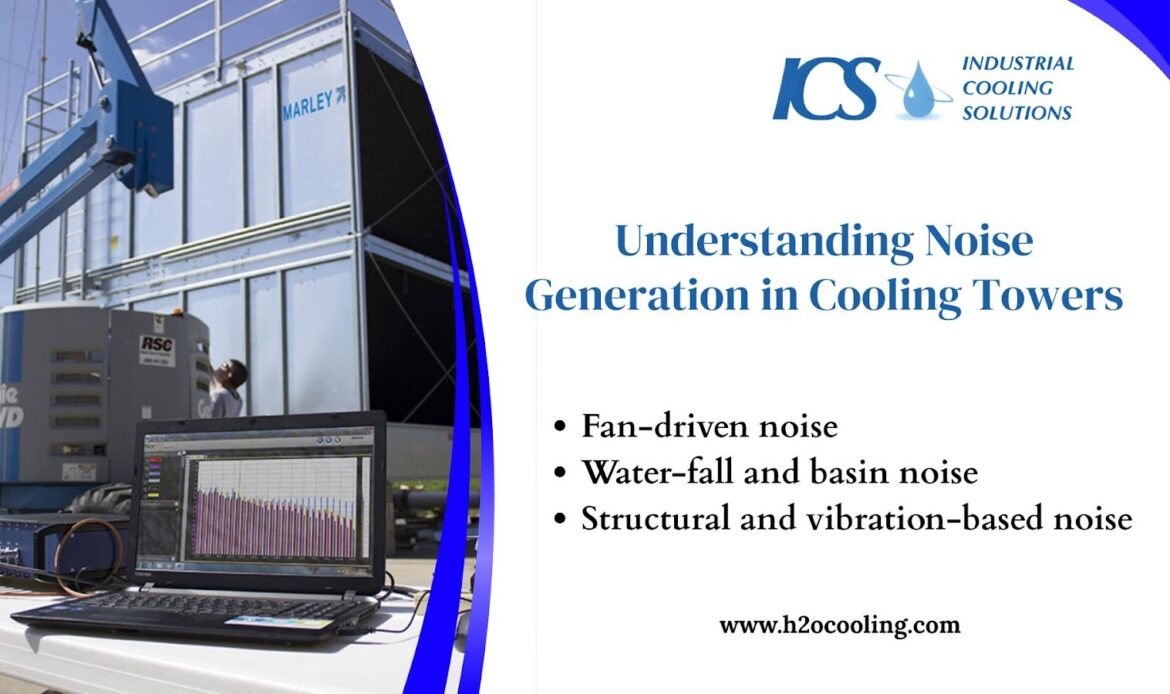
To effectively control cooling tower noise, you must first understand where it comes from and its characteristics. How do different components contribute to the overall sound profile? The noise is a complex mix of sounds from various sources, each with a distinct frequency.
- Fan-driven noise: The large fans that move air through the tower are the most dominant noise source. This sound is typically low to mid-frequency and radiates from both the air intake and discharge points.
- Water-fall and basin noise: The sound of water splashing down from the fill into the basin creates a constant, high-frequency broadband noise. While less powerful than fan noise, its high-pitched character can be particularly annoying to the human ear.
- Structural and vibration-based noise: The motors, fans, and pumps generate vibrations that travel through the cooling tower’s structure. This noise can radiate into the surrounding environment, especially if the tower is installed on a rooftop or connected to other buildings.
Analyzing the full frequency spectrum of these sources is essential. Different frequencies require different attenuation methods.
Core Principles of Cooling Tower Silencer Design
What are the fundamental principles for designing effective noise control systems? The goal is to reduce noise without compromising the tower’s primary function: cooling. This involves balancing acoustic performance with aerodynamic efficiency.
Silencers vs. Barriers vs. Enclosures:
These are the three main tools for noise attenuation.
- Intake and discharge silencers treat noise at its source.
- Acoustic barriers block the direct path of sound to sensitive receivers.
- Full acoustic enclosures contain the entire noise source.
The choice depends on the required noise reduction, the layout of the site, and the specific noise sources being targeted.
Balancing Airflow and Cooling Efficiency:
Silencers and other acoustic components can create a pressure drop, which restricts airflow and reduces cooling efficiency. A well-designed system minimizes this impact, ensuring the tower can still meet its performance targets.
Material and Structural Considerations:
Cooling towers are harsh, corrosive environments. Silencers and other acoustic components must be constructed from durable, corrosion-resistant materials like galvanized steel, stainless steel, or aluminum to ensure a long service life.
Maintenance and Accessibility Planning:
All noise control components, especially silencers, will require periodic inspection and cleaning. The design must include safe and practical access for maintenance personnel without requiring major disassembly.
Noise-Control Components in Cooling Tower
A comprehensive noise control strategy combines several specialized components. Each one targets a specific noise source or pathway, and together they create a quiet and compliant cooling tower.
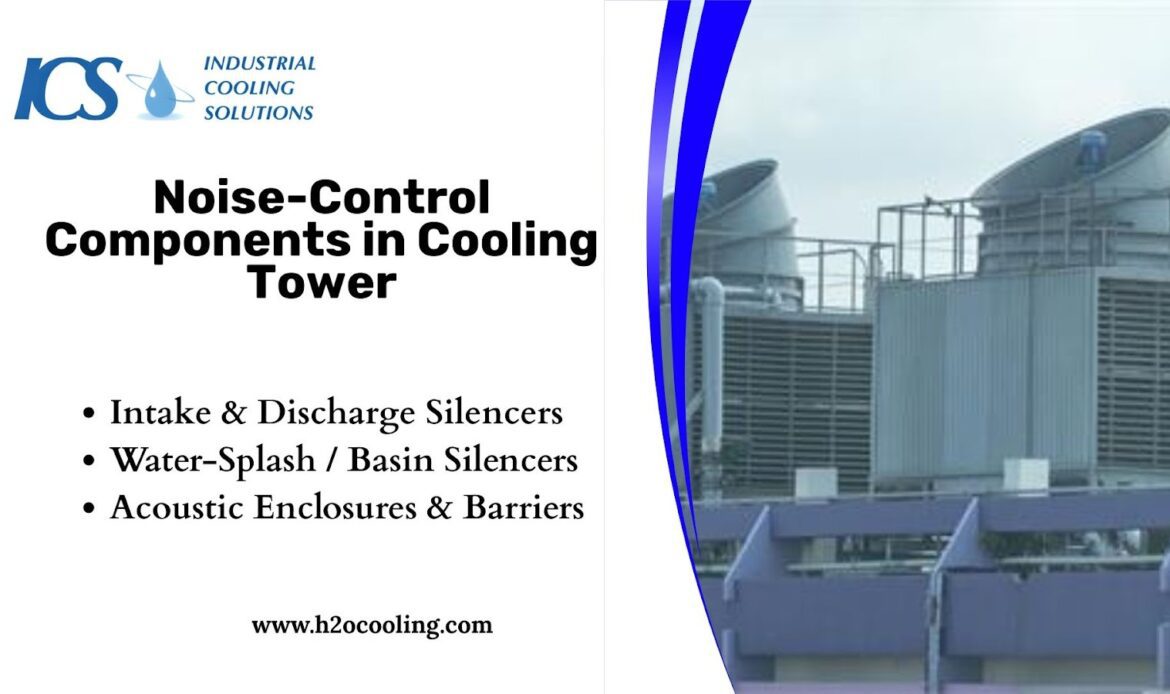
Intake & Discharge Silencers
Silencers are the most common and effective method for reducing fan noise. They are designed to absorb sound energy as air passes through them.
Purpose and Effectiveness:
Placed at the fan’s air intake and discharge openings, silencers can achieve significant noise reduction, particularly in the low to mid-frequency ranges where fan noise is dominant.
Types of Silencers:
- Splitter-Type Silencers: Use parallel acoustic baffles to absorb and reduce sound effectively.
- Lined Discharge Hoods: Designed to minimize noise at air exit points.
- Intake Attenuators: Treat and control noise at air entry points for quieter operations.
Water-Splash / Basin Silencers
Water-splash silencers, often in the form of floating mats or grids, are placed on the surface of the water in the collection basin.
How They Work
- Absorb the energy of falling water droplets to prevent splash noise at the source.
- Reduce high-frequency noise effectively.
- Easily integrate into the basin design for seamless functionality.
Acoustic Enclosures & Barriers
If silencers alone cannot meet the required noise levels, especially for receivers located very close to the tower, acoustic barriers or full enclosures may be necessary.
How They Work
- Utilize specific design elements like height, length, and sound-absorptive lining to noise reduction.
- Prevent sound reflections by using materials that absorb sound on the side facing the tower.
Vibration Isolation & Structural Noise Mitigation
Fans, motors, and pumps should be mounted on vibration isolators, such as springs or neoprene pads. This decouples the machinery from the cooling tower structure, significantly reducing the transmission of structure-borne noise.
Designing for Noise Compliance: Step-by-Step Workflow
A successful outcome requires a structured process that integrates acoustic design into the project from day one. What are the key steps to follow?
- Acoustic Assessment and Regulatory Requirements: Begin by conducting a baseline environmental noise assessment and clearly defining the applicable regulatory noise limits.
- Identify and Analyze All Noise Sources: Use manufacturer data and predictive software to model the noise output from the fans, water, and structure across the full frequency spectrum.
- Select Appropriate Noise-Control Components: Based on the analysis, choose the right combination of silencers, barriers, and vibration isolators to target each noise source effectively.
- Integrate Aerodynamic and Acoustic Design: Work closely with the cooling tower manufacturer to ensure that the noise control solution does not negatively impact thermal performance.
- Plan Maintenance and Accessibility: Incorporate access panels, walkways, and platforms into the design to allow for safe and easy maintenance of all acoustic components.
- Simulation and Acoustic Testing Before Installation: Use acoustic modeling software to verify that the proposed design will meet the noise compliance goals before construction begins.
- Implementation, Monitoring, and Long-Term Maintenance: After installation, conduct post-commissioning noise measurements to confirm compliance and establish a long-term maintenance schedule.
Common Mistakes & Pitfalls in Silencer
Many projects fall short of their noise reduction goals due to avoidable errors. These often include poor initial planning, underestimating environmental factors, and failing to use the right materials or technology.
By addressing these challenges early, teams can significantly improve their chances of success and meet noise control objectives.
- Treating noise reduction as a retrofit: Waiting until after the tower is installed to address noise is the most expensive and least effective approach.
- Ignoring airflow or cooling efficiency impact: Selecting a silencer based only on its acoustic rating without considering its pressure drop can cripple the tower's performance.
- Overlooking maintenance access: A silencer that cannot be cleaned will eventually clog, reducing airflow and creating a performance and safety issue.
- Focusing only on fan noise: Ignoring water splash or structural noise can lead to compliance failures even with effective fan silencers.
- Relying on "quiet fans" alone: While a quieter fan helps, it is rarely sufficient to meet strict noise regulations without a comprehensive design approach.
Your Path to Compliance and Quiet Operation
Ultimately, effective cooling tower noise control design is about proactive engineering, not reactive problem-solving. By integrating noise attenuation into the earliest planning stages, you can design a cooling tower that is efficient, compliant, and a good neighbor. Treating noise as a fundamental design parameter protects your investment, avoids costly retrofits, and ensures long-term operational reliability.
Use this checklist to guide your process:
- Audit: Define regulatory limits and assess the acoustic environment.
- Source Analysis: Identify and model all noise sources and their frequencies.
- Design: Select and integrate the right combination of attenuation components.
- Implementation: Oversee the correct installation of all acoustic systems.
- Testing: Verify acoustic performance with pre- and post-installation measurements.
- Maintenance: Establish a long-term plan for inspection and cleaning.
Adopting this integrated approach from the start is the most reliable way to achieve compliance and ensure your cooling tower operates quietly and efficiently for years to come.
Conclusion
In conclusion, proper installation and maintenance of a cooling tower is crucial for its efficient and quiet operation. It is essential to follow the manufacturer's instructions and guidelines, conduct thorough inspections, and establish a regular cleaning schedule. Neglecting these steps can lead to compliance issues and affect the performance of the cooling tower.
At H2ocooling.com, we specialize in comprehensive cooling tower solutions, from installation and maintenance to repairs. Our experts focus on optimizing performance while addressing key concerns like cooling tower noise control design to ensure compliance and efficiency.
Contact us today to discuss how we can support your cooling tower needs!
Frequently Asked Questions
What causes cooling tower noise?
Cooling tower noise mainly comes from fans, falling water, and structural vibration. Each source produces different frequencies that require specific control methods.
How do you reduce cooling tower noise?
Noise is reduced using silencers, barriers, water-splash mats, and vibration isolators. The right combination depends on your tower design and noise limits.
What is a cooling tower silencer?
A silencer is an acoustic device installed at the intake or discharge to absorb fan noise. It reduces low- to mid-frequency sound without harming airflow when designed correctly.
How loud is a cooling tower?
Cooling towers typically range from 65–95 dB, depending on size and fan type. Larger towers or high-speed fans usually generate more noise.
How do acoustic barriers work for cooling towers?
Barriers block the sound path between the tower and nearby receivers. They work best when tall, close to the source, and absorption-lined.
Do silencers affect cooling tower performance?
Poorly designed silencers can create a pressure drop, reducing airflow. Proper acoustic-aerodynamic design avoids performance loss.