

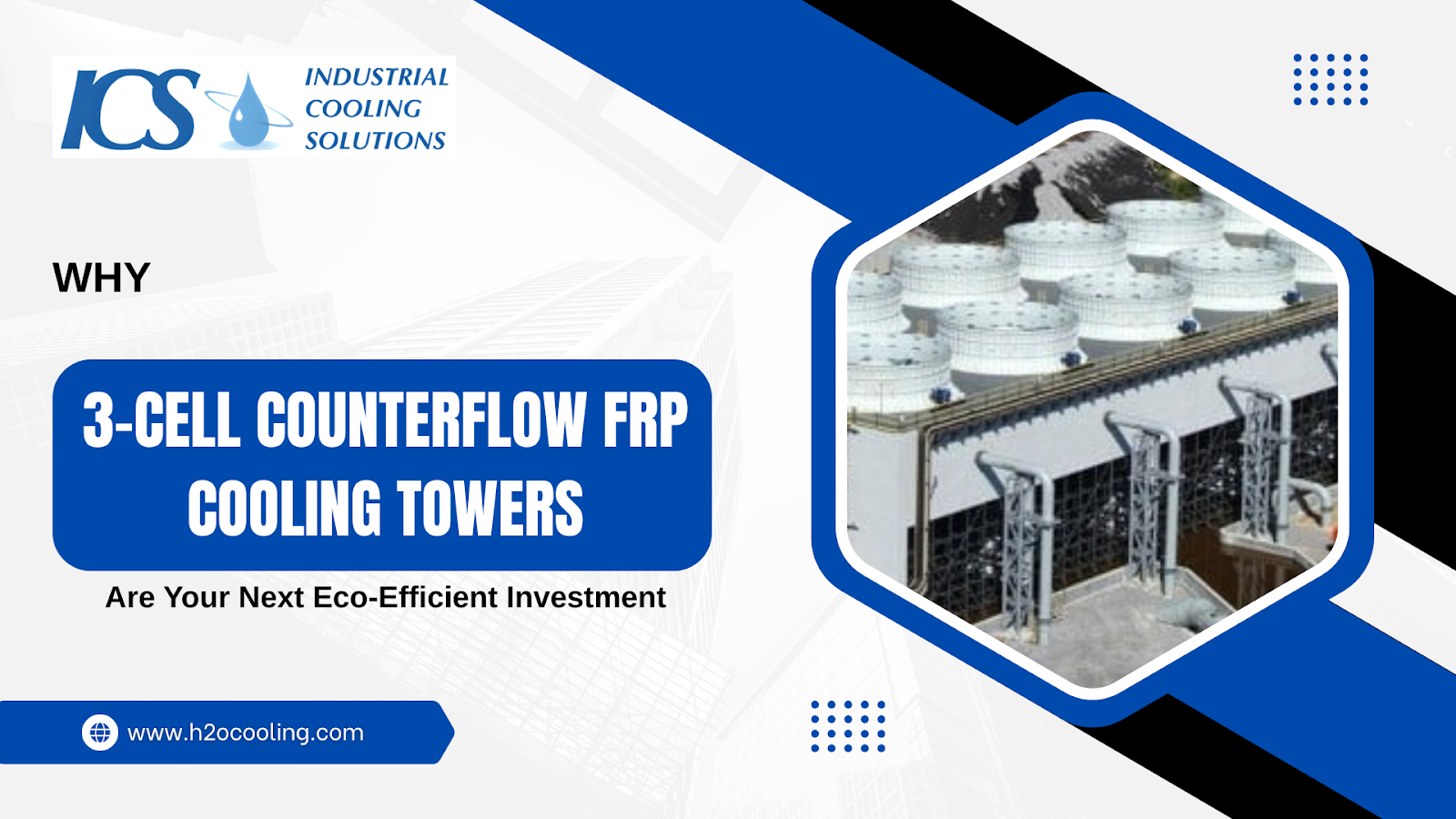
As businesses aim to reduce costs, improve efficiency, and meet sustainability goals, industrial cooling systems are being redefined. The 3-cell counterflow FRP cooling tower stands at the forefront of this revolution, offering a game-changing combination of efficiency, durability, and eco-friendliness.
By investing in this technology, businesses are positioned to maximize operational scalability and environmental preservation. This blog unpacks why these cooling towers are transforming industrial practices, with insights into their unique features and tangible benefits.
Decoding the Core: Counterflow Efficiency and FRP Durability
The core of every efficient cooling system is rooted in its craftsmanship and the materials used. 3-Cell Counterflow FRP Cooling Towers stand out thanks to two fundamental innovations: the counterflow principle and the use of Fiberglass Reinforced Plastic.
The Counterflow Blueprint for Efficiency
Unlike older designs, counterflow cooling towers maximize heat transfer by optimizing airflow and water interaction. Hot water flows downward while cooler air is pushed upward in the opposite direction, ensuring efficient heat dissipation. This innovative design creates superior thermal performance, minimizes dead zones, and reduces energy demands.
FRP: The Unsung Hero of Durability
Fiberglass Reinforced Plastic (FRP) is revolutionizing the world of industrial cooling. Its corrosion-resistant and lightweight properties ensure longer lifespans compared to traditional materials like wood or metal.
- Key benefits of FRP include:
- Resistance to rust and rot
- Reduced maintenance needs
- High durability in corrosive environments
FRP ensures your system runs seamlessly while reducing the risk of downtime, making it essential for long-term operational efficiency.
What Does "3-Cell" Mean? Unlocking Modularity and Flexibility
Three Independent Sections: The tower is split into three compartments, each with its own fan, fill media, and water distribution system.
Parallel Operation: All three cells can operate simultaneously to handle large cooling loads.
Redundancy: If one cell needs maintenance, the other two can continue operating, ensuring uninterrupted cooling.
Scalability: You can run one, two, or all three cells depending on the cooling demand, which improves energy efficiency.
Key Operational Advantages:
- Scalability on Demand: You can easily adjust total cooling capacity by operating one, two, or all three cells. This means you can handle fluctuating loads efficiently, expanding or contracting capacity as your operational needs change.
- Uninterrupted Cooling (Redundancy): If one cell requires routine maintenance, cleaning, or repair, you can take it offline without forcing a complete shutdown of your industrial process. The other two cells can continue operating, ensuring critical cooling remains uninterrupted.
- Optimized Energy Use: By running only the necessary number of cells based on real-time cooling loads, you can achieve significant energy savings, avoiding the wasteful operation of an oversized system during periods of lower demand.
- Operational Flexibility: This design allows for precise tailoring of cooling performance to specific process needs, enhancing overall system efficiency and control.
The Profit Powerhouse: How These Towers Boost Your Bottom Line
Investing in a 3-cell counterflow FRP cooling tower is not just an expense; it's a strategic move that delivers tangible economic returns throughout its lifecycle.
Slashed Energy Bills Through Peak Efficiency
The counterflow design inherently optimizes heat transfer, which leads to lower fan horsepower requirements for a given cooling load. This translates directly into reduced electricity consumption and substantial savings on your operational energy bills, day after day, year after year.
Drastically Reduced Maintenance & Downtime

FRP offers exceptional durability, resulting in fewer breakdowns and significantly lower maintenance requirements. Its innovative modular design provides additional benefits, ensuring efficient and cost-effective operations. Here’s why FRP stands out:
- Reduced Maintenance Costs: The robust nature of FRP minimizes wear and tear, leading to less frequent repairs and long-term savings.
- Minimized Downtime: Thanks to its modular design, repairs can be targeted to specific sections without disrupting the operation of other cells, ensuring continuous functionality.
Extended Asset Lifespan, Enhanced ROI
The extreme durability of FRP ensures a significantly longer operational life for the cooling tower. This defers major capital expenditure on replacements for decades, lowering your overall Total Cost of Ownership (TCO) and boosting your long-term Return on Investment (ROI).
Optimized Footprint & Installation Savings
Counterflow designs typically take up less space than crossflow towers with the same capacity. This saves valuable industrial real estate. Furthermore, the modular nature of 3-cell towers means future expansion is straightforward and less disruptive, offering flexibility as your business grows.
A Greener Footprint: Driving Sustainable Operations
Sustainability is no longer optional; it’s necessary. A 3-cell counterflow FRP tower provides businesses with tangible environmental benefits.
Advanced Water Conservation

Advanced thermal designs and effective drift eliminators are essential for enhancing water efficiency in cooling systems. Here's how they add value:
- .Reduced Water Losses: Drift eliminators are specifically designed to capture water droplets carried in the airflow, significantly reducing evaporative water losses.
- Minimized Water Consumption: Superior thermal designs enhance system efficiency, ensuring optimal cooling performance while using less water overall.
- Advanced Water Conservation Methods: Technologies such as high-efficiency drift eliminators, optimized cooling system designs, and water recycling processes work together to conserve water effectively.
- Environmental Impact: Reduced water waste and efficient use of resources contribute to more sustainable and eco-friendly operations.
Investing in these advanced water conservation solutions ensures improved performance, lower costs, and a positive environmental impact.
Minimizing Chemical Dependency
FRP (Fiberglass Reinforced Plastic) offers significant advantages by reducing scaling and fouling, which are common issues in many industrial operations. This not only minimizes the need for harsh water treatment chemicals but also creates safer, more efficient, and cost-effective systems. Here's why this matters:
- Reduced Chemical Usage: Decreases dependency on strong water treatment chemicals, leading to safer workplaces and lower environmental impact.
- Improved Efficiency: Less scaling and fouling mean equipment performs better, with fewer interruptions and maintenance requirements.
- Enhanced Durability: FRP’s resistance to harsh conditions extends the lifespan of equipment, providing a reliable solution for demanding industries.
Substantial Carbon Emission Reductions
Reducing energy demands doesn’t just cut costs—it also plays a crucial role in minimizing your carbon footprint. Aligning your operations with global emissions-reduction targets can bring significant advantages, including:
- Sustainability Goals: Demonstrate your commitment to environmental responsibility by actively contributing to global climate initiatives.
- Enhanced Brand Reputation: Consumers and stakeholders increasingly value companies prioritizing eco-friendly practices.
- Regulatory Compliance: Stay ahead of evolving environmental regulations, avoiding potential fines or penalties.
Navigating Regulations with Confidence
3-cell counterflow FRP cooling towers offer businesses a reliable solution to meet regulatory standards while delivering additional value. These cooling towers not only help companies stay compliant with evolving regulations but also reduce operational risks and support sustainability goals. Here’s how they can benefit your business:
- Enhanced Sustainability: Improve your Corporate Social Responsibility (CSR) efforts by minimizing environmental impact through efficient cooling solutions.
- Durability and Reliability: FRP (Fiber Reinforced Plastic) construction ensures long-lasting performance, even in harsh conditions, reducing maintenance costs.
Investing in these cooling towers is not just about compliance—it's about driving efficiency, reducing costs, and building a responsible brand image.
Real-World Impact: Industries Thriving with 3-Cell FRP Towers
The robust performance, modularity, and durability of 3-cell counterflow FRP cooling towers make them ideal for a diverse array of high-demand industrial sectors.
Versatility Across High-Demand Sectors
Industries benefiting from 3-cell counterflow systems include:
- Power Generation: Cooling condenser water in thermal and nuclear power plants.
- Chemical and Petrochemical Processing: Handling corrosive process fluids and demanding cooling loads.
- HVAC for Large-Scale Facilities: Efficiently managing heat rejection for air conditioning in massive commercial buildings, data centers, and institutional complexes.
- Manufacturing: Providing precise temperature control for production machinery and processes.
- Pharmaceutical Production: Maintaining stable temperatures for sensitive processes.
5.2 Delivering Consistent Performance
Imagine a data center where even a slight temperature fluctuation can lead to catastrophic data loss, or a chemical plant where precise temperature control is vital for reaction stability. The reliability and flexibility of a 3-cell FRP tower ensure consistent, dependable cooling, even during peak loads or unexpected maintenance events.
Your Strategic Partner in Industrial Cooling
Beyond the Product: Comprehensive Solutions
At H2ocooling, we specialize in providing cutting-edge cooling tower solutions. Our expertise extends beyond simply selling equipment; we offer comprehensive services from custom design and precision manufacturing to seamless installation and ongoing support for these advanced systems.
The Value of Expert Consultation
Our experienced team goes beyond basic analysis to deeply understand your operational needs, energy goals, and facility requirements. We provide:
- Tailored recommendations to suit your specific industry and operational demands.
- Guidance on energy-efficient cooling towers to reduce operational costs.
- Professional installation assistance to guarantee smooth integration with your current systems.
Maximizing Your Investment: Ongoing Support
Our focus is on ensuring the lasting efficiency and dependability of your cooling tower by offering a variety of specialized services, including:
- Real-time monitoring and diagnostics for proactive issue resolution.
- Tailored performance enhancements designed to meet evolving operational demands.
- Access to our dedicated support team for quick assistance whenever you need it.
Conclusion
Three-cell counterflow FRP cooling towers set a new standard for both efficiency and environmental sustainability. These towers combine adaptable design, durable performance, and eco-friendly operation to help businesses cut costs and reduce their environmental footprint.
In this blog, we break down how these cooling towers work, their key benefits, and why they’re a smart investment for long-term success. From energy savings to supporting sustainability goals, 3-cell cooling towers can transform your industrial cooling strategy.
Ready to learn more? Contact H2ocooling.com today and discover how we can help you build a smarter, greener future with advanced cooling solutions.